
Zucchini Mushroom & Peas Quiche
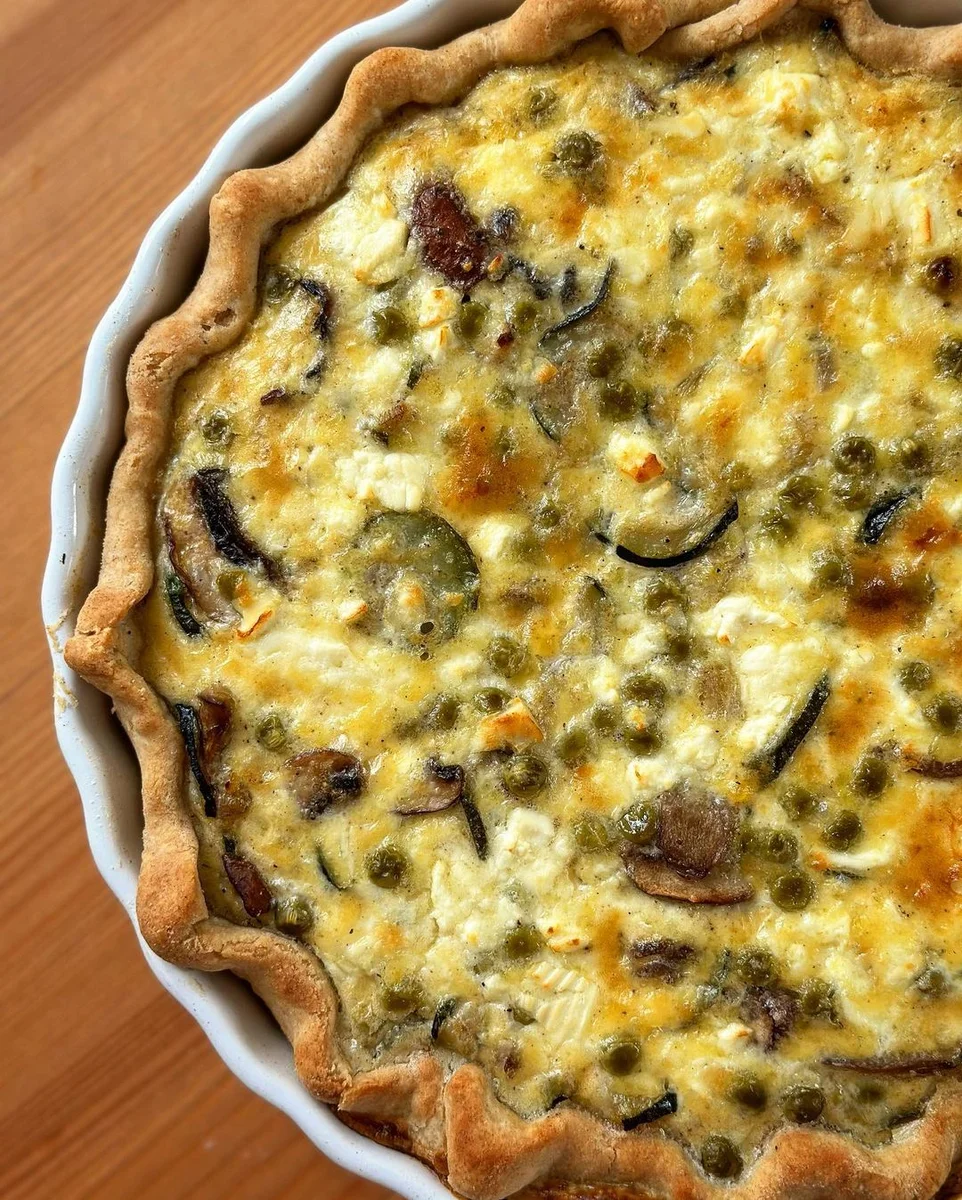
This savoury quiche pairs a buttery corn-flour crust with courgette, brown mushrooms and peas. It makes a vegetable-rich main for lunch or a light dinner, served warm or at room temperature.
Ingredients
- 280 gfull corn flour
- 120 gsoft butter
- ½ tspsalt
- as neededcold water
- as neededoil and butter
- 1 largeonion
- 2 largecourgettes
- 250 gbrown mushrooms
- 1 cup (about ¾ of a can; approximately 150 g)peas
- to tastesalt, pepper and garlic powder
Instructions
- 1
Make the dough
Prepare the dough, using a kitchen machine if you like. Refrigerate it for 1 hour.
- 2
Cook the vegetables
Dice the onion and sauté it. Add the courgettes and sauté for a couple of minutes, then add the mushrooms. Cover the pan and cook for 10 minutes.
- 3
Bake the crust
Grease a quiche tin, press the dough into it and bake the crust for 15 minutes.
- 4
Mix in peas
Add the cooked peas to the vegetables and mix briefly.
- 5
Fill the crust
Take the crust out of the oven and spoon in the vegetables, leaving behind any liquid. Pour over the egg mixture; add cheese if you wish, such as feta.
- 6
Bake and rest
Bake for a further 35 minutes. Leave the quiche to rest for 20 minutes before cutting.
What is courgette, mushroom and pea quiche?
Quiche is a savoury tart made with pastry and a filling that is commonly set with eggs. This version combines familiar European tart-making with a mix of courgettes, mushrooms and peas.
The vegetables are cooked before they go into the crust, which helps soften them and lets excess moisture be drained away. The recipe leaves the egg mixture quantity open, so use your usual quiche custard proportion.
Nutrition and macros by portion
The nutrition label shows one serving as written: 560 calories, 18g protein, 62g carbs, 29g fat.
| Portion | Adjustment | kcal | Protein | Carbs | Fat |
|---|---|---|---|---|---|
| Lighter | Use less butter | 392 kcal | 13g | 43g | 20g |
| This serving | As written | 560 kcal | 18g | 62g | 29g |
| Hungry | Serve a larger slice | 840 kcal | 27g | 93g | 44g |
The flour and peas provide most of the carbohydrate, while the butter and any oil contribute much of the fat. Protein comes from the egg mixture, mushrooms and peas, though the egg quantity is not specified; serve a slice with salad or extra vegetables for a more balanced plate.
Building the corn-flour crust
Butter: Work the soft butter into the flour and salt to make the dough, adding cold water only if needed to bring it together.
Chilling: Resting the dough in the fridge for an hour firms the butter and makes the pastry easier to handle when lining the tin.
Cooking the vegetable filling
Onion and courgette: Sauté the diced onion first, then add the courgette for a couple of minutes so it starts to soften.
Mushrooms: Add these last and cook covered for 10 minutes. The vegetables can release a lot of liquid, so drain or leave that liquid behind when filling the crust.
Getting a set centre
Egg mixture: Pour it over the vegetables once they are in the baked crust. The recipe does not specify its ingredients or amount, so make enough to fill the tart without overflowing.
Doneness: The quiche is ready after the stated 35-minute bake when the centre looks set rather than liquid. Rest it for 20 minutes to make cleaner slices.
Timing the preparation
The dough needs an hour in the fridge, followed by 15 minutes for the crust and 35 minutes for the filled quiche. Allow another 20 minutes of resting before serving, as well as time to prepare and cook the vegetables.
Serving the quiche
Serve a warm slice with a crisp green salad or simply dressed leaves to balance the buttery crust. It also works at room temperature for lunch or a picnic.
Recipe notes & tips
- Add cold water gradually so the dough does not become sticky.
- Keep the dough chilled for the full hour to make it easier to press into the tin.
- Cut the onion and courgettes into even pieces so they cook at a similar rate.
- Leave the vegetable cooking liquid in the pan when transferring the filling.
- Let the baked quiche rest for 20 minutes before slicing.
Variations
- Add feta: Crumble it over the vegetables before pouring in the egg mixture.
- Use fresh peas: Cook them until tender before adding them to the filling.
- Change the mushrooms: Use another variety if brown mushrooms are unavailable.
- Add herbs: Stir chopped thyme or parsley into the cooked vegetables.
- Season gently: Add a pinch of nutmeg to the egg mixture for a warm savoury note.
Common mistakes to avoid
- Adding too much water to the dough: Add it a little at a time so the pastry stays manageable.
- Skipping the chill: Refrigerate the dough for the stated hour before lining the tin.
- Leaving liquid in the filling: Keep the vegetable juices out of the crust to help prevent a soggy base.
- Overfilling the crust: Pour in only enough egg mixture to sit comfortably among the vegetables.
- Cutting too soon: Rest the quiche for 20 minutes so the filling can settle.
How to store
Cool leftovers, cover and refrigerate for up to 3 days. Reheat slices in an oven until warmed through, or serve them cold or at room temperature.
Frequently asked questions
How much egg mixture should I use?
The recipe does not give an amount or list the egg mixture ingredients. Use your usual quiche custard quantity, enough to fill the crust around the vegetables without overflowing.
Do I need to cook the vegetables first?
Yes. The method sautés the onion, courgettes and mushrooms before adding them to the crust, then mixes in cooked peas.
Why should I leave the vegetable liquid behind?
The vegetables can release moisture as they cook. Leaving that liquid in the pan helps keep the crust from becoming soggy.
Can I add cheese?
Yes. The method suggests adding cheese if you like and mentions feta as one option.
How can I tell when the quiche is cooked?
After the further 35-minute bake, look for a centre that is set rather than liquid. Leave it to rest for 20 minutes before cutting.
Cook it from the original
This recipe comes from fooooods.com. Their page has the author’s own photos, notes and tips — the best place to cook it from.
Open the recipe on fooooods.com