
Tagliatelle
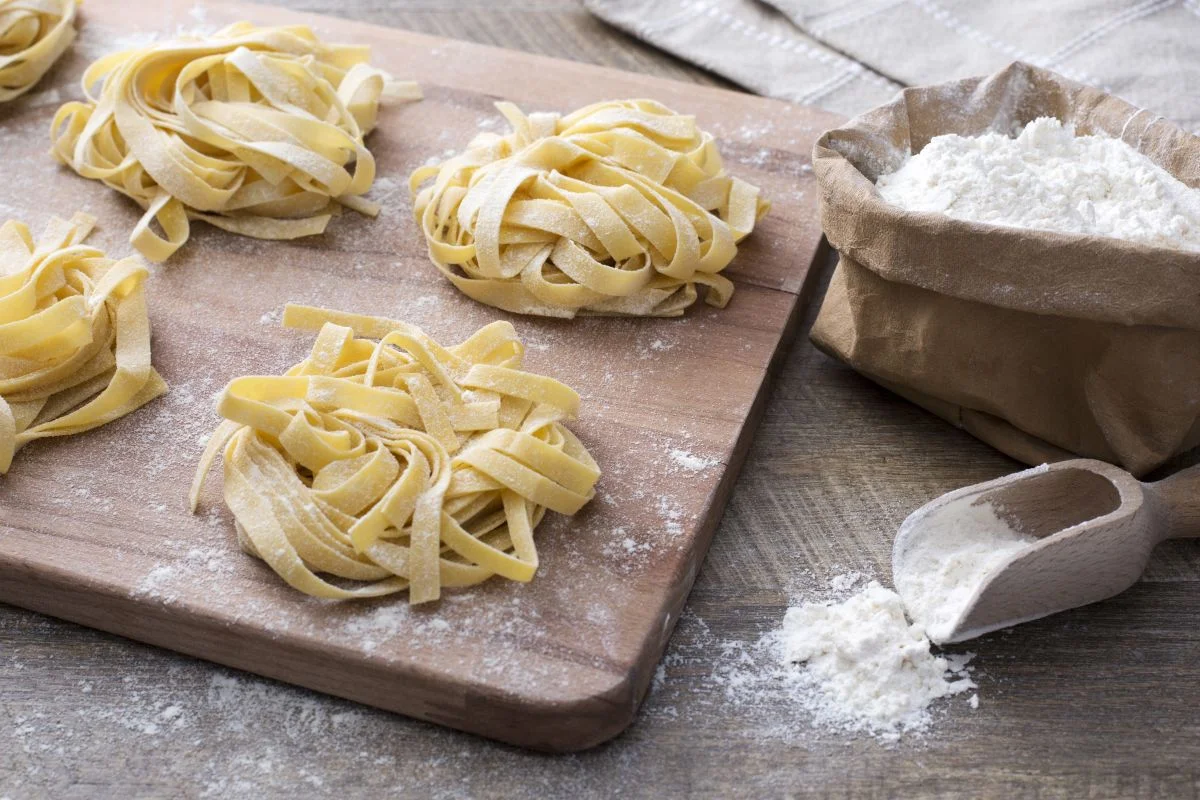
These fresh egg tagliatelle are made by hand from 00 flour and eggs, then cut into ribbons and shaped into nests. Make them when you want a fresh pasta base for ragù or another favourite sauce.
Ingredients
- 300 g00 flour
- 3eggs, at room temperature
- as neededsemolina, for dusting
Instructions
- 1
Mix the dough
Put the flour in a bowl, reserving a little to add if needed. Make a well in the centre and crack in the room-temperature eggs. Beat them with a fork, then begin kneading by hand once they have taken up some of the flour.
- 2
Knead and rest
Knead on a lightly floured surface for at least 10–15 minutes, until the dough is smooth and elastic. Work it firmly without tearing it, shape it into a ball and wrap it in cling film. Leave it to rest at room temperature for at least 30 minutes.
- 3
Divide the dough
Cut the dough into three portions. Dust one portion well with flour and flatten it; keep the other two wrapped so they do not dry out. Set the pasta machine to setting 1, its widest setting, and pass the dough through the rollers.
- 4
Fold the sheet
Take the first thick sheet and fold both edges in towards the centre to make it more regular.
- 5
Roll it thinner
Dust the dough lightly and pass it through the machine again, repeating the process until you reach setting 8. Lay the sheet on a floured surface and trim the ends with a dough scraper or knife to make them even.
- 6
Prepare the sheets
Cut the sheet in half to make it easier to handle, then pass it through the machine again at setting 8, as it will have shrunk slightly while being worked. Dust both sides with a little semolina and leave the sheets to dry for 5 minutes on each side.
- 7
Fold the pasta
Take one sheet and fold one edge over to about two-thirds of its width. Roll it up into a very flat roll, keeping the seam facing upwards.
- 8
Cut the ribbons
Cut the roll into slices 7 mm thick. Take the tagliatelle by the ends and spread the ribbons over your hand.
- 9
Shape the nests
Wind the ribbons around your fingers to form a nest and place it on a lightly floured surface. Repeat with the remaining dough; the tagliatelle are then ready to cook.
What are tagliatelle?
Tagliatelle are long, flat ribbons of fresh egg pasta associated with Bologna and the Emilia-Romagna region of Italy. They are often served with ragù, whose hearty texture suits the broad pasta.
This version uses just 00 flour and eggs, with semolina for dusting. Kneading, resting and rolling the dough carefully help make sheets that can be cut into neat ribbons.
Nutrition and macros by portion
The nutrition label shows one serving as written: 321 calories, 0g protein, 59g carbs, 4g fat.
| Portion | Adjustment | kcal | Protein | Carbs | Fat |
|---|---|---|---|---|---|
| Lighter | Smaller pasta nest | 225 kcal | 0g | 41g | 3g |
| This serving | As written | 321 kcal | 0g | 59g | 4g |
| Hungry | Larger pasta portion | 482 kcal | 0g | 88g | 6g |
The listed nutrition is per serving, and the carbohydrates come mainly from the flour; eggs contribute most of the protein and fat. Pair a portion with vegetables and a protein-rich sauce to make a more rounded plate.
Choosing the ingredients
00 flour: Its fine texture makes a smooth pasta dough. Reserve a little as directed so you can adjust the dough if it needs it.
Room-temperature eggs: They are easier to work into the flour when they are not cold straight from the fridge.
Semolina: Use it to dust the sheets and help keep the fresh ribbons from sticking together.
Kneading and resting
Knead firmly for at least 10–15 minutes, but avoid tearing the dough. It should become smooth and elastic as you work it.
Resting: Wrap the dough and leave it at room temperature for at least 30 minutes. Keep the unused portions covered while rolling so they do not dry out.
Rolling the sheets
Start at setting 1, the widest setting, and fold the first thick sheet towards the centre to even it out. Continue rolling and lightly dusting until setting 8.
Final pass: The recipe calls for another pass at setting 8 after trimming and halving the sheet, since it may have shrunk slightly during handling. Dust both sides with semolina and dry each side for 5 minutes.
Cutting and shaping
Flat roll: Fold one edge of the sheet over to about two-thirds of its width, then roll it into a flat bundle with the seam facing upwards.
Even ribbons: Cut slices 7 mm thick. Gently lift the ends, spread the strands over your hand and wind them around your fingers into nests.
Serving the tagliatelle
Tagliatelle are a classic match for ragù, as well as other sauces that can cling to their broad ribbons. Toss the pasta with your chosen sauce after cooking.
For a balanced plate, serve a moderate nest of pasta with a sauce that includes vegetables or a protein-rich ingredient.
Recipe notes & tips
- Keep the portions you are not rolling wrapped in cling film so they do not dry out.
- Use only a light dusting of flour while rolling, and semolina for dusting the finished sheets.
- Work the dough firmly but stop short of tearing it.
- Keep the pasta machine on setting 1 for the first pass, then work towards setting 8 as directed.
- Make the cuts evenly at 7 mm so the ribbons are similar in width.
- Shape the ribbons into nests on a lightly floured surface.
Variations
- Ragù pairing: Serve the tagliatelle with a rich ragù, a traditional match for the pasta.
- Vegetable sauce: Toss the cooked ribbons with a vegetable-based sauce for a different accompaniment.
- Herb finish: Add fresh herbs to your chosen sauce just before serving.
- Semolina dusting: Use a light semolina dusting between the sheets to help prevent sticking.
Common mistakes to avoid
- Skipping the rest: The dough needs at least 30 minutes wrapped at room temperature before rolling.
- Leaving spare dough exposed: Keep the other portions wrapped while you work to stop them drying out.
- Forcing a thick sheet through: Begin at the machine's widest setting, number 1, and roll progressively.
- Overworking roughly: Knead energetically but avoid tearing the dough and its developing structure.
- Cutting unevenly: Measure slices at 7 mm for ribbons of a consistent width.
- Using too much dusting flour: Dust lightly so excess flour does not build up on the sheets.
How to store
The recipe gives instructions for making and shaping fresh tagliatelle but does not specify storage times. Keep the shaped nests lightly floured and covered if they are not being cooked straight away; refrigerate them in a covered container and cook promptly.
Frequently asked questions
Can I make the dough without a pasta machine?
The method uses a pasta machine to roll the dough to setting 8. A rolling pin can be used to roll it by hand, though the sheet may be harder to make evenly thin.
Why does the dough need to rest?
Resting gives the dough time to relax after kneading, making it easier to roll. Keep it wrapped while it rests.
Why does the recipe divide the dough into three portions?
Smaller portions are easier to flatten and pass through the pasta machine. Keep the portions you are not using wrapped so they do not dry out.
Why pass the sheet through setting 8 again?
The sheet may shrink a little as it is handled. The final pass at setting 8 helps restore its length before cutting.
How wide should I cut the tagliatelle?
Cut the rolled pasta into slices 7 mm thick, as specified in the method.
What should I serve with tagliatelle?
Ragù is a classic pairing, but the broad ribbons also suit other sauces. Choose a sauce that coats the pasta well.
Cook it from the original
This recipe comes from giallozafferano.es. Their page has the author’s own photos, notes and tips — the best place to cook it from.
Open the recipe on giallozafferano.es