
Polenta
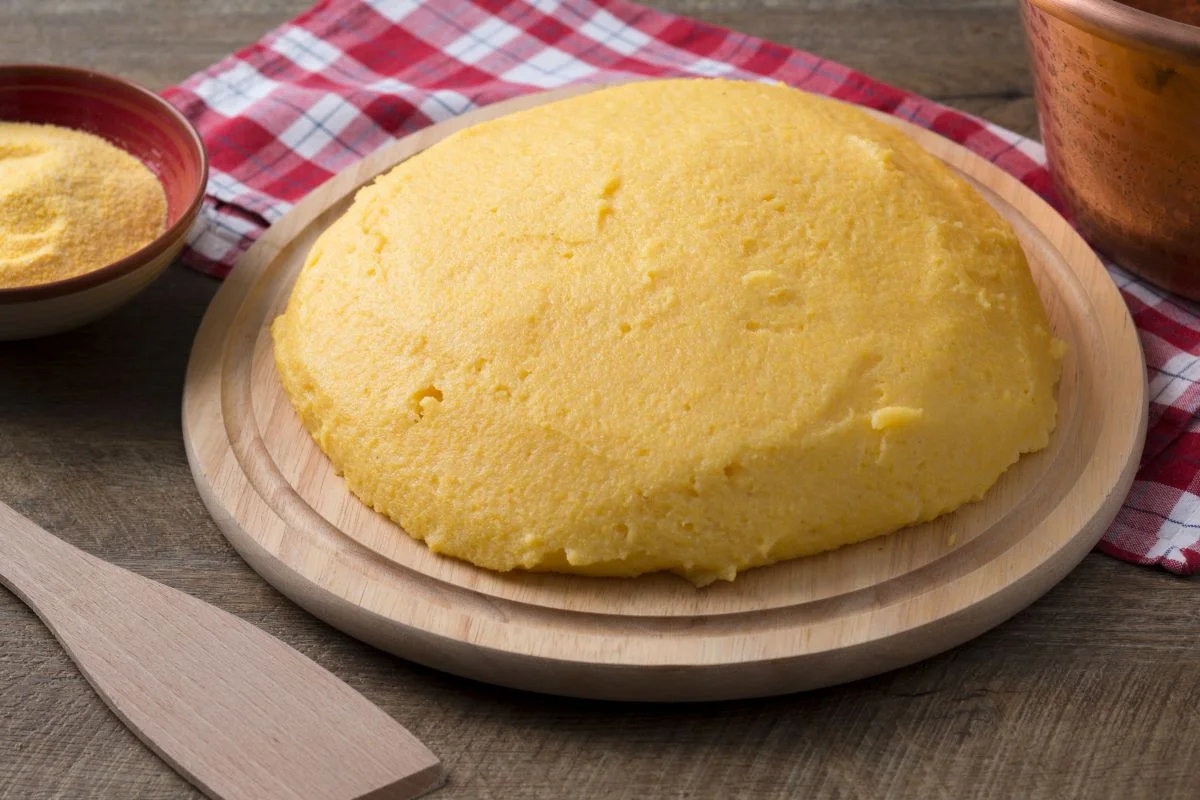
Polenta is a hearty northern Italian dish made by slowly cooking cornmeal in water. This simple version needs steady stirring and makes a comforting base or side for a range of meals.
Ingredients
- 500 gCornmeal
- 2 lWater
- 15 gExtra-virgin olive oil
- 1 spoonCoarse salt
Instructions
- 1
Heat the water
Set a heavy-based steel pan over the heat and pour in 2 litres of water. Just before it boils, add the salt, then gradually rain in the cornmeal while stirring with a wooden spoon or a traditional hazelwood polenta stick. Keep the heat high and stir briskly.
- 2
Cook the polenta
Stir in the olive oil to help prevent lumps. Keep mixing until the water returns to the boil, then reduce the heat to its lowest setting and cook gently for 50 minutes, stirring continuously so the polenta does not stick. At the end, raise the heat until the polenta pulls away from the sides and bottom of the pan.
- 3
Turn out and serve
Carefully invert the pan over a round board slightly wider than the pan to release the polenta. Serve it at the table.
What is polenta?
Polenta is a traditional dish from northern Italy, made by cooking cornmeal with water until it forms a thick, filling mixture. It has a long history as an everyday staple, and can be served soft or turned out to set into a sliceable mound.
This version keeps the ingredient list simple. Slow cooking and frequent stirring give the cornmeal time to soften and thicken evenly.
Nutrition and macros by portion
The nutrition label shows one serving as written: 484 calories, 0g protein, 102g carbs, 4g fat.
| Portion | Adjustment | kcal | Protein | Carbs | Fat |
|---|---|---|---|---|---|
| Lighter | Smaller polenta portion | 339 kcal | 0g | 71g | 2g |
| This serving | As written | 484 kcal | 0g | 102g | 4g |
| Hungry | Larger polenta portion | 726 kcal | 0g | 153g | 5g |
Most of the carbohydrates in this serving come from the cornmeal, while the olive oil supplies most of the fat; the listed protein is 0 g per serving. To balance the plate, serve it with vegetables and a protein-rich accompaniment.
Choosing the ingredients
Cornmeal: use the quantity specified and add it gradually to the hot water, rather than tipping it in all at once. A steady stream makes it easier to incorporate smoothly.
Olive oil: the recipe adds oil during cooking to help limit lumps. Coarse salt goes into the water just before the cornmeal.
Stirring without lumps
Gradual addition: rain the cornmeal into the water while stirring briskly. Keep the spoon moving around the pan so dry pockets do not gather.
Steady movement: once the heat is lowered, continue stirring throughout the 50-minute simmer and scrape the bottom carefully to prevent sticking.
Getting the texture right
During cooking: the mixture should become thick as the cornmeal absorbs the water. Use the pan's return to a boil as the cue to lower the heat.
At the finish: the recipe looks for the polenta to pull away from the pan. Raise the heat briefly at the end and wait until it releases from the bottom before turning it out.
Timing the cook
The stated total time is 80 minutes, while the method specifies 50 minutes of gentle cooking. Allow additional time for heating the water, gradually adding the cornmeal and bringing the mixture back to the boil.
Keep close to the pan during the simmer: continuous stirring is part of the method, not just a final check.
Turning out and serving
Use a round board slightly wider than the pan, and invert the pan carefully to release the polenta. Take care when handling the hot, heavy pan.
Serve the polenta as a hearty side or base alongside a meal. Its plain corn flavour pairs well with savoury accompaniments.
Recipe notes & tips
- Use a heavy-based pan to help distribute the heat during the long simmer.
- Add the cornmeal in a gradual stream while stirring briskly.
- Keep stirring over low heat and pay particular attention to the bottom of the pan.
- Wait for the polenta to pull away from the pan before turning it out.
- Choose a board slightly wider than the pan so the polenta has room to release.
Variations
- Serve it soft: spoon out the polenta before turning it onto a board.
- Slice it later: let the turned-out polenta cool until firm, then cut it into portions.
- Add herbs: stir chopped herbs into the cooked polenta for an aromatic variation.
- Finish with cheese: serve with grated cheese alongside or over the polenta.
- Pair with a sauce: offer a savoury sauce at the table to complement its mild corn flavour.
Common mistakes to avoid
- Adding the cornmeal all at once: it can clump; rain it in gradually while stirring.
- Stopping the stirring: the polenta may stick to the bottom; keep it moving throughout the simmer.
- Keeping the heat high: the mixture can catch during the long cook; lower it to the minimum once it returns to the boil.
- Turning it out too soon: it may not release cleanly; wait until it pulls away from the pan.
- Using a small board: the polenta may spill over; choose one wider than the pan.
How to store
Cool leftovers, cover and refrigerate for up to 3 days. Reheat gently in a pan with a little water, stirring until hot; firm leftovers can also be sliced and reheated in a pan.
Frequently asked questions
How do I stop the polenta from becoming lumpy?
Pour the cornmeal into the hot water gradually while stirring briskly. Continue stirring as it cooks so the mixture stays even.
Does the polenta need to be stirred for the whole 50 minutes?
Yes, the method calls for continuous stirring over low heat. This also helps keep it from sticking to the bottom of the pan.
How can I tell when the polenta is ready?
After the 50-minute simmer, raise the heat and wait until the polenta pulls away from the pan, including its bottom.
Can I serve this polenta soft?
Yes. The recipe turns it out onto a board, but you can serve it from the pan if you prefer a soft consistency.
What can I serve with polenta?
Serve it as a side or a base with vegetables, a savoury sauce, cheese or a protein-rich accompaniment.
Can I make it ahead?
You can cook it ahead and refrigerate it once cool. Reheat gently with a little water, stirring until hot.
Cook it from the original
This recipe comes from giallozafferano.es. Their page has the author’s own photos, notes and tips — the best place to cook it from.
Open the recipe on giallozafferano.es