
Fettuccine Alfredo
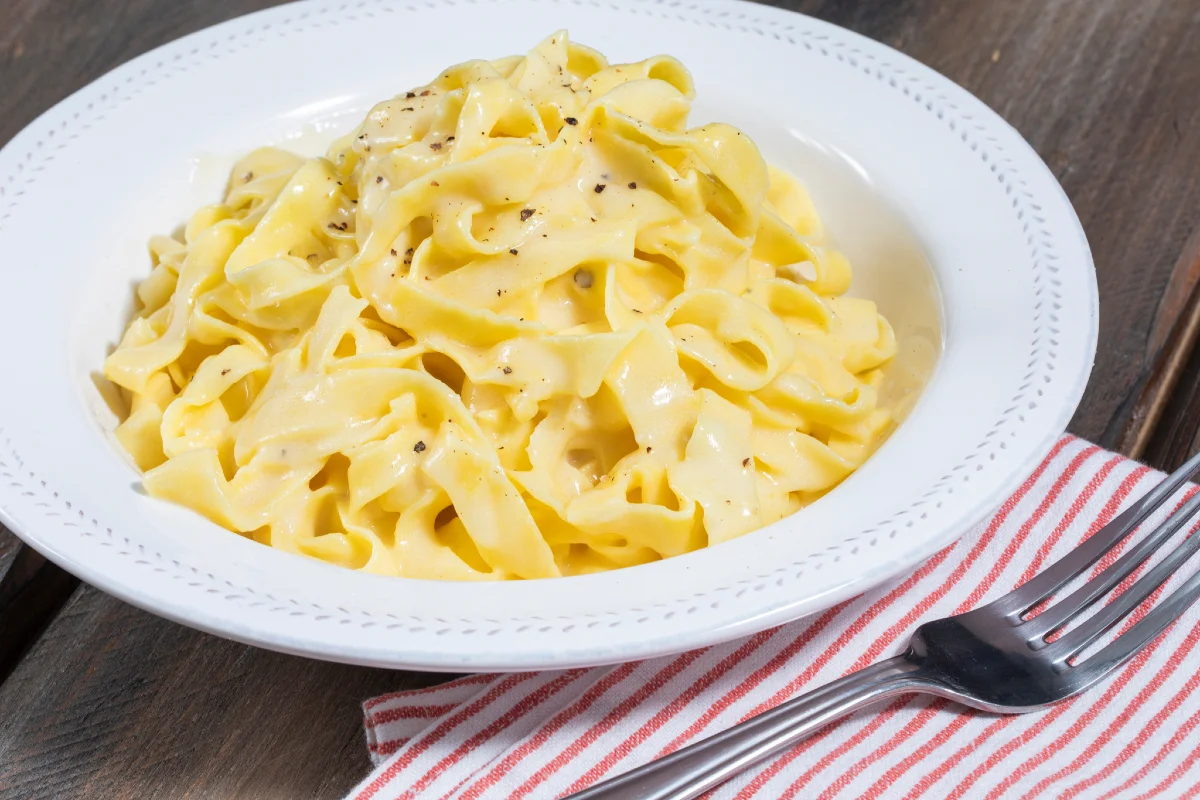
Fettuccine Alfredo pairs fresh egg pasta with butter and finely grated Parmigiano Reggiano for a simple, creamy first course. Making the ribbons by hand gives the dish a tender, freshly made texture and lets the sauce come together just before serving.
Ingredients
- 150 g00 flour
- 140 gfinely re-milled durum wheat semolina
- 4 mediumeggs
- 200 g24-month-aged Parmigiano Reggiano PDO
- 100 gbutter, at room temperature
- to tastefine salt
- to tasteblack pepper
Instructions
- 1
Mix the flours
To make the fresh pasta, combine the semolina and 00 flour on a work surface. Shape them into a mound with a well in the centre, then add the eggs.
- 2
Knead and rest
Mix the eggs into the flour first with a spatula, then continue by hand. Once the dough starts to hold together, knead for about 5–7 minutes, stretching and working it in different directions without tearing it. Shape it into a ball, wrap it in cling film and leave it to rest at room temperature for 30 minutes.
- 3
Prepare the cheese
Pass the cheese through a sieve to make it finer. Cut off about a third of the dough and keep the rest wrapped so it does not dry out.
- 4
Roll the pasta
Dust the dough with a little semolina and feed it through the pasta machine at its widest setting. Fold the sheet over a couple of times after the first pass, then roll it again to even out its shape and strengthen it. Continue until the second-to-last setting, about 1.5 mm thick, passing it through that setting twice. Cut the sheet into 2 or 3 rectangles, depending on its length, dust with semolina and leave each side to dry for 2–3 minutes.
- 5
Cut the ribbons
Roll each sheet up from its short side into a flat roll. Keep the seam facing upwards and, without pressing too firmly, cut ribbons about 6 mm wide. Use the seam to lift the ribbons and form them into nests, then place them on a tray dusted with semolina.
- 6
Cook the fettuccine
Cook the fettuccine for 1 minute in plenty of salted water. Meanwhile, put the room-temperature butter in a frying pan and add a little pasta cooking water to start melting it. Turn off the heat, transfer the drained pasta to the pan and toss with tongs, or two spoons, taking care not to break the ribbons. Add the Parmigiano Reggiano a little at a time.
- 7
Finish and serve
Toss the pasta, adding enough cooking water to make a smooth, creamy sauce. Taste and adjust the salt if needed, then serve immediately with plenty of freshly ground black pepper.
What is Fettuccine Alfredo?
Fettuccine Alfredo is an Italian pasta dish made by coating ribbons of pasta with butter and cheese. It is associated with Roman cooking and became especially popular in the United States.
This version starts with homemade egg pasta, combining 00 flour and durum wheat semolina. The semolina gives the sheet a slightly rougher texture, while the sauce relies on butter, finely grated Parmigiano Reggiano and pasta water.
Nutrition and macros by portion
The nutrition label shows one serving as written: 715 calories, 33g protein, 53g carbs, 39g fat.
| Portion | Adjustment | kcal | Protein | Carbs | Fat |
|---|---|---|---|---|---|
| Lighter | Use less butter and cheese | 500 kcal | 23g | 37g | 27g |
| This serving | As written | 715 kcal | 33g | 53g | 39g |
| Hungry | Serve a larger portion | 1073 kcal | 50g | 80g | 59g |
The flour, semolina and eggs supply most of the carbohydrates, while butter and Parmigiano Reggiano account for much of the fat. The eggs and cheese also contribute protein. Serve a moderate portion with salad or vegetables to add freshness and balance the plate.
Why use two flours?
00 flour: This finely milled flour helps make the dough smooth and workable. Combining it with semolina gives the pasta a more textured finish.
Semolina: Durum wheat semolina adds a golden tone and helps the cut ribbons keep their shape. Use a little from the measured amount to dust the dough and tray.
Getting the dough right
Kneading: Work the dough for the full 5–7 minutes, stretching it without tearing it, until it feels cohesive. The 30-minute rest at room temperature makes it easier to roll.
Keeping it covered: Only cut off about a third of the dough at a time. Leave the remaining dough wrapped in cling film to stop its surface drying while you work.
Rolling and cutting the ribbons
Rolling: Fold the sheet a couple of times after its first pass through the machine to even it out. Roll gradually to about 1.5 mm, passing the sheet through the final setting twice.
Cutting: Let the sheets dry for 2–3 minutes on each side before rolling them up. Cut gently into ribbons about 6 mm wide, without compressing the roll.
Making the sauce
Butter: Start with room-temperature butter and a little pasta water in the pan. The recipe uses the residual heat of the drained pasta to melt the butter, so turn off the heat before tossing.
Cheese and water: Add the finely sieved Parmigiano gradually while mixing. A little more pasta water helps bring the butter and cheese together into a creamy coating.
How to tell when it is ready
Pasta: The fresh ribbons need only 1 minute in boiling salted water. Handle them gently when draining and tossing so they stay intact.
Sauce: Look for a smooth coating that clings to the fettuccine rather than a pool of liquid at the bottom of the pan. Adjust with pasta water a little at a time, then serve straight away.
What to serve alongside
Serve the fettuccine as a first course, with freshly ground black pepper added at the table. A crisp green salad or simply cooked vegetables make a fresh counterpoint to the rich pasta.
The sauce is best made just before eating, so prepare any accompaniments while the dough rests or the pasta sheets dry.
Recipe notes & tips
- Keep dough that you are not rolling wrapped in cling film so it does not dry out.
- Dust the pasta lightly with semolina to help prevent the sheets and ribbons sticking.
- Use tongs or two spoons to toss the fresh pasta gently.
- Reserve some cooking water before draining so you can adjust the sauce gradually.
- Grate the Parmigiano finely so it mixes more readily into the sauce.
- Bring the finished pasta to the table immediately while the sauce is creamy.
Variations
- Add parsley: Stir in a little chopped parsley just before serving for a fresh herbal note.
- Add garlic: Warm a lightly crushed garlic clove with the butter, then remove it before tossing the pasta.
- Use another hard cheese: Replace some of the Parmigiano with finely grated Pecorino for a sharper flavour.
- Add mushrooms: Cook sliced mushrooms separately and fold them through the pasta at the end.
- Finish with lemon: Add a little finely grated lemon zest at the table for a bright contrast.
Common mistakes to avoid
- Leaving dough uncovered: It can dry out before rolling; keep unused dough wrapped in cling film.
- Rolling too quickly: The sheet may become uneven; fold it after the first pass and work through the settings gradually.
- Pressing the roll while cutting: This can squash the ribbons; cut gently with the seam facing upwards.
- Cooking too long: Fresh fettuccine cooks quickly; boil it for 1 minute as directed.
- Adding cheese over high heat: It may not blend smoothly; turn off the heat before tossing in the drained pasta and cheese.
- Adding too much water at once: The sauce can become thin; loosen it gradually with small additions of pasta water.
How to store
Freshly dressed Fettuccine Alfredo is best eaten immediately. Keep any leftovers in an airtight container in the fridge for up to 2 days, then reheat gently in a pan with a splash of water, stirring carefully.
Frequently asked questions
Can I make the pasta dough ahead?
You can make the dough ahead and keep it wrapped in the fridge. Let it come towards room temperature before rolling so it is easier to handle.
Can I use ready-made fettuccine?
Yes, though the cooking time will depend on whether the pasta is fresh or dried. Cook it according to its packet instructions and reserve some cooking water for the sauce.
What if I do not have a pasta machine?
Roll the dough out with a rolling pin to about 1.5 mm thick. Keep the sheet lightly dusted with semolina, then cut it into ribbons about 6 mm wide.
Why is my sauce not creamy?
The cheese may need finer grating, or the mixture may need a little more pasta water. Toss gradually until the sauce coats the fettuccine smoothly.
Can I prepare the sauce in advance?
It is better to make it as the pasta cooks. The butter, cheese and pasta water come together most easily when tossed with the hot, freshly drained fettuccine.
How wide should the fettuccine be?
Cut the ribbons about 6 mm wide, as described in the method. Keep the pressure light so they do not stick together or lose their shape.
Cook it from the original
This recipe comes from giallozafferano.es. Their page has the author’s own photos, notes and tips — the best place to cook it from.
Open the recipe on giallozafferano.es