
Pasta allo scarpariello
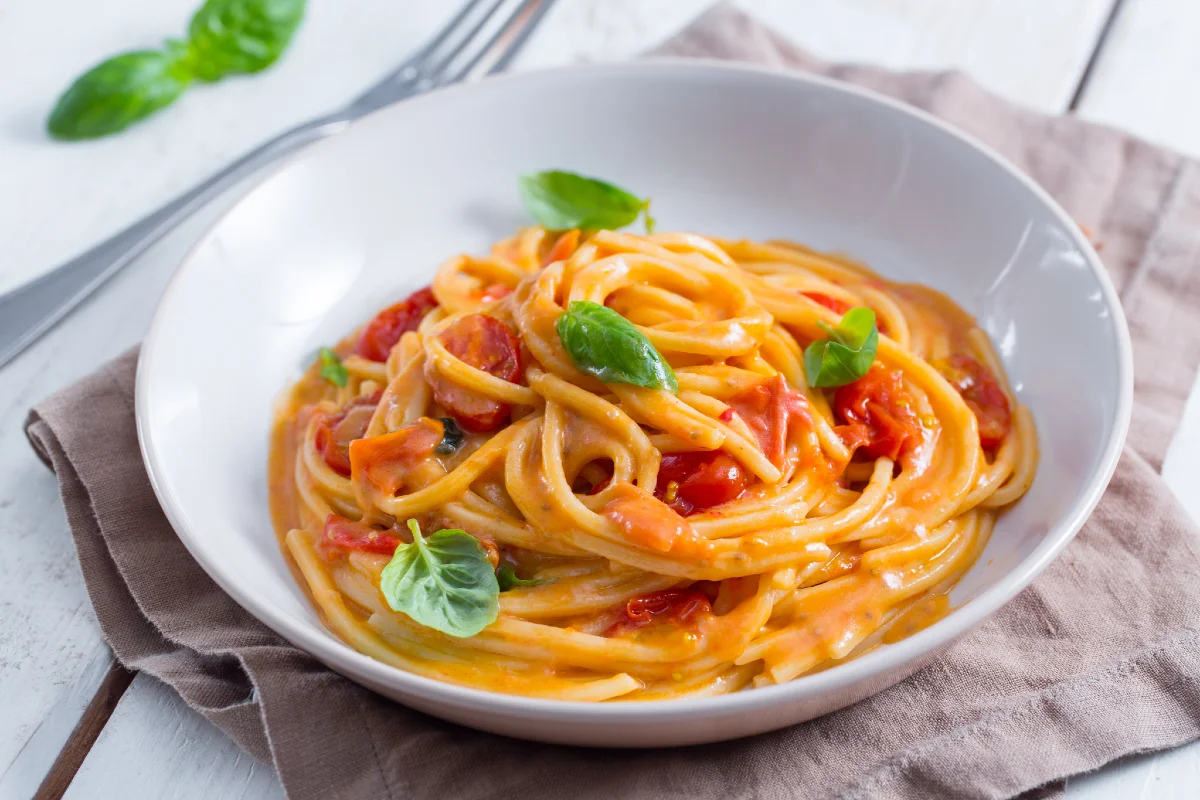
Pasta allo scarpariello is a quick Campanian pasta dish with cherry tomatoes, fresh basil and two grated cheeses. It makes a bright, savoury meal with a creamy finish from pasta water and cheese.
Ingredients
- 320 gspaghettoni
- 500 gpear-shaped cherry tomatoes
- 30 gPecorino Romano, for grating
- 30 gParmigiano Reggiano PDO, for grating
- 1 bunchfresh basil
- ½long fresh chilli
- 70 gextra-virgin olive oil
- 1 clovegarlic
- as neededfine salt
Instructions
- 1
Prepare the ingredients
Bring a pan of water to the boil for the pasta and salt it once boiling. Wash and halve the cherry tomatoes. Cut open the chilli, remove the seeds, then slice it into strips and chop it.
- 2
Start the sauce
Grate the Pecorino Romano and Parmigiano Reggiano. Heat the extra-virgin olive oil in a large frying pan, then add the chopped chilli and the peeled, whole garlic clove. Fry for about 3 minutes, stirring now and then. Add the cherry tomatoes and cook over a medium heat for about 10 minutes.
- 3
Cook the pasta
Meanwhile, cook the spaghettoni until al dente. When the tomato sauce is ready, season it with salt, remove the garlic and add a few basil leaves. Stir in a ladleful of pasta cooking water to help make the sauce creamy.
- 4
Combine pasta and sauce
Drain the pasta al dente, keeping aside a couple of ladlefuls of cooking water, and add the pasta directly to the pan. Finish cooking over a medium-low heat, tossing it with the sauce and adding cooking water if needed to keep the sauce creamy.
- 5
Finish with cheese
Turn off the heat. Gradually add the grated Pecorino and Parmigiano, alternating with more cooking water if needed and stirring continuously so the cheese does not start to melt. Add more basil leaves, then serve immediately with extra fresh basil on each plate.
What is pasta allo scarpariello?
Pasta allo scarpariello is a Campanian pasta dish built around tomatoes, basil and grated cheese. This version uses cherry tomatoes and a blend of Pecorino Romano and Parmigiano Reggiano for a balance of tangy, savoury flavours.
The sauce comes together while the pasta cooks, making it a useful choice when you want a quick first course. Pasta water helps bind the tomatoes, oil and cheese into a coating sauce.
Nutrition and macros by portion
The nutrition label shows one serving as written: 542 calories, 0g protein, 70g carbs, 22g fat.
| Portion | Adjustment | kcal | Protein | Carbs | Fat |
|---|---|---|---|---|---|
| Lighter | Use less olive oil | 379 kcal | 0g | 49g | 16g |
| This serving | As written | 542 kcal | 0g | 70g | 22g |
| Hungry | Add a larger portion | 813 kcal | 0g | 105g | 33g |
The pasta supplies most of the carbohydrates, while the olive oil contributes much of the fat. The two cheeses add protein and further fat; serve the pasta with a green salad or vegetables to balance the plate.
Choose the right pasta
Spaghettoni: its thick strands hold up well to the chunky tomato sauce. Cook it just to al dente before finishing it in the pan.
Pasta water: save a couple of ladlefuls before draining. Its starch helps the oil and tomato juices cling to the pasta.
Build the tomato sauce
Chilli and garlic: warm them in the oil for about 3 minutes, stirring occasionally. Keeping the garlic whole makes it easy to lift out before serving.
Cherry tomatoes: cook them over a medium heat for about 10 minutes, until softened and juicy. Add a ladleful of pasta water to help turn their juices into a sauce.
Keep the finish creamy
Pasta first: toss the drained spaghettoni in the sauce over a medium-low heat, adding cooking water a little at a time if the pan looks dry.
Cheese off the heat: switch off the hob before adding the grated cheeses. Stir continuously, alternating cheese with a little cooking water so the sauce stays cohesive.
Check the texture and timing
Al dente: begin checking the pasta towards the end of its cooking time; it should still have a slight bite before it goes into the sauce. It will finish cooking in the pan.
Glossy sauce: the finished sauce should coat the strands rather than pool at the bottom. Add cooking water in small amounts to adjust it.
Serve it straight away
Fresh basil: add some leaves to the sauce and finish each plate with more just before serving. This keeps the herb’s fresh aroma prominent.
On the side: serve the pasta as a first course, or pair it with a simple green salad for a fuller meal.
Recipe notes & tips
- Grate both cheeses before you start cooking so they are ready to stir in off the heat.
- Keep the garlic clove whole so you can remove it easily before adding the pasta.
- Reserve the pasta water before draining, as it is needed to adjust the sauce.
- Add the cheeses gradually while stirring continuously.
- Serve as soon as the pasta is coated and glossy.
Variations
- Adjust the heat: use less chilli for a milder sauce.
- Use another pasta shape: choose a long or short shape that can be coated well in the sauce.
- Add more basil: finish with extra leaves for a stronger herbal note.
- Change the cheese balance: vary the amounts of Pecorino and Parmigiano while keeping both in the dish.
Common mistakes to avoid
- Overcooking the pasta: cook it al dente because it finishes in the pan.
- Forgetting the pasta water: reserve a couple of ladlefuls before draining to loosen and bind the sauce.
- Adding cheese over the heat: turn the hob off first and stir continuously to help keep the sauce smooth.
- Adding too much cooking water at once: pour it in gradually so the sauce does not become thin.
- Leaving the garlic in: remove the whole clove once the tomato sauce is ready.
How to store
For the best texture, serve this pasta immediately. Refrigerate leftovers in an airtight container and use within 2 days; reheat gently in a pan with a splash of water, stirring until warmed through.
Frequently asked questions
Can I prepare the sauce ahead?
You can cook the tomato sauce ahead, but the pasta is best finished and combined with it just before serving. Add the cheese off the heat at the end.
How much pasta water should I reserve?
Keep aside a couple of ladlefuls as directed. Add it little by little, using only enough to make the sauce creamy and help it coat the pasta.
How do I know when the pasta is al dente?
It should be cooked through but retain a slight bite in the centre. It will continue cooking briefly in the pan with the sauce.
Can I make it less spicy?
Yes. Use less than half a chilli or leave it out if you prefer no heat.
Why add the cheese after turning off the heat?
The recipe adds the grated cheeses off the heat, with continuous stirring and cooking water as needed, to keep the sauce creamy.
Cook it from the original
This recipe comes from giallozafferano.es. Their page has the author’s own photos, notes and tips — the best place to cook it from.
Open the recipe on giallozafferano.es