
Achari Chicken
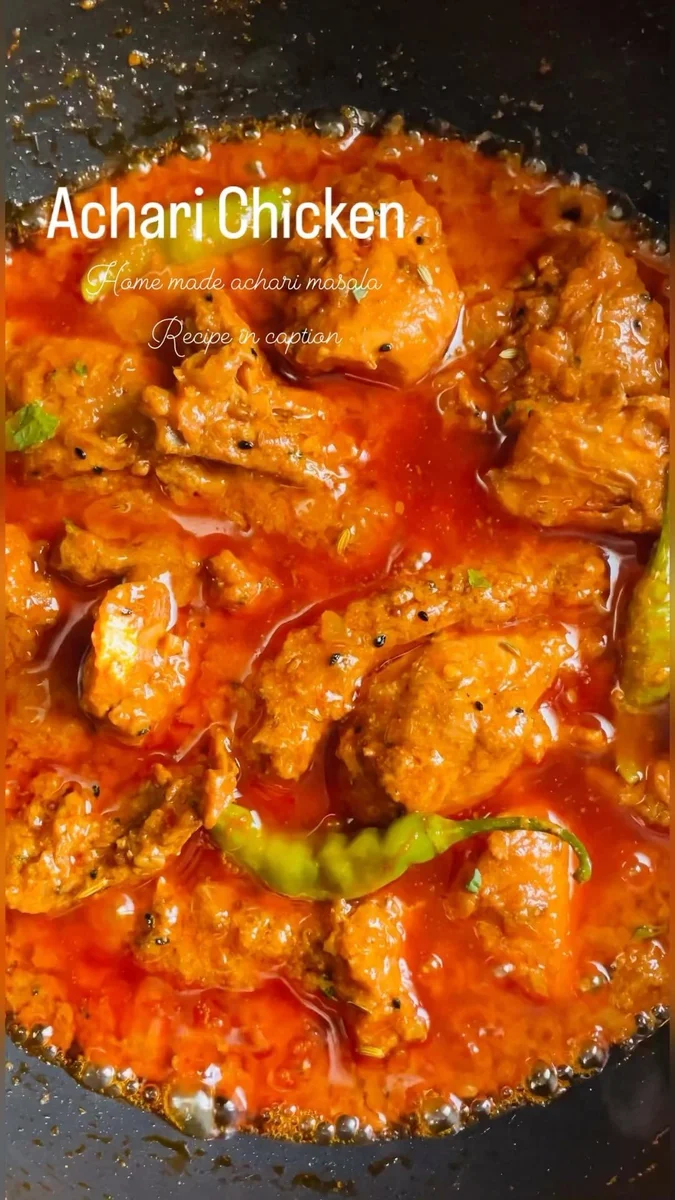
Achari chicken is a tangy, warmly spiced chicken curry flavoured with lemon, chillies and roasted pickling spices. It is cooked in one wok and is especially good with rice or flatbreads to soak up the sauce.
Ingredients
- 750 gchicken pieces
- as specified in the recipe; quantities not providedhomemade achari masala ingredients, roasted but not ground
- 1 heaped tablespoonginger and garlic paste
- 1 largeonion, chopped
- 4–5 tablespoonstomato paste or purée
- ½ cup (about 120 g)plain yoghurt, well beaten
- 4 tablespoonsfreshly squeezed lemon juice
- 4–6green chillies
- to tastesalt
- 1 teaspoonred chilli flakes
- 1 tablespoonKashmiri red pepper
- 1 teaspoonturmeric powder
- 1 tablespooncoriander powder, roasted and crushed
- ½ cup (120 ml)cooking oil
- as specified in the recipefresh coriander
Instructions
- 1
Brown the onion
Heat the oil in a wok. Add the chopped onion and fry for a few minutes, until golden brown.
- 2
Fry the chicken
Add the chicken pieces, ginger and garlic paste, salt, chilli flakes, Kashmiri red pepper, turmeric and coriander powder. Stir-fry for 3–5 minutes.
- 3
Add the sauces
Stir in the yoghurt, tomato paste or purée and freshly roasted achari masala. Fry together for a few minutes.
- 4
Cook the curry
Add ½ cup of water and cook over a low heat for 10–12 minutes, until oil rises to the surface.
- 5
Finish and serve
Stir in the lemon juice, green chillies and fresh coriander, then serve.
What is achari chicken?
Achari means pickle-style, referring to the tangy, pungent spice profile associated with South Asian pickles. This chicken curry uses roasted achari masala alongside lemon juice and green chillies for its savoury, sharp finish.
Here, the chicken is fried with onion and ground spices before simmering with yoghurt and tomato. That sequence builds a rich sauce without needing a long list of separate cooking stages.
Nutrition and macros by portion
The nutrition label shows one serving as written: 560 calories, 43g protein, 15g carbs, 37g fat.
| Portion | Adjustment | kcal | Protein | Carbs | Fat |
|---|---|---|---|---|---|
| Lighter | Use less cooking oil | 392 kcal | 30g | 11g | 26g |
| This serving | As written | 560 kcal | 43g | 15g | 37g |
| Hungry | Serve a larger portion | 840 kcal | 65g | 23g | 56g |
Chicken supplies most of the protein, while the oil contributes much of the fat and energy. The onion, tomato and yoghurt add some carbohydrate, with the exact balance depending on the cuts of chicken and amount of tomato used. Serve a moderate portion with vegetables and rice or flatbread to make a more complete plate.
The spice blend
Achari masala: the recipe calls for a homemade blend, roasted but not ground, but does not specify its component spices or quantities. Use the blend you have prepared, and keep it whole or coarsely crushed as directed.
Ground spices: Kashmiri red pepper gives colour, while turmeric and roasted, crushed coriander round out the seasoning. Add the salt to taste, bearing in mind that the sharp lemon finish will also affect how the curry tastes.
Building the sauce
Golden onion: take a few minutes to fry the onion until properly coloured; it provides a deeper base for the sauce. Stir frequently so it browns evenly rather than catching on the bottom of the wok.
Yoghurt and tomato: add both after the chicken and spices have had their initial fry. Stir well to combine them with the spices before adding the water.
Getting the chicken cooked
Initial frying: stir-frying the chicken for 3–5 minutes coats it with the aromatics and spices. Keep the pieces moving and scrape the bottom of the wok if the spice mixture starts to stick.
Low simmer: cook for 10–12 minutes after adding the water, checking that the chicken is cooked through before serving. The recipe does not specify a cut or piece size, so larger pieces may need a little longer.
How to judge the sauce
During cooking, the sauce should thicken and become glossy, with oil rising to the surface as described in the method. If it looks too thick before the chicken is done, add a small splash of water and continue cooking gently.
The lemon juice goes in at the end, keeping its fresh tang distinct from the cooked tomato and spices. Taste the sauce after adding it and adjust the salt if needed.
Serving ideas
Rice: plain steamed rice makes an easy base and catches the tangy sauce. Flatbreads are another useful choice for scooping up the chicken and gravy.
Fresh coriander: scatter it over the curry when serving for a fresh herbal note. A simple vegetable side can round out the plate.
Recipe notes & tips
- Cut the chicken into evenly sized pieces so it cooks at a similar pace.
- Have the spice blend and other ingredients ready before heating the wok.
- Stir often while browning the onion to prevent it catching.
- Use plain, unsweetened yoghurt and beat it smooth before adding.
- Add the lemon juice near the end, as the method directs, to keep its tang bright.
Variations
- Adjust the heat: Use fewer green chillies for a milder curry.
- Use chicken on the bone: Allow extra cooking time and check the pieces are cooked through.
- Choose tomato purée: Use it in place of tomato paste, as the recipe allows.
- Change the accompaniment: Serve with flatbreads instead of rice.
- Add fresh herbs: Finish with extra coriander if you enjoy its flavour.
Common mistakes to avoid
- Rushing the onion: Give it a few minutes to turn golden, stirring so it browns without burning.
- Letting spices catch: Keep the chicken and spice mixture moving in the wok.
- Adding yoghurt without stirring: Beat it smooth first, then mix it thoroughly into the chicken.
- Cooking on too high a heat: Keep the simmer low after adding water to avoid scorching the sauce.
- Serving before checking: Check the thickest chicken pieces are cooked through, allowing extra time for larger pieces.
How to store
Refrigerate leftovers in a covered container and use within 2 days. Reheat gently in a pan until steaming hot throughout, adding a splash of water if the sauce has thickened.
Frequently asked questions
What is achari masala?
It is a roasted spice blend used for a pickle-style flavour. This recipe does not list the blend's individual spices or their quantities.
Can I use tomato paste or purée?
Yes. The recipe allows either, using 4–5 tablespoons.
How can I tell when the chicken is done?
Check the thickest piece: it should be cooked through, with no raw-looking centre. Larger pieces may need longer than the stated 10–12-minute simmer.
Can I make the curry less spicy?
Use fewer green chillies and reduce the chilli flakes to suit your taste. Keep in mind that Kashmiri red pepper is also part of the seasoning.
What should I serve with achari chicken?
Serve it with rice or flatbreads, which work well with the sauce. A vegetable side is also a good addition.
Cook it from the original
This recipe comes from fooooods.com. Their page has the author’s own photos, notes and tips — the best place to cook it from.
Open the recipe on fooooods.com