
Bhuna Gosht
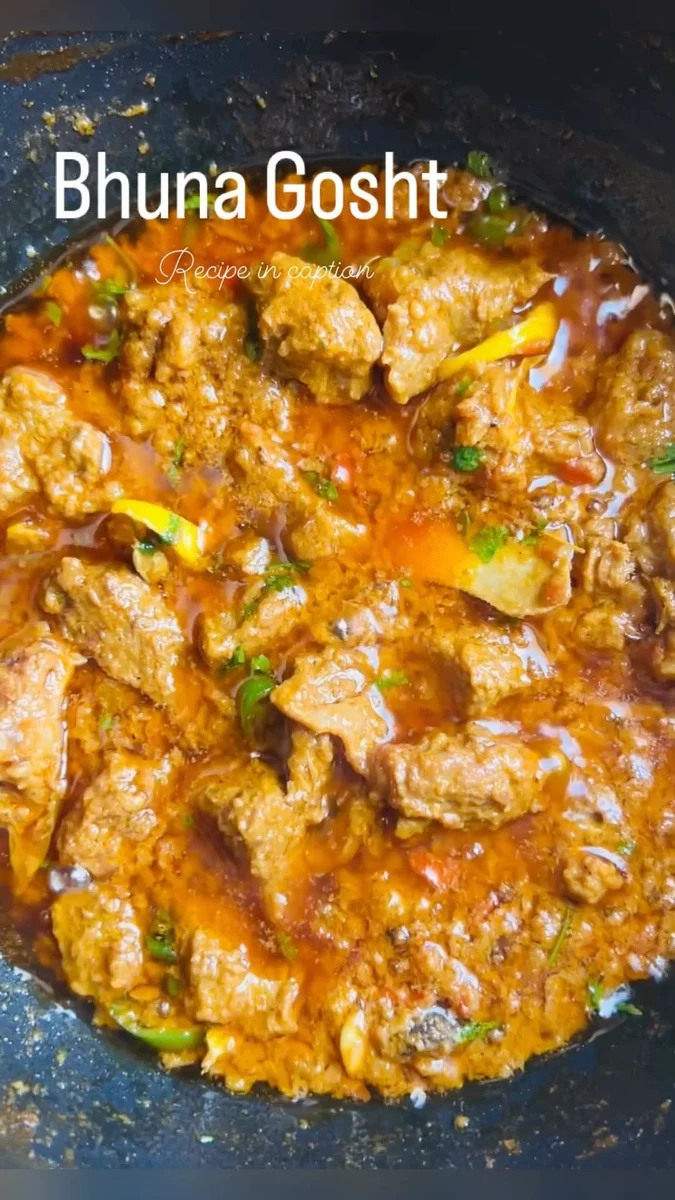
Bhuna Gosht is a warmly spiced meat curry, marinated with yoghurt and cooked until tender before being finished over a high heat. Serve it with roti or naan to scoop up the thick, flavourful sauce.
Ingredients
- 750 gbeef or mutton, on the bone or boneless
- 1 tablespoon (optional, but recommended)raw papaya paste or meat tenderiser
- 1 tablespoonginger and garlic paste
- 170 gplain yoghurt, beaten
- to tastesalt
- 1 tablespoonred chilli powder
- 1 tablespoonKashmiri red chilli powder
- 1 teaspoonturmeric powder
- 1 tablespoonground cumin
- 1 tablespoonground coriander
- 1 tablespoongaram masala or allspice powder
- to tasteoil
- to tasteonion, chopped
- to tastewhole spices
- 2 cups (about 470 ml)water
- to tastetomato purée and paste
- to tastegreen chillies, chopped
- to tastefresh coriander, chopped
- to tastelemon slices
Instructions
- 1
Marinate the meat
Mix the meat with the raw papaya paste or tenderiser, ginger and garlic paste, yoghurt, salt, chilli powders, turmeric, cumin, coriander and garam masala or allspice. Cover and marinate for 4–6 hours.
- 2
Fry the onion
Heat oil in a wok, add the chopped onion and sauté for 3–5 minutes.
- 3
Release the spices
Add the whole spices and sauté for another 3–5 minutes, until fragrant.
- 4
Brown the meat
Add the marinated meat and cook over a medium heat for 5 minutes, until its colour changes.
- 5
Simmer until tender
Pour in 2 cups (about 470 ml) of water. Cook over a low-to-medium heat for 35–40 minutes, until the meat is tender.
- 6
Reduce with tomato
Add the tomato purée and paste, then cook over a high heat for 5 minutes, until oil rises to the surface.
- 7
Garnish and serve
Finish with chopped green chillies, fresh coriander and lemon slices. Serve with roti or naan.
What is Bhuna Gosht?
Bhuna Gosht is a South Asian meat curry whose name points to the technique of frying or cooking ingredients down until their flavours concentrate. Recipes vary by household and region, and this version uses a yoghurt-and-spice marinade before simmering the meat.
The slow cook makes the meat tender, while the final high-heat stage reduces the tomato mixture and brings oil to the surface. That finish gives the sauce a more concentrated character than a thin, brothy curry.
Nutrition and macros by portion
The nutrition label shows one serving as written: 480 calories, 39g protein, 12g carbs, 29g fat.
| Portion | Adjustment | kcal | Protein | Carbs | Fat |
|---|---|---|---|---|---|
| Lighter | Less oil, more vegetables | 336 kcal | 27g | 8g | 20g |
| This serving | As written | 480 kcal | 39g | 12g | 29g |
| Hungry | Larger meat portion | 720 kcal | 59g | 18g | 44g |
The meat supplies most of the protein, while the yoghurt adds some protein and fat; the oil contributes much of the added fat. The recipe does not give quantities for the oil, onion or tomato mixture, and the bread is served alongside, so the carbohydrate content of a plate will depend on how much bread you add. Pair a moderate portion with vegetables for a more varied meal.
The marinade matters
Papaya paste: It is optional in this recipe but recommended as a tenderising addition. Use it in the marinade with the yoghurt, ginger and garlic, and spices.
Yoghurt: Beating it before mixing helps it combine evenly with the seasonings. Allow the stated 4–6 hours for the meat to marinate.
Build the flavour in stages
Onion: Sauté the chopped onion in oil for 3–5 minutes before adding the whole spices. The recipe does not specify how finely to chop it, so aim for pieces that cook evenly.
Whole spices: Give them another 3–5 minutes in the wok, stopping when they smell aromatic. Keep them moving so they release their aroma without scorching.
Check the meat for doneness
Simmering: After the meat changes colour, add the water and cook for 35–40 minutes over low to medium heat. The recipe’s cue is tenderness, so check a piece before moving on; cooking time can vary with the cut and whether it is on the bone.
Finish: Once the tomato purée and paste are added, cook on high for 5 minutes, until oil rises to the surface. Keep an eye on the wok as the sauce reduces.
How to serve it
Bread: Roti or naan is suggested for serving and works well for scooping up the thick sauce. Add the green chillies, coriander and lemon slices as the finishing garnish.
Balance: If serving a full meal, pair the curry with a vegetable side and choose a portion of bread that suits your appetite.
Plan around the cooking time
Marinating: The meat needs 4–6 hours in the yoghurt and spice mixture, so prepare it ahead of cooking. The recipe gives no total time, but the marinating period is separate from the cooking steps.
Simmering: Allow 35–40 minutes for the meat to become tender, followed by 5 minutes on high with the tomato mixture. Use tenderness and the oil rising to the surface as the cues to proceed and finish.
Recipe notes & tips
- Marinate the meat for the full 4–6 hours if your schedule allows.
- Use a wok large enough to stir the meat and spices without crowding them.
- Keep the whole spices moving as they cook so they become fragrant without burning.
- Check tenderness before adding the tomato mixture, since cuts and bone-in pieces can cook at different rates.
- Watch closely during the final 5 minutes over high heat as the sauce reduces.
- Add the coriander, green chillies and lemon slices just before serving.
Variations
- Choose mutton: Use mutton instead of beef, as allowed by the recipe.
- Go boneless: Use boneless meat for a version without bones at the table.
- Skip papaya: Leave out the optional raw papaya paste and use the listed meat tenderiser if desired.
- Adjust the heat: Reduce the red chilli powder for a milder curry.
- Change the spice: Choose garam masala or allspice powder for the marinade.
Common mistakes to avoid
- Short marinating: Give the meat 4–6 hours in the yoghurt and spices as directed.
- Scorched whole spices: Stir them for the stated 3–5 minutes and take care not to let them burn.
- Rushing the simmer: Cook until the meat is tender, rather than relying on the clock alone.
- Skipping the colour cue: Wait until the meat changes colour during the 5-minute medium-heat stage.
- Leaving the finish unattended: Watch the sauce during its 5 minutes on high heat until oil rises to the surface.
How to store
Cool leftovers promptly and refrigerate them in a covered container for up to 3 days. Reheat thoroughly in a pan over a gentle heat, adding a splash of water if the sauce has thickened too much.
Frequently asked questions
Can I use boneless meat?
Yes. The recipe allows either meat on the bone or boneless meat.
Is raw papaya essential?
No, it is marked optional, though recommended. The ingredient list also gives meat tenderiser as an alternative.
How long should I marinate the meat?
Marinate it with the yoghurt, ginger and garlic paste, papaya or tenderiser, and spices for 4–6 hours.
How do I know the meat is ready?
After simmering for 35–40 minutes, check that the meat is tender. Cooking time may vary depending on the cut and whether it is bone-in.
What should I serve with Bhuna Gosht?
The recipe suggests roti or naan. It is also easy to serve with a vegetable side.
What does the final high-heat stage do?
It cooks the meat with the tomato purée and paste for 5 minutes, reducing the mixture until oil rises to the surface.
Cook it from the original
This recipe comes from fooooods.com. Their page has the author’s own photos, notes and tips — the best place to cook it from.
Open the recipe on fooooods.com