
Easy Baked Dijon Salmon
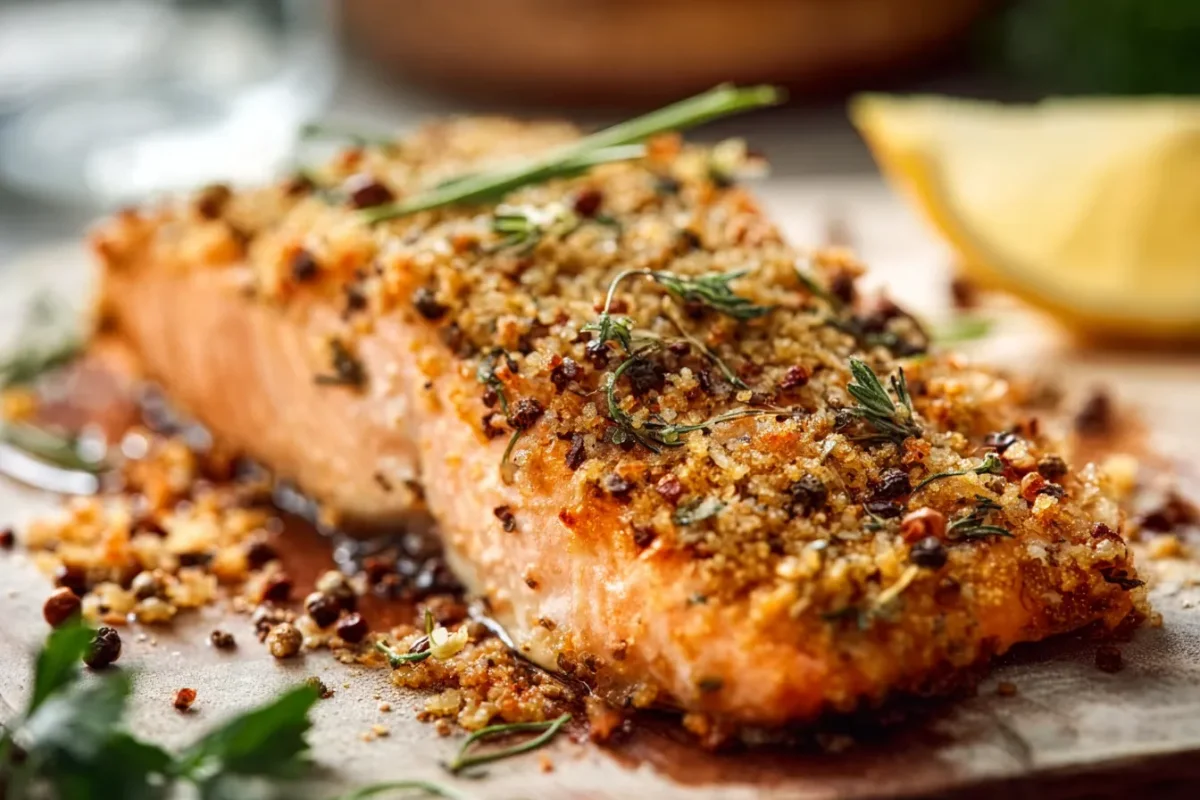
This baked salmon is coated with a tangy Dijon, lemon and herb glaze, then roasted until tender and flaky. It makes a quick weeknight main with little preparation and pairs easily with vegetables or a grain.
Ingredients
- 2 tablespoons (30 ml)Dijon mustard
- 1 tablespoon (15 ml)olive oil
- 1 tablespoon (15 ml)lemon juice
- 1 teaspoon (5 ml)garlic powder
- 1/2 teaspoon (2.5 ml)dried dill
- 1/4 teaspoon (1.25 ml)salt
- 1/4 teaspoon (1.25 ml)black pepper
- Not specifiedsalmon fillets
- To tastefresh parsley, chopped, for garnish
- To tastelemon wedges, for garnish
Instructions
- 1
Heat the oven
Preheat the oven to 200°C (400°F). Line a baking sheet with parchment paper.
- 2
Mix the glaze
In a small bowl, whisk together the Dijon mustard, olive oil, lemon juice, garlic powder, dried dill, salt and black pepper.
- 3
Arrange the salmon
Place the salmon fillets on the prepared baking sheet.
- 4
Coat the fillets
Spread the Dijon mixture evenly over the top of each fillet.
- 5
Bake the salmon
Bake for 12–15 minutes, until the salmon is cooked through and flakes easily with a fork.
- 6
Let it rest
Remove the salmon from the oven and leave it to rest for a couple of minutes before serving.
- 7
Garnish and serve
If desired, finish with chopped fresh parsley and lemon wedges.
What is baked Dijon salmon?
It is a simple baked fish dish dressed with a sharp, savoury mustard mixture. Dijon mustard, a French-style condiment, gives the glaze its distinctive tang, while the American-style preparation keeps the cooking straightforward.
Here, lemon juice and dried dill brighten the mustard and complement the salmon. A short bake lets the fish remain moist while the glaze seasons its surface.
Nutrition and macros by portion
The nutrition label shows one serving as written: 350 calories, 0g protein, 0g carbs, 0g fat.
| Portion | Adjustment | kcal | Protein | Carbs | Fat |
|---|---|---|---|---|---|
| Lighter | More vegetables, less oil | 245 kcal | 0g | 0g | 0g |
| This serving | As written | 350 kcal | 0g | 0g | 0g |
| Hungry | Add rice or potatoes | 525 kcal | 0g | 0g | 0g |
Salmon provides most of the protein and fat, while the olive oil adds further fat; the mustard and seasonings contribute comparatively little. Serve a fillet with vegetables and a modest portion of rice or potatoes to make a balanced plate.
Why the glaze works
Mustard: Dijon brings both acidity and a smooth texture, helping the other glaze ingredients cling to the fish.
Lemon and herbs: Lemon juice cuts through the richness of salmon, while dill adds a gentle herbal note. Garlic powder seasons the glaze without needing extra preparation.
Getting the fish ready
Even placement: Arrange the fillets on the lined baking sheet with space between them so they bake rather than crowd together.
Coating: Spread the mustard mixture across the top of each fillet as evenly as possible. The recipe does not specify the fillet size, so check for doneness within the stated baking window.
How to tell when it is done
Flake test: Begin checking after 12 minutes. The salmon is ready when it is cooked through and separates easily into flakes with a fork.
Rest: Give the fish a couple of minutes out of the oven before serving. This brief pause makes it easier to transfer without breaking the fillets.
Timing and preparation
Quick mixing: The glaze comes together in one small bowl while the oven heats. Line the baking sheet before adding the fish to keep the preparation simple.
Bake window: The stated cooking time is 12–15 minutes, within a total preparation and cooking time of 25 minutes. Fillet thickness can affect how quickly the fish cooks, so use the flaking cue as well as the timer.
What to serve alongside
Vegetables: Serve with roasted or steamed greens, such as broccoli or green beans, for a fresh contrast to the savoury glaze.
Something filling: Rice, potatoes or crusty bread can round out the plate. Add a lemon wedge at the table for anyone who wants extra citrus.
Recipe notes & tips
- Whisk the glaze until the oil and lemon juice are evenly combined.
- Line the baking sheet with parchment to make serving and clean-up easier.
- Spread the mixture over the tops of the fillets rather than leaving it pooled in one spot.
- Start checking the fish at 12 minutes, especially if the fillets are small or thin.
- Add the parsley and lemon wedges just before serving for a fresh finish.
Variations
- Fresh dill: Use chopped fresh dill in place of dried dill for a brighter herbal flavour.
- Whole-grain mustard: Swap in whole-grain mustard for a coarser glaze with mustard seeds.
- Extra citrus: Add a little lemon zest to the glaze for a more pronounced lemon aroma.
- Mild heat: Stir a pinch of chilli flakes into the mustard mixture for gentle warmth.
- Herb finish: Scatter chopped chives over the salmon along with the parsley.
Common mistakes to avoid
- Guessing the bake time: Fillet thickness varies, so check from 12 minutes and stop when the fish flakes easily.
- Uneven coating: Spread the glaze across the top of every fillet so each gets seasoned.
- Crowding the tray: Leave space between fillets to help them bake evenly.
- Skipping the rest: Give the cooked salmon a couple of minutes before transferring it to plates.
- Overdoing the garnish: Add parsley and lemon to taste so they complement rather than overwhelm the Dijon glaze.
How to store
Refrigerate leftover salmon in a covered container and eat within 3 days. Reheat gently until hot throughout, or enjoy it chilled in a salad.
Frequently asked questions
Can I use frozen salmon?
Yes, thaw it completely in the refrigerator first and pat it dry before adding the glaze. Follow the recipe's flaking cue, as the cooking time depends on the fillets.
Can I prepare the Dijon mixture ahead?
Yes, mix it shortly ahead and keep it covered in the refrigerator. Stir it again before spreading it over the salmon.
How do I know the salmon is cooked?
It should be cooked through and flake easily with a fork. Begin checking at 12 minutes, since fillet thickness can change the timing.
Can I bake the salmon without parchment?
Yes, use a lightly oiled baking sheet instead. Parchment mainly helps prevent sticking and makes clean-up easier.
What can I use instead of dried dill?
Chopped fresh dill is a suitable substitute. Add it to the glaze in place of the dried herb.
Cook it from the original
This recipe comes from besthomemaderecipes.com. Their page has the author’s own photos, notes and tips — the best place to cook it from.
Open the recipe on besthomemaderecipes.com