
Lasagne alla Bolognese
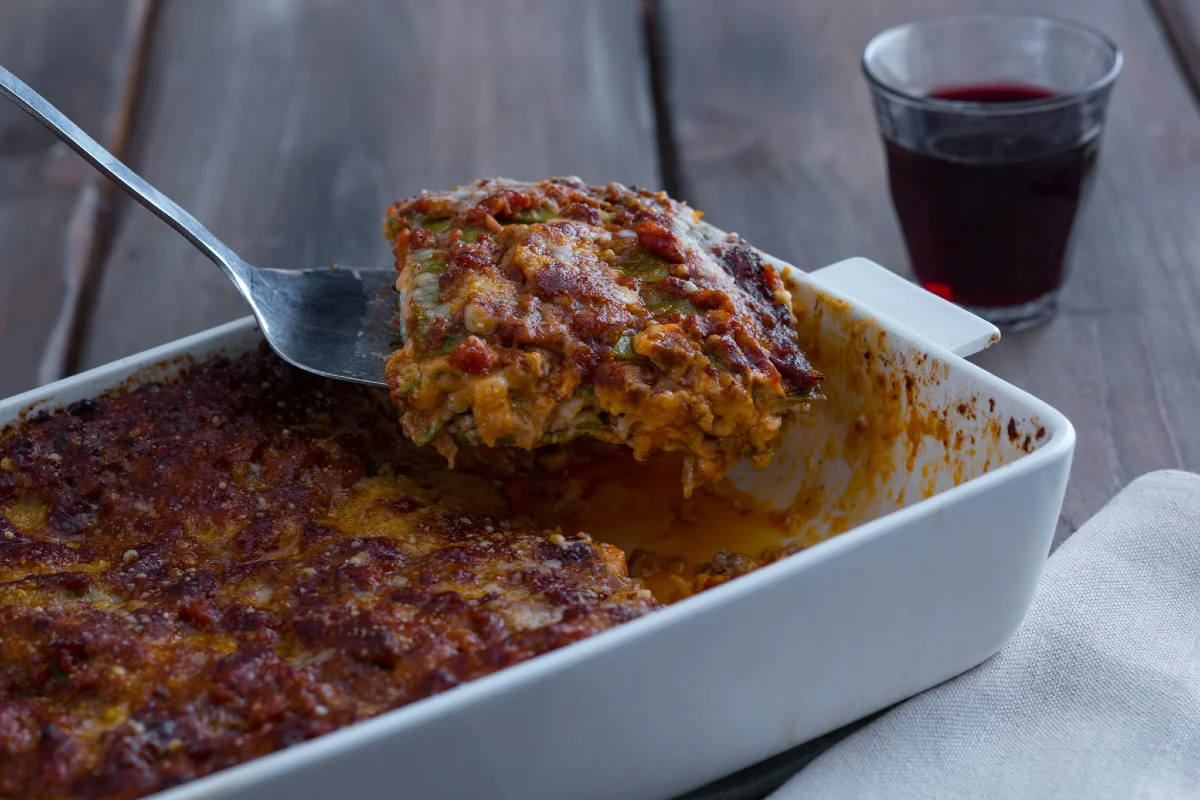
This traditional baked lasagne layers spinach pasta with slow-cooked Bolognese ragù, béchamel and Parmesan. It is a generous Sunday-lunch project, with each component prepared separately before the dish is assembled and baked.
Ingredients
- 350 gremilled durum wheat semolina
- 150 g00 flour
- 250 gspinach
- 2eggs
- 3egg yolks
- 300 gbeef mince, coarsely ground
- 150 gpancetta
- 50 gcarrots
- 50 gcelery
- 50 ggolden onions
- 100 gred wine
- 300 gpassata
- to tastevegetable stock
- 1 spoonfulextra-virgin olive oil
- to tastefine salt
- to tasteblack pepper
- 70 gbutter
- 70 g00 flour
- 1 lwhole milk
- to tastefine salt
- to tastenutmeg
- to tastebutter
- 270 gParmigiano Reggiano DOP
Instructions
- 1
Prepare the ragù
Make the vegetable stock and keep it hot. Cut the pancetta into strips, then chop it finely with a knife or mezzaluna. Finely chop the carrots, onions and celery and set them aside.
- 2
Brown the meat
Heat a little oil in a casserole and add the pancetta, breaking it up with a wooden spoon. Brown it for a few minutes, then add the chopped vegetables and cook for 5–6 minutes. Add the mince, raise the heat and brown it thoroughly.
- 3
Simmer the ragù
Pour in the red wine to deglaze the pan and wait until it has evaporated completely. Stir in the passata. Once the ragù comes back to a simmer, add a ladle or two of hot stock, then cook it for at least a couple of hours.
- 4
Cook the spinach
Keep the casserole covered but not sealed, checking and stirring the ragù occasionally. Add more hot stock if needed. Meanwhile, put the spinach in a pan with a little water, cover and cook until wilted.
- 5
Drain the spinach
Cook the spinach for 5–6 minutes in total. Drain it, leave it to cool a little, then squeeze it thoroughly and transfer it to a blender.
- 6
Make spinach purée
Blend the spinach until smooth; you should have 100 g of purée. Tip the semolina and 00 flour onto a work surface, add the purée and shape the mixture into a well.
- 7
Knead the pasta
Lightly beat the eggs and add them to the well, followed by the beaten yolks. Work from the centre so the eggs stay contained, then knead until the dough is even.
- 8
Rest the dough
Wrap the dough in cling film and leave it at room temperature for 30 minutes. While it rests, keep an eye on the ragù and start the béchamel by warming the milk in a pan without bringing it to the boil.
- 9
Make the roux
In a separate pan, melt the butter. Add the flour all at once and cook for a few minutes, until the roux is golden. Pour in the hot milk in three additions, mixing well each time.
- 10
Finish the béchamel
Season with salt and nutmeg, then keep stirring until the béchamel is creamy. Transfer it to a bowl, cover the surface with cling film and set it aside. Once the dough has rested for 30 minutes, cut off a piece and keep the remaining dough covered so it does not dry out.
- 11
Roll the pasta
Dust the work surface with a little semolina, flatten a piece of dough into a rectangle and feed it through the pasta machine, starting at the widest setting. Fold it over and pass it through again; dust with semolina if it feels too damp. Gradually reduce the setting until the sheet is just over 0.5 mm thick, then cut it into 30 x 20 cm rectangles. Repeat with the remaining dough. Bring a large pan of salted water to the boil and cook the sheets one at a time.
- 12
Blanch the sheets
Cook each pasta sheet for 30–40 seconds, then lift it out with a slotted spoon. Lay it on a tray lined with a tea towel and pat away excess water. Keep the cooked sheets side by side rather than stacking them. When the ragù is ready, season it with salt and pepper.
- 13
Start assembling
Butter the base of a large 30 x 20 cm lasagne dish. Spread on a thin layer of béchamel and ragù, then lay the first pasta sheet over it.
- 14
Layer the lasagne
Add a layer of béchamel and ragù, followed by grated Parmesan, then another pasta sheet.
- 15
Build five layers
Continue layering béchamel, ragù, grated cheese and pasta until you have made five layers. After placing the final pasta sheet, spoon ragù over it.
- 16
Bake the lasagne
Spread the ragù so it completely covers the pasta. Sprinkle over the grated cheese and add small pieces of butter. Bake in a preheated conventional oven at 170 °C for 40 minutes, then serve.
What is lasagne alla Bolognese?
Lasagne alla Bolognese is an Italian baked pasta dish built from alternating sheets of pasta, meat ragù, béchamel and cheese. It is closely associated with Emilia-Romagna, where pasta and slow-simmered ragù are central to the region’s cooking.
This version uses spinach in homemade pasta, which gives the sheets their colour and brings a savoury note. Its defining contrast is between the rich, slowly cooked ragù and the smooth béchamel.
Nutrition and macros by portion
The nutrition label shows one serving as written: 806 calories, 0g protein, 66g carbs, 43g fat.
| Portion | Adjustment | kcal | Protein | Carbs | Fat |
|---|---|---|---|---|---|
| Lighter | Smaller slice, more salad | 564 kcal | 0g | 46g | 30g |
| This serving | As written | 806 kcal | 0g | 66g | 43g |
| Hungry | Larger slice | 1209 kcal | 0g | 100g | 65g |
The pasta sheets provide most of the carbohydrates, while butter, pancetta, olive oil and cheese contribute much of the fat. Beef, milk, eggs and cheese supply protein. Pair a slice with salad or vegetables for a more balanced plate.
The ragù takes its time
Pancetta base: finely chopping the pancetta helps it render into the oil and distribute through the sauce. The carrots, celery and onions then soften for 5–6 minutes before the beef goes in.
Slow simmer: brown the beef well before adding the wine and passata. Keep the stock hot and add it as needed while the ragù cooks for at least a couple of hours.
Getting the pasta right
Spinach purée: squeeze the cooked leaves thoroughly before blending; excess water can make the dough sticky. The recipe specifies 100 g of purée for the dough.
Thin sheets: start the pasta machine on its widest setting and reduce the thickness gradually. The finished sheets should be just over 0.5 mm thick, then cut to 30 x 20 cm.
A smooth béchamel
Golden roux: cook the butter and flour for a few minutes until golden, rather than leaving the flour raw. Add the hot milk in three stages and mix well as you go.
Creamy finish: stir continuously until the sauce thickens and turns smooth. Cover its surface with cling film while it waits to help prevent a skin forming.
Blanch and handle the sheets
Quick cooking: lower each sheet into boiling salted water for 30–40 seconds. Lift it out with a slotted spoon so it keeps its shape.
Drying: lay the sheets on a tea towel and pat off excess water. Keep them side by side rather than stacking them, which helps stop them sticking together.
Layering and baking
First layer: butter the 30 x 20 cm dish, then spread a thin coating of béchamel and ragù before adding pasta. Repeat with sauce and grated Parmesan, building five layers.
Top: finish with ragù spread all the way across the final pasta sheet, then add cheese and small pieces of butter. Bake in a preheated conventional oven at 170 °C for 40 minutes.
What to serve alongside
A crisp green salad or simply dressed seasonal vegetables offer a fresh contrast to the rich layers. Keep side dishes straightforward so the ragù, béchamel and Parmesan remain the focus.
Because this is a substantial main course, serve moderate slices and let anyone who wants more come back for another portion.
Recipe notes & tips
- Keep the vegetable stock hot so it does not cool the ragù when you add it.
- Squeeze the spinach well before blending to avoid adding excess moisture to the pasta dough.
- Cover any pasta dough you are not rolling to stop its surface drying out.
- Dust sticky pasta lightly with semolina as you feed it through the machine.
- Lay blanched sheets side by side on a tea towel rather than piling them up.
- Spread the final ragù layer to the edges so the top pasta is covered before baking.
Variations
- More vegetables: serve the lasagne with a generous side of seasonal greens.
- A different cheese: use another hard, finely grated cheese in place of some or all of the Parmesan.
- Pasta machine: roll the dough by hand if needed, keeping the sheets as thin and even as possible.
- Make-ahead ragù: cook the ragù in advance and chill it until you are ready to assemble the lasagne.
- Individual portions: assemble the layers in smaller ovenproof dishes, keeping the same layering order.
Common mistakes to avoid
- Wet spinach: squeeze it thoroughly after cooking so extra water does not make the dough difficult to handle.
- Pale beef: brown the mince well before adding the wine to build flavour in the ragù.
- Rushed ragù: allow at least a couple of hours of gentle cooking, adding hot stock when needed.
- Lumpy béchamel: add the hot milk in three additions and mix thoroughly after each one.
- Stacked pasta sheets: keep blanched sheets side by side on the towel to reduce sticking.
- Uncovered top sheet: spread ragù over the entire final pasta layer before adding cheese and butter.
How to store
Cool leftovers, cover and refrigerate for up to 3 days. Reheat individual portions in the oven or microwave until hot throughout; add a small splash of water before reheating if the pasta seems dry.
Frequently asked questions
Can I make the ragù ahead?
Yes. Cook it ahead, let it cool and refrigerate it in a covered container until you are ready to assemble the lasagne.
Why is the spinach squeezed before blending?
Removing excess water makes it easier to measure the stated 100 g of purée and helps keep the pasta dough manageable.
How thin should the pasta sheets be?
Roll them to just over 0.5 mm thick, then cut them into 30 x 20 cm rectangles.
Do I need to cook the pasta sheets first?
In this recipe, yes. Blanch each sheet in boiling salted water for 30–40 seconds, then drain and pat it dry.
How many layers should I make?
The method calls for five layers. Finish with ragù covering the final pasta sheet, then add the grated cheese and small pieces of butter.
What oven temperature and baking time should I use?
Bake in a preheated conventional oven at 170 °C for 40 minutes.
Cook it from the original
This recipe comes from giallozafferano.es. Their page has the author’s own photos, notes and tips — the best place to cook it from.
Open the recipe on giallozafferano.es