
Sausage and Pepper Skillet Recipe
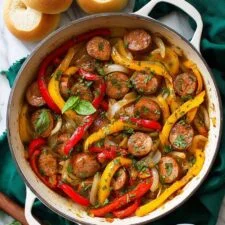
Sausage and pepper skillet brings browned Italian sausage together with sweet peppers, onion and a tomato-rich pan sauce. It makes a hearty dinner in one pan and works just as well in a hoagie bun as alongside potatoes, rice, polenta or pasta.
Ingredients
- 5 links (567 g total; 20 oz)Italian sausages, mild or spicy
- 15 ml (1 tbsp)olive oil
- 2 largebell peppers, one red and one yellow or green, cored and sliced
- 1 largeyellow onion, sliced
- 45 ml (3 tbsp)tomato paste
- 15 ml (1 tbsp)minced garlic
- 2.5 ml (½ tsp), or to tastered pepper flakes
- 180 ml (¾ cup), plus up to 60 ml (¼ cup) more if neededlow-sodium chicken broth
- 15 ml (1 tbsp)balsamic vinegar
- 1 largeRoma tomato, halved and sliced
- 3 tbspchopped fresh basil
- 5 ml (1 tsp)dried oregano
- 25 g (¼ cup)finely shredded Parmesan
- To garnishchopped fresh basil or parsley
- To tastesalt
- To tasteblack pepper
Instructions
- 1
Brown the sausages
Heat the olive oil in a large skillet over medium heat. Add the sausage links and brown them on all sides, about 8–10 minutes. Transfer them to a plate, leaving the rendered fat in the skillet.
- 2
Soften the vegetables
Set the skillet back over medium heat. Add the sliced bell peppers and onion and sauté for 3 minutes, until they begin to soften.
- 3
Cook the aromatics
Stir in the tomato paste, minced garlic and red pepper flakes. Cook for 1 minute, until fragrant.
- 4
Combine the sauce
Pour in the chicken broth and balsamic vinegar. Add the sliced Roma tomato, chopped basil and dried oregano, then season with salt and pepper to taste. Stir and nestle the browned sausages into the pepper mixture.
- 5
Simmer until cooked
Bring the mixture to a simmer, then turn the heat to low. Cover and cook for about 10 minutes, until the sausages reach an internal temperature of 71°C (160°F) and the peppers are tender. If the sauce needs thinning, add up to 60 ml (¼ cup) more chicken broth.
- 6
Rest the sausages
Lift the sausages from the pan and rest them on a cutting board, tented with foil, for 5 minutes. Keep the pepper mixture warm in the covered skillet.
- 7
Toss and serve
Slice the sausages and return them to the skillet. Add the shredded Parmesan and toss everything together. Garnish with fresh basil or parsley and serve hot in hoagie buns or with potatoes, rice, polenta or pasta.
What is sausage and pepper skillet?
This Italian-American favourite pairs sausage with peppers and onions, cooked together until their flavours mingle in a savoury sauce. It is often served in a long roll, though it also makes a substantial plate with a starchy side.
This version builds a tomato-based pan sauce with tomato paste, fresh tomato, broth and balsamic vinegar. Browning the sausages first leaves flavour in the skillet for the vegetables and sauce to pick up.
Nutrition and macros by portion
The nutrition label shows one serving as written: 380 calories, 25g protein, 10g carbs, 25g fat.
| Portion | Adjustment | kcal | Protein | Carbs | Fat |
|---|---|---|---|---|---|
| Lighter | Serve without a bun | 266 kcal | 18g | 7g | 18g |
| This serving | As written | 380 kcal | 25g | 10g | 25g |
| Hungry | Add a larger side | 570 kcal | 38g | 15g | 38g |
The sausages provide most of the protein and fat, while the peppers and onion contribute a smaller amount of carbohydrate; the broth-based sauce adds relatively little. For a balanced plate, serve a portion with vegetables or a modest helping of rice, potatoes, polenta or pasta.
Why brown the sausages first?
Sausage colour: Give the links time to brown on all sides before taking them out of the pan. The recipe leaves the rendered fat behind, which helps carry flavour into the vegetables.
Don’t rush: The sausages finish cooking later in the covered pan, so browning at this stage is not the final doneness check.
Build flavour in the pan
Vegetable base: Sauté the peppers and onion for 3 minutes, just until they begin to soften. They will continue cooking as the sausages simmer in the sauce.
Tomato and garlic: Cook the tomato paste, garlic and red pepper flakes for 1 minute before adding liquid. This brief step helps release their aroma without letting the garlic cook for too long.
Get the sauce consistency right
Deglaze: Add the broth and balsamic vinegar after the aromatics, then stir in the tomato, basil and oregano. The liquid loosens the tomato paste and helps bring the ingredients together.
Adjust: The sauce should coat the peppers without being too thick to simmer. Add the optional extra broth if it needs thinning, rather than pouring it in automatically.
Check the sausages and peppers
Temperature: Cook the covered mixture on low for about 10 minutes, checking that the sausages reach 71°C (160°F) internally. A food thermometer is the clearest way to check the stated temperature.
Texture: The peppers should be tender, while still holding their shape. Rest the sausages for 5 minutes before slicing so the final pieces are easier to handle.
Choose how to serve it
In a bun: Spoon the sausage and pepper mixture into hoagie buns for a filling, hand-held meal.
On a plate: Serve it with potatoes, rice, polenta or pasta to catch the tomato sauce. Finish with the fresh herb garnish and Parmesan already tossed through the skillet.
Recipe notes & tips
- Use a skillet large enough to fit the sausages and vegetables without crowding them.
- Choose mild or spicy Italian sausages to suit your preference.
- Slice the peppers and onion to similar thickness so they soften at a similar rate.
- Keep the extra broth aside and add it only if the sauce seems too thick.
- Check the thickest sausage with a thermometer to confirm it reaches 71°C (160°F).
- Let the sausages rest for the full 5 minutes before slicing.
Variations
- Change the heat: Use mild sausages and omit or reduce the red pepper flakes for a gentler skillet.
- Pick your peppers: Use a yellow or green pepper in place of the second pepper colour.
- Herb finish: Garnish with chopped parsley instead of fresh basil.
- Serve in rolls: Spoon the mixture into hoagie buns for a sandwich-style meal.
- Choose a side: Serve with rice, potatoes, polenta or pasta instead of buns.
Common mistakes to avoid
- Skipping the browning: The sausages miss the first flavour-building step; brown them on all sides before setting them aside.
- Overcooking the garlic: It can lose its fresh aroma; cook it with the tomato paste and flakes for just 1 minute.
- Adding all the extra broth: The sauce may become too thin; add the optional 60 ml only if needed.
- Guessing the doneness: Check the sausages with a thermometer and cook until they reach 71°C (160°F).
- Slicing straight away: The links are harder to handle; let them rest for 5 minutes first.
How to store
Refrigerate leftovers in an airtight container and use within 3–4 days. Reheat gently in a covered skillet until hot throughout, adding a splash of broth if the sauce has thickened.
Frequently asked questions
Can I use mild or spicy sausage?
Either works. The recipe also includes red pepper flakes, so adjust those to match the heat of the sausages.
How do I know when the sausages are done?
Check the internal temperature with a food thermometer; the recipe calls for 71°C (160°F). The peppers should also be tender.
Can I make the sauce less thick?
Yes. Add some of the reserved chicken broth, up to 60 ml (¼ cup), until the sauce reaches the consistency you want.
What can I serve with this skillet?
Serve it in hoagie buns or alongside potatoes, rice, polenta or pasta.
Can I prepare it ahead?
You can cook the skillet ahead and refrigerate it, then reheat gently in a covered pan. Add a splash of broth if the sauce has thickened.
Cook it from the original
This recipe comes from bakingwithmaya.com. Their page has the author’s own photos, notes and tips — the best place to cook it from.
Open the recipe on bakingwithmaya.com