
Butternut Squash Curry
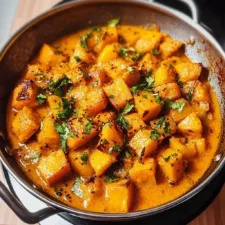
This creamy butternut squash curry combines tender squash, chickpeas and greens in a warmly spiced coconut sauce. It makes a comforting one-pot meal, with lime and fresh coriander to lift the rich flavours.
Ingredients
- 1 large (approximately 1–1.2 kg)butternut squash, peeled, seeded and cut into 2.5 cm cubes
- 15 mlcoconut oil or vegetable oil
- 1 large (approximately 1.5 cups / 225 ml chopped)yellow onion, finely chopped
- 3–4 clovesgarlic, minced
- 2.5 cm piecefresh ginger, grated or minced
- 30–45 mlThai-style red curry paste
- 5 mlground turmeric
- 5 mlground cumin
- 2.5 mlground coriander
- 400 mlfull-fat coconut milk
- 240–360 mlvegetable broth
- 1 can (425 g)chickpeas, rinsed and drained (optional)
- 2 cups (approximately 60 g)fresh spinach or kale, roughly chopped (optional)
- 15–30 mlfreshly squeezed lime juice
- 5–10 mlbrown sugar or maple syrup (optional)
- to tastesalt and freshly ground black pepper
- to tastefresh coriander leaves, chopped
- to tastered pepper flakes (optional)
Instructions
- 1
Prepare the squash
Peel the squash with a vegetable peeler, halve it lengthways and scoop out the seeds and stringy flesh. Cut the squash into even 2.5 cm cubes and set aside.
- 2
Soften the onion
Heat the coconut oil in a large Dutch oven or heavy-based pot over a medium heat. When the oil shimmers, add the onion and cook for 5–7 minutes, until softened and translucent.
- 3
Add garlic and ginger
Stir in the garlic and ginger and cook for 1–2 minutes, until fragrant. Take care not to let the garlic burn.
- 4
Bloom the spices
Add the curry paste, turmeric, cumin and ground coriander. Stir and cook for 1–2 minutes to toast the spices lightly.
- 5
Add squash and liquids
Add the squash and stir to coat it in the spice mixture. Pour in the coconut milk and 240 ml of the vegetable broth. If using the optional sugar or maple syrup, add it now, then bring the mixture to a gentle simmer.
- 6
Simmer until tender
Lower the heat, cover the pot and simmer for 15–20 minutes, stirring occasionally, until the squash is easily pierced with a fork. If the curry gets too thick, add the remaining 120 ml of broth, or more as needed.
- 7
Add chickpeas and greens
Stir in the chickpeas if using. Add the spinach or kale during the last 5 minutes of cooking, letting it wilt into the curry.
- 8
Finish the curry
When the squash is tender and the greens have wilted, take the pot off the heat and stir in the lime juice. Taste and adjust with salt, pepper, a little more sweetener or more curry paste as desired.
- 9
Garnish and serve
Spoon the curry into bowls and garnish with chopped fresh coriander and red pepper flakes, if using. Serve hot with accompaniments of your choice.
What is butternut squash curry?
Curry describes a broad family of spiced dishes, and this version takes its flavour cues from Thai-style red curry paste. Sweet squash simmers in coconut milk with aromatics and warm spices until the sauce turns creamy.
Chickpeas and leafy greens make it a substantial one-pot meal. The lime added at the end brings a sharp note that balances the richness.
Nutrition and macros by portion
The nutrition label shows one serving as written: 450 calories, 0g protein, 0g carbs, 0g fat.
| Portion | Adjustment | kcal | Protein | Carbs | Fat |
|---|---|---|---|---|---|
| Lighter | Use less coconut milk | 315 kcal | 0g | 0g | 0g |
| This serving | As written | 450 kcal | 0g | 0g | 0g |
| Hungry | Serve with extra rice | 675 kcal | 0g | 0g | 0g |
The squash and chickpeas provide most of the carbohydrates, while coconut milk and oil contribute much of the fat; chickpeas also add some protein. Pair a serving with rice or flatbread if you want a more filling plate, or add extra leafy greens alongside it.
Build the flavour base
Aromatics: Slowly soften the onion before adding garlic and ginger. This gives them time to release their flavour without scorching the garlic.
Spices: Stir the curry paste and ground spices in the pot for 1–2 minutes. Keep them moving so they toast lightly rather than sticking or burning.
Cut the squash evenly
Even cubes: Cut the squash into roughly 2.5 cm pieces so they cook at a similar rate. Smaller pieces can break down sooner, while larger ones may need extra time.
Tenderness: The squash is ready when a fork slips into a cube easily. Stir gently as it simmers to avoid crushing the pieces.
Adjust the sauce
Start with less broth: The recipe begins with 240 ml, leaving another 120 ml to loosen the curry if needed. Add it gradually, since the squash also softens into the sauce as it cooks.
Finish with lime: Stir in the lime juice off the heat, then taste before adding more seasoning. The flavour should be rich and warmly spiced, with enough acidity to keep it lively.
Choose the add-ins
Chickpeas: Rinsed, drained chickpeas add a tender, substantial element; stir them in once the squash is nearly cooked.
Leafy greens: Spinach wilts quickly, while kale stays firmer. Add either during the last 5 minutes, as directed.
Serve it with
Rice: Serve the curry with steamed rice to soak up the coconut sauce. Flatbread is another useful option for scooping.
Fresh toppings: Coriander adds a fresh, herbal finish, and red pepper flakes bring extra heat. Add them at the table so everyone can adjust their bowl.
Recipe notes & tips
- Use a large, heavy-based pot so the squash has room to simmer evenly.
- Cut the squash into similar-sized cubes to help them finish cooking together.
- Keep the heat moderate when frying the garlic and spices to prevent them catching.
- Add broth a little at a time if you prefer a thicker sauce.
- Taste after adding the lime before adjusting the salt, sweetness or curry paste.
- Check the curry paste label if you need a vegan option, as ingredients can vary.
Variations
- More heat: Use the larger amount of curry paste and finish with red pepper flakes.
- Extra greens: Add more spinach or kale during the final 5 minutes of cooking.
- A sweeter balance: Stir in the optional brown sugar or maple syrup if the squash is not very sweet.
- Milder curry: Begin with 30 ml of curry paste and add more only after tasting.
- Different beans: Replace the chickpeas with another cooked bean, adding it at the same stage.
- Herb finish: Add extra fresh coriander just before serving for a fresher flavour.
Common mistakes to avoid
- Uneven squash pieces: Cut them to roughly 2.5 cm so smaller pieces do not collapse before larger ones soften.
- Burnt garlic: Add it after the onion has softened and cook only until fragrant, about 1–2 minutes.
- Scorched spices: Stir the curry paste and ground spices continuously for their 1–2 minutes in the pot.
- Too-thick sauce: Add the reserved broth gradually until the consistency suits you.
- Mushy squash: Begin checking for tenderness at 15 minutes and stop simmering once a fork pierces it easily.
- Flat flavour: Stir in the lime juice, then taste and adjust the seasoning before serving.
How to store
Cool leftovers promptly and store them in an airtight container in the fridge for up to 3 days. Reheat gently in a saucepan, stirring occasionally; add a splash of broth or water if the sauce has thickened.
Frequently asked questions
Can I make this curry without chickpeas?
Yes. The chickpeas are optional, so you can leave them out and follow the remaining method as written.
Can I use frozen butternut squash?
Yes, use the same amount and add it straight to the pot. Check it for tenderness as it cooks, since frozen pieces may soften sooner.
How can I make the curry less spicy?
Start with 30 ml of red curry paste and omit the red pepper flakes. Taste at the end before deciding whether to add more paste.
When should I add the spinach or kale?
Stir it into the pot during the last 5 minutes of cooking so it wilts without becoming overly soft.
What can I serve with butternut squash curry?
Steamed rice or flatbread goes well with the coconut sauce. You can also serve it with extra greens.
How do I know when the squash is cooked?
Pierce a cube with a fork; it should slide in easily. If it is still firm, continue simmering and check again.
Cook it from the original
This recipe comes from betterhomerecipes.com. Their page has the author’s own photos, notes and tips — the best place to cook it from.
Open the recipe on betterhomerecipes.com