
Miso and Ginger-Glazed Salmon Recipe
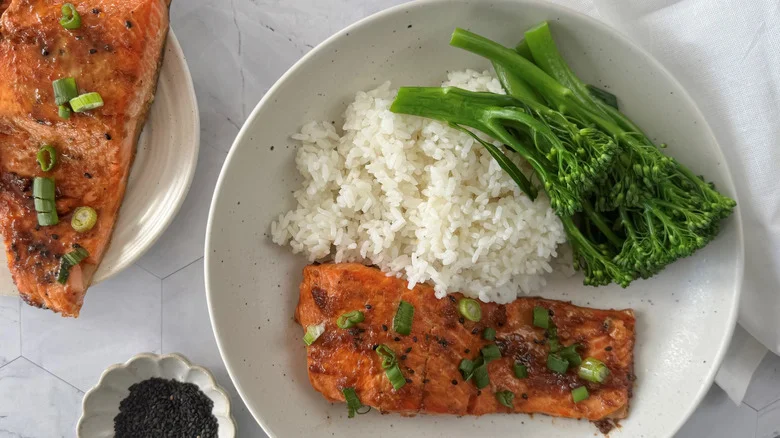
Salmon fillets are coated in a sweet, savoury miso and ginger glaze, seared in a pan and finished in the oven. It is a quick way to bring plenty of flavour to a weeknight meal.
Ingredients
- 60 ml (¼ cup)soy sauce
- 15 ml (1 tablespoon)rice vinegar
- 5 ml (1 teaspoon)sesame seeds
- 15 ml (1 tablespoon)toasted sesame oil
- 7.5 ml (1½ teaspoons)finely grated ginger
- 60 ml (¼ cup)white miso paste
- 15 ml (1 tablespoon)honey
- 4 fillets, about 170 g each (6 oz each)salmon
- 2.5 ml (½ teaspoon)sea salt
- 2.5 ml (½ teaspoon)ground black pepper
- 15 ml (1 tablespoon)avocado oil
- 3, dicedspring onions
Instructions
- 1
Preheat the oven
Heat the oven to 200°C (400°F).
- 2
Combine the glaze
Put the soy sauce, rice vinegar, sesame seeds, sesame oil, ginger, miso paste and honey in a small saucepan over medium-low heat.
- 3
Simmer the glaze
Whisk the mixture and let it simmer for 2 minutes, until thickened. Take the pan off the heat.
- 4
Season the salmon
Season the salmon lightly with the salt and pepper.
- 5
Brush on the glaze
Coat the salmon generously with the glaze.
- 6
Heat the frying pan
Warm the avocado oil in a large oven-safe frying pan over medium heat.
- 7
Sear the salmon
Set the salmon in the pan top side down and brown it lightly for 2 minutes.
- 8
Turn the fillets
Carefully flip each salmon fillet.
- 9
Bake until firm
Transfer the pan to the oven and bake the salmon for 10 minutes, or until firm and at 54°C (130°F).
- 10
Finish and serve
Scatter the diced spring onions over the salmon and serve.
What is miso-glazed salmon?
Miso-glazed salmon brings together salmon, a Japanese fermented soybean paste, and a sweet-savoury sauce. This version combines white miso with soy, ginger, rice vinegar, sesame and honey.
The method pairs a brief sear with oven baking, so the glaze gets a little colour before the fish finishes cooking. Spring onions add a fresh finish.
Nutrition and macros by portion
The nutrition label shows one serving as written: 483 calories, 39g protein, 11g carbs, 31g fat.
| Portion | Adjustment | kcal | Protein | Carbs | Fat |
|---|---|---|---|---|---|
| Lighter | More greens, less rice | 338 kcal | 27g | 8g | 22g |
| This serving | As written | 483 kcal | 39g | 11g | 31g |
| Hungry | Add rice and vegetables | 725 kcal | 59g | 17g | 47g |
The salmon provides most of the protein and fat, while the honey and glaze ingredients contribute the carbohydrates. Serve a fillet with plenty of vegetables and a measured portion of rice for a balanced plate.
Building the glaze
Miso and soy: both bring savoury depth, so the glaze needs only a short simmer to combine and thicken.
Ginger and vinegar: ginger gives the sauce a fragrant edge, while rice vinegar balances the honey's sweetness.
Sesame and honey: toasted sesame oil and seeds add a nutty note; honey helps round out the salty, tangy flavours.
Getting the sear right
Hot oil: let the avocado oil warm in the pan over medium heat before adding the fish. The recipe calls for an oven-safe frying pan, which can go straight from hob to oven.
Top side down: begin with the top side against the pan and brown it lightly for 2 minutes. Turn the fillets carefully to keep them intact and retain their coating.
Checking the fish
Temperature: the method gives 54°C (130°F) as the target temperature at the thickest part of the salmon. Check with a food thermometer if you have one.
Texture: the recipe also describes the fish as firm when done. Fillet thickness can affect how quickly it reaches that point, so use the temperature and texture cues together.
Timing the meal
Glaze first: simmer it for 2 minutes, then take it off the heat before seasoning and brushing the salmon. This keeps the cooking sequence straightforward.
Sear, then bake: give the top side 2 minutes in the pan before baking for 10 minutes. Have the oven preheated and the pan ready so the fish can move through these stages without a long pause.
Serving ideas
Rice: serve the salmon with steamed rice to complement the savoury glaze and make a simple plate.
Vegetables: add greens such as broccoli or bok choy for a fresh, lightly textured contrast. Spoon any glaze left in the pan over the fish when serving.
Recipe notes & tips
- Grate the ginger finely so it disperses evenly through the glaze.
- Whisk the glaze as it simmers to help the miso and honey blend with the liquids.
- Brush the glaze over the salmon before searing, as directed, so it is coated for the pan-to-oven method.
- Use a large oven-safe frying pan that can hold the fillets without crowding.
- Turn the fish carefully with a wide spatula to help keep the fillets whole.
- Dice the spring onions while the salmon cooks so they are ready for serving.
Variations
- Add garlic: Stir a little finely grated garlic into the glaze for extra savoury flavour.
- Use brown miso: Swap in brown miso for a deeper, more robust glaze.
- Add chilli: Mix chilli flakes into the glaze for a touch of heat.
- Finish with lime: Serve with lime wedges for a bright, citrusy contrast.
- Try another fish: Use thick white fish fillets, adjusting the cooking time to suit their thickness.
Common mistakes to avoid
- Boiling the glaze hard: Keep it at a gentle simmer so it thickens without reducing too quickly.
- Using a cold pan: Warm the avocado oil over medium heat before adding the salmon to help it brown.
- Moving the fish too soon: Let the top side brown lightly for the full 2 minutes before turning.
- Flipping roughly: Use a wide spatula and turn the fillets carefully to avoid breaking them.
- Relying only on the timer: Check for firmness and the stated 54°C (130°F) temperature, as fillets can vary in thickness.
How to store
Refrigerate leftover salmon in an airtight container and eat within 2 days. Reheat gently in a low oven or microwave until hot, taking care not to overcook it.
Frequently asked questions
Can I make the glaze ahead?
Yes. Make it ahead and refrigerate it in a covered container. Warm it gently until spreadable before brushing it over the salmon.
Can I use skin-on salmon?
Yes. The method can be used with skin-on fillets; follow the recipe's instruction to place the top side down for the initial sear.
What if I do not have an oven-safe frying pan?
Sear the salmon in a frying pan, then carefully move it to an ovenproof dish for baking.
Can I use regular sesame oil?
The recipe specifies toasted sesame oil, which has a pronounced nutty flavour. Regular sesame oil may taste milder, so the finished glaze may be less aromatic.
How do I know when the salmon is done?
The recipe says to bake until the fish is firm and reaches 54°C (130°F). Check the thickest part with a food thermometer if available.
Cook it from the original
This recipe comes from foodie.com. Their page has the author’s own photos, notes and tips — the best place to cook it from.
Open the recipe on foodie.com