
Chiffon cake
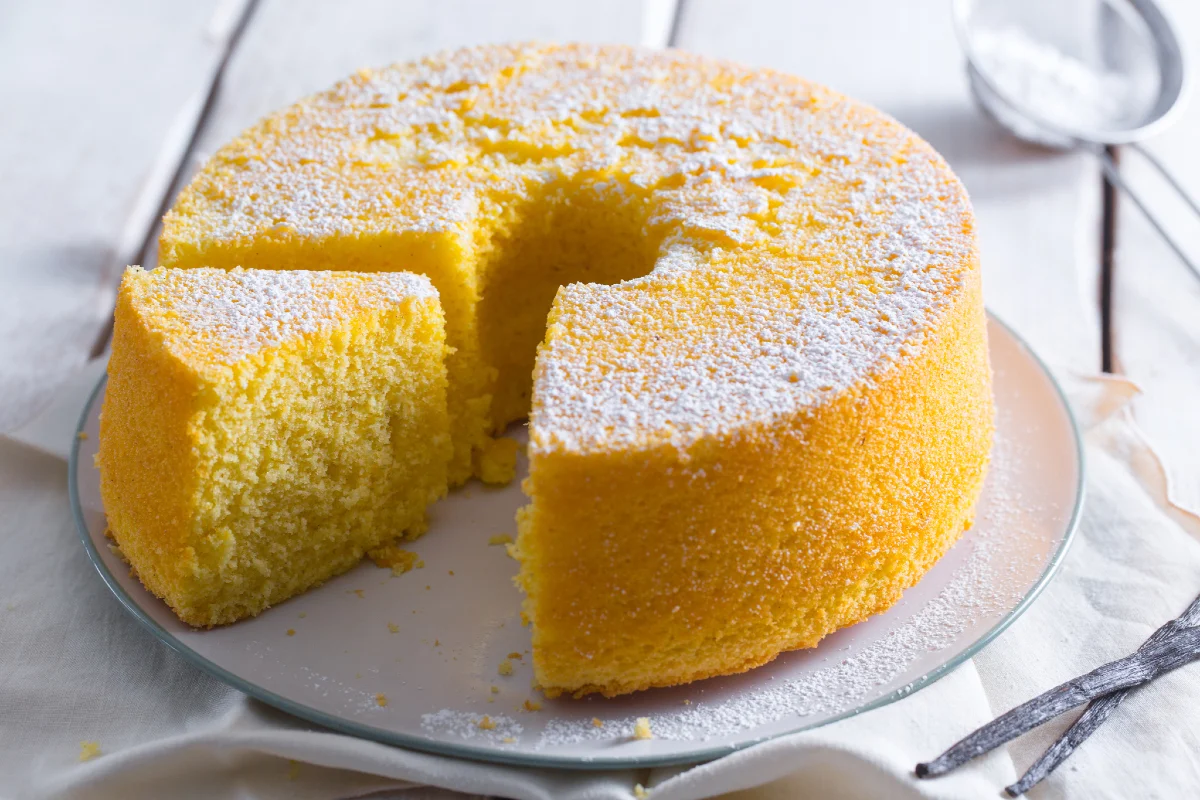
Chiffon cake is a tall, airy cake with a tender crumb and a delicate vanilla and lemon aroma. Its impressive height makes it a lovely centrepiece for breakfast or an afternoon treat.
Ingredients
- 300 gcaster sugar
- 290 gplain flour
- 200 gwater
- 120 gsunflower oil
- 385 g (about 6 medium eggs)eggs
- 1vanilla pod
- 1unwaxed lemon, zested
- 16 gbaking powder
- 8 gcream of tartar
- 2 gfine salt
- as neededicing sugar
Instructions
- 1
Sift dry ingredients
Sift the flour into a bowl, then sift in the baking powder. Add the caster sugar.
- 2
Mix and separate
Add the salt and stir the dry ingredients together. Separate the eggs, putting the yolks and whites into different bowls, then refrigerate the whites.
- 3
Combine yolk mixture
Add the room-temperature water and sunflower oil to the yolks. Stir in the zest of 1 lemon.
- 4
Add vanilla and mix
Split the vanilla pod and scrape out the seeds with the tip of a knife; add them to the yolk mixture. Whisk until smooth, without whipping it, then pour it into the dry ingredients. Whisk until the batter is smooth and lump-free, then set it aside.
- 5
Whip the whites
Take the chilled egg whites and pour them into a stand mixer bowl, or use a hand-held electric mixer. Whip until white and foamy, sift the cream of tartar over them, then continue beating for a few minutes until whipped. Stir a portion of the whites quickly into the reserved batter with a spatula to loosen it. Gradually fold in the remaining whites with an upward and downward motion, taking care not to deflate them.
- 6
Fill the tin
Gently pour the batter into an ungreased, unfloured chiffon cake tin. The tin used here is 21 cm across at the base, 25 cm across at the top and 10 cm high. Spread the batter evenly.
- 7
Bake and cool
Bake in a preheated conventional oven at 160°C for about 60 minutes, placing the cake in the lower part of the oven. For a fan oven, bake at 150°C for 45–50 minutes. Check with a skewer and remove the cake only when it comes out clean. Wait 5–10 minutes, then quickly turn the tin upside down, using a plate to help. Stand the tin on its feet so air can circulate while the cake cools and releases from the sides. Once completely cool, loosen the base with a small knife.
- 8
Release and serve
Work quickly when loosening the cake so that it does not stick and tear under its own weight. Lift off the base, dust the cake with icing sugar and serve.
What is chiffon cake?
Chiffon cake is a tall, light cake made with oil and a whipped egg-white mixture. It is associated with American baking and is known for a soft crumb that sits between a sponge cake and a richer cake.
This version uses vanilla and lemon zest for fragrance. The separate yolk batter and folded-in whites help it rise while keeping the texture airy.
Nutrition and macros by portion
The nutrition label shows one serving as written: 491 calories, 0g protein, 70g carbs, 19g fat.
| Portion | Adjustment | kcal | Protein | Carbs | Fat |
|---|---|---|---|---|---|
| Lighter | Smaller cake slice | 344 kcal | 0g | 49g | 13g |
| This serving | As written | 491 kcal | 0g | 70g | 19g |
| Hungry | Larger cake slice | 737 kcal | 0g | 105g | 29g |
The recipe’s carbohydrates mainly come from the sugar and flour, while the sunflower oil and egg yolks provide much of the fat; the eggs also contribute protein. Pair a slice with fresh fruit or yoghurt for a more balanced plate.
Why the tin stays ungreased
Unprepared tin: do not grease or flour the chiffon tin. The cake needs to cling to the sides as it rises and as it cools upside down.
Getting the egg whites right
Cold whites: keep them in the fridge while you prepare the yolk batter, as directed. Whip until white and foamy before adding the sifted cream of tartar, then continue beating until whipped.
Gentle folding: mix a little of the whites into the batter first to loosen it. Fold in the rest gradually with an up-and-down motion to preserve as much air as possible.
Checking the bake
Oven position: bake the cake in the lower part of a preheated oven at 160°C in a conventional oven, or 150°C in a fan oven. The stated baking times are about 60 minutes and 45–50 minutes respectively.
Doneness: use a skewer before removing the cake; it should come out clean. Let it stand for 5–10 minutes before turning the tin over.
Cooling it upside down
Upside-down rest: turn the tin over quickly and stand it on its feet, allowing air to circulate beneath it. Leave the cake until completely cool so it can release from the sides on its own.
Careful release: use a small knife to loosen the base, then lift it away. Work promptly so the cake does not stick and tear under its own weight.
Serving ideas
Simple finish: icing sugar gives the cooled cake a delicate finish without hiding its height. Serve it with tea or coffee for breakfast or an afternoon snack.
On the side: fresh fruit makes a bright accompaniment, while a spoonful of yoghurt can add a tangy contrast.
Recipe notes & tips
- Measure the eggs by weight, as the recipe specifies 385 g, rather than relying only on the approximate count.
- Use room-temperature water in the yolk mixture, as directed.
- Sift the flour, baking powder and cream of tartar to help keep the mixtures even.
- Fold the egg whites in gently rather than beating them into the batter.
- Use a chiffon cake tin with feet so it can stand upside down while cooling.
- Wait until the cake is completely cool before loosening the base.
Variations
- More lemon: Add extra lemon zest for a brighter citrus aroma.
- Citrus swap: Use orange zest in place of the lemon zest.
- Vanilla flavour: Add a little more vanilla by using an extra pod.
- Fruit accompaniment: Serve each slice with fresh berries or other seasonal fruit.
- Creamy side: Add a spoonful of yoghurt alongside each slice.
Common mistakes to avoid
- Greasing the tin: The cake needs to cling to the sides, so use the tin ungreased and unfloured.
- Deflating the whites: Fold them in gradually with an up-and-down motion instead of stirring vigorously.
- Skipping the skewer test: Check that the skewer comes out clean before removing the cake from the oven.
- Turning too late: After the 5–10 minute rest, turn the tin upside down promptly.
- Removing it while warm: Let the cake cool completely before loosening the base with a small knife.
How to store
Once completely cool, store the cake in an airtight container at room temperature and eat within 3 days. If you prefer it warm, reheat a slice briefly in a low oven.
Frequently asked questions
Can I use a regular cake tin?
The method is designed for a chiffon cake tin, which has feet for upside-down cooling. A regular tin may not allow the cake to cool in the same way.
Can I use a hand-held mixer?
Yes. The method allows for an electric hand mixer if you do not have a stand mixer.
How do I know the cake is baked?
Insert a skewer into the cake before taking it out of the oven. It is ready when the skewer comes out clean.
Why does the cake cool upside down?
The tin is turned upside down and stood on its feet so air can circulate while the cake cools and releases from the sides.
When should I remove the cake from the tin?
Wait until it is completely cool, then loosen the base with a small knife and lift it away.
Cook it from the original
This recipe comes from giallozafferano.es. Their page has the author’s own photos, notes and tips — the best place to cook it from.
Open the recipe on giallozafferano.es