
Black Pepper Chicken
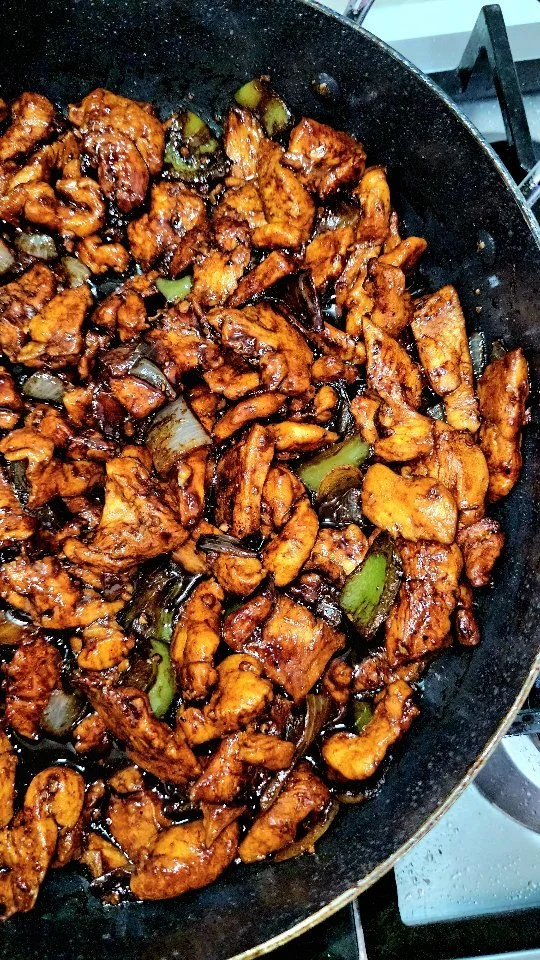
Black Pepper Chicken pairs golden pieces of chicken with onion and green capsicum in a peppery, savoury soy sauce. Cook it in batches for good browning, then simmer everything together until the sauce coats the chicken.
Ingredients
- 1 kgchicken breast, cut into thick slices or bite-sized cubes
- 2 tablespoonsoil
- to tastesalt
- 2onions, cut into cubes
- 1green capsicum, cut into cubes
- 1 teaspoonminced garlic
- 1 teaspoonminced ginger
- 2 tablespoonscornstarch
- 1 teaspoonfreshly ground black pepper
- 8 tablespoonslight soy sauce
- 4 tablespoonsdark soy sauce
- 2 tablespoonsrice vinegar
- 1 tablespoonbrown sugar
- 1 tablespoontoasted sesame oil
- 8 tablespoonswater or chicken broth
Instructions
- 1
Mix the sauce
Whisk together the black pepper, rice vinegar, light and dark soy sauces, brown sugar, sesame oil and water or chicken broth.
- 2
Season the chicken
Pour 2 tablespoons of the sauce over the chicken. Add 2 tablespoons of cornstarch and salt, taking care not to add too much because the soy sauce is salty.
- 3
Prepare the vegetables
Set the chicken aside while you cut the onions and capsicum into cubes.
- 4
Brown the chicken
Heat 1 tablespoon of oil in a frying pan. Arrange the chicken in a single layer and cook in batches over medium heat until golden underneath.
- 5
Cook it through
Turn the chicken over and cook until it is cooked through.
- 6
Cook the vegetables
Heat the remaining 1 tablespoon of oil in the same pan. Cook the onions and capsicum for 3–4 minutes, then add the ginger and garlic.
- 7
Add chicken and sauce
Sauté the ginger and garlic for 30 seconds. Return the chicken to the pan and pour in the sauce.
- 8
Simmer until thick
Mix well and simmer for at least 4–5 minutes, or until the sauce thickens.
- 9
Serve with rice
Serve with white rice.
What is Black Pepper Chicken?
Black Pepper Chicken is a stir-fried chicken dish built around a savoury soy-based sauce with a clear peppery bite. Similar dishes are popular in Chinese-inspired home cooking, though recipes and regional styles vary.
This version combines light and dark soy sauces, vinegar and a little brown sugar, then thickens the sauce with the cornstarch-coated chicken. Onion and capsicum bring sweetness and crunch alongside the tender chicken.
Nutrition and macros by portion
The nutrition label shows one serving as written: 536 calories, 58g protein, 25g carbs, 20g fat.
| Portion | Adjustment | kcal | Protein | Carbs | Fat |
|---|---|---|---|---|---|
| Lighter | Use less oil | 375 kcal | 41g | 18g | 14g |
| This serving | As written | 536 kcal | 58g | 25g | 20g |
| Hungry | Add more rice | 804 kcal | 87g | 38g | 30g |
The chicken supplies most of the protein, while the rice served alongside it will provide much of the meal's carbohydrate. Oil, sesame oil and chicken contribute fat, and the soy sauces are the main source of sodium. Serve with a generous portion of vegetables or greens and adjust the rice portion to suit your plate.
The sauce and its balance
Soy sauces: Light soy sauce brings saltiness, while dark soy sauce gives the sauce a deeper colour and flavour. Taste the finished sauce before adding any extra salt.
Pepper and vinegar: Freshly ground black pepper provides the defining warmth, and rice vinegar offsets the savoury sauce. Brown sugar rounds out the sharp and salty notes.
Getting a good sear
Batches: Arrange the chicken in a single layer and leave space between pieces. Crowding the pan can release moisture and make the chicken steam rather than brown.
Heat: Use medium heat as directed, and let the first side turn golden before flipping. Smaller cubes may cook faster than thick slices, so check them as you go.
Using the cornstarch
Coating: Tossing the chicken with sauce and cornstarch gives the pieces a light coating that helps the sauce cling later. Keep the coating even rather than letting it gather in thick patches.
Thickening: Once the sauce is in the pan, simmer for at least 4–5 minutes and stir so it thickens around the chicken. If it still looks loose, continue simmering briefly while watching the pan.
Vegetable texture and timing
Onions and capsicum: Their 3–4 minutes in the pan should soften them while leaving some bite. Cut them into similarly sized cubes so they cook at a similar pace.
Garlic and ginger: Add these after the vegetables and sauté for 30 seconds. This short time releases their aroma without giving them a long spell in the hot pan.
Serving ideas
Rice: White rice is the suggested accompaniment and soaks up the peppery sauce. Spoon the chicken and vegetables over it just before serving.
Fresh sides: A simple cucumber salad or steamed greens can provide a crisp, fresh contrast. Keep additional salty sauces on the side, as the chicken already contains soy sauce.
Recipe notes & tips
- Cut the chicken into evenly sized pieces so they cook at a similar rate.
- Measure out the sauce ingredients before heating the pan, as the later cooking steps move quickly.
- Brown the chicken in batches to avoid overcrowding the pan.
- Use freshly ground black pepper for a more pronounced pepper flavour.
- Taste before adding extra salt because both soy sauces are salty.
- Simmer the sauce until it coats the chicken rather than relying on time alone.
Variations
- Add chilli: Include sliced fresh chilli for extra heat.
- Use broccoli: Add small florets with the onions and capsicum for a more vegetable-rich pan.
- Swap the protein: Use boneless chicken thighs, cut into bite-sized pieces, and cook until done.
- Make it gluten-free: Choose gluten-free soy sauce and check the other ingredient labels.
- Add spring onions: Scatter sliced spring onions over the dish just before serving.
Common mistakes to avoid
- Crowded pan: The chicken can steam rather than brown; cook it in batches in a single layer.
- Too much salt: Soy sauce already adds plenty; season lightly and taste before adding more.
- Burnt garlic: It can turn bitter; add it with the ginger after the vegetables and sauté for only 30 seconds.
- Uneven chicken pieces: They may finish at different times; cut them to a similar size.
- Thin sauce: It may need more simmering; continue cooking until it thickens around the chicken.
- Overcooked vegetables: They can lose their bite; keep to the stated 3–4 minutes before adding the aromatics.
How to store
Refrigerate leftovers in an airtight container for up to 3 days. Reheat until piping hot in a pan or microwave, stirring so the chicken heats evenly; add a small splash of water if the sauce has thickened too much.
Frequently asked questions
Can I use chicken thighs instead of breast?
Yes, use boneless thighs cut into evenly sized pieces. Cook them until fully cooked through before adding the sauce.
How can I tell when the chicken is cooked?
Cut into a piece to check that the centre is no longer pink, or use a food thermometer to confirm it has reached a safe internal temperature.
Can I prepare the sauce ahead?
Yes. Whisk it together in advance and keep it covered in the fridge, then stir it again before adding it to the pan.
Why is the sauce too salty?
Soy sauce brands vary in saltiness, and this recipe uses a generous amount. Serve with plain rice, and next time use a reduced-salt soy sauce or reduce the soy sauce and adjust the liquid accordingly.
What should I serve with Black Pepper Chicken?
White rice is the suggested accompaniment. Steamed greens or a fresh salad also work well alongside it.
Cook it from the original
This recipe comes from fooooods.com. Their page has the author’s own photos, notes and tips — the best place to cook it from.
Open the recipe on fooooods.com