
Spaghetti with tomato
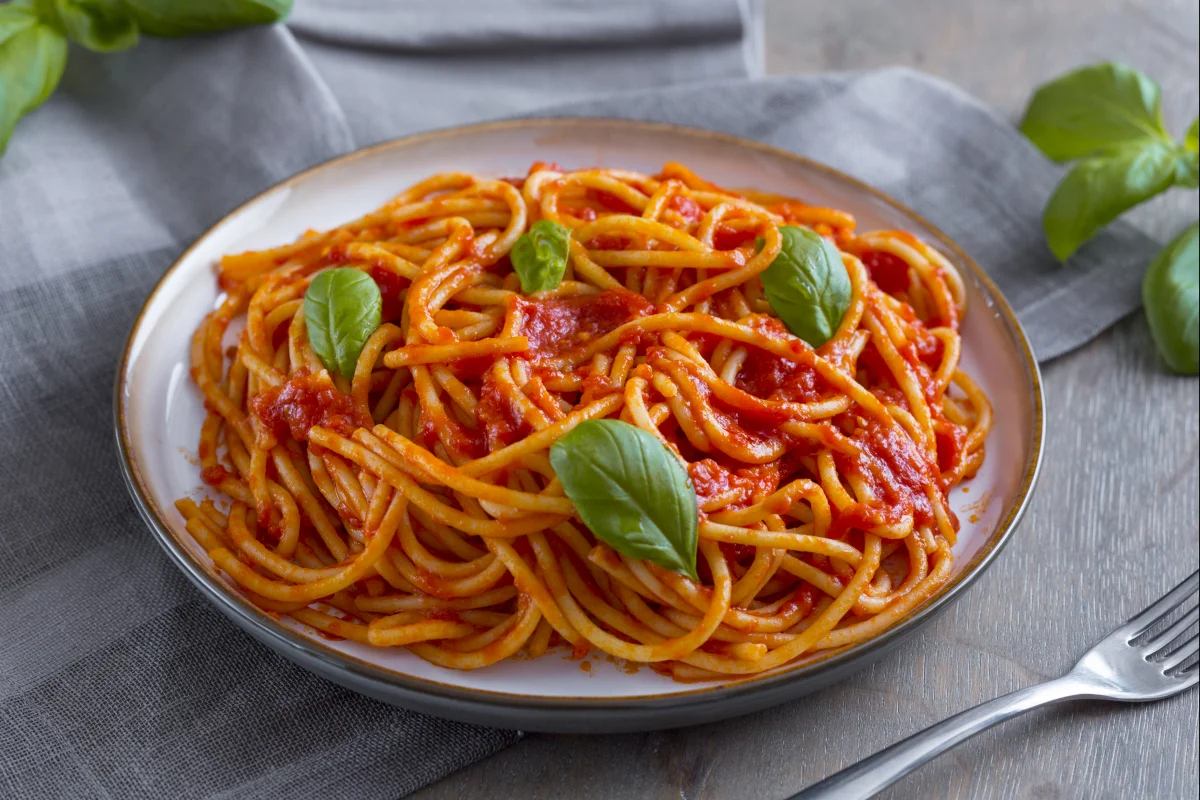
Spaghetti with tomato is a classic Italian pasta dish, pairing a slow-cooked tomato sauce with al dente spaghetti. Its short ingredient list makes it a comforting family meal, while gently simmering the sauce gives it time to develop a rounded flavour.
Ingredients
- 320 gspaghetti
- 800 gpeeled tomatoes
- 30 gextra-virgin olive oil
- 1 clovegarlic
- to tastebasil
- to tastefine salt
Instructions
- 1
Start the sauce
Pour the extra-virgin olive oil into a frying pan. Peel the garlic clove, cut it in half and remove the germ for a gentler aroma. Cook over high heat for 2 minutes, then add the peeled tomatoes and season with salt.
- 2
Simmer and purée
Cover the pan and simmer the sauce over very low heat for at least 1 hour; it should bubble gently. Stir from time to time. Remove the garlic, then pass the tomatoes through a food mill to make a smooth, even purée.
- 3
Add the basil
Return the sauce to the pan and warm it over very low heat. Add the basil leaves and, after a few minutes, turn off the heat while keeping the sauce warm. Cook the spaghetti in plenty of boiling salted water.
- 4
Combine and serve
Drain the spaghetti while it is al dente, straight into the sauce. Toss over high heat briefly to bring everything together, then serve with fresh basil to taste.
What is spaghetti with tomato?
This Italian pasta dish brings together spaghetti and a straightforward tomato sauce. Its appeal is in the contrast between the firm, springy pasta and a smooth sauce made from slowly simmered tomatoes.
This version keeps the ingredient list simple and cooks the sauce for at least an hour. Passing the tomatoes through a food mill gives the finished sauce an even texture.
Nutrition and macros by portion
The nutrition label shows one serving as written: 414 calories, 0g protein, 73g carbs, 9g fat.
| Portion | Adjustment | kcal | Protein | Carbs | Fat |
|---|---|---|---|---|---|
| Lighter | Use less olive oil | 290 kcal | 0g | 51g | 6g |
| This serving | As written | 414 kcal | 0g | 73g | 9g |
| Hungry | Serve a larger portion | 621 kcal | 0g | 109g | 13g |
Most of the carbohydrates come from the spaghetti, while the olive oil supplies most of the fat. The tomatoes contribute some carbohydrate, and the dish contains little protein overall; pair it with a protein-rich side such as beans or lentils and vegetables for a more balanced plate.
Building flavour with a few ingredients
Garlic: Cutting the clove in half makes it easy to remove after it has flavoured the oil. Taking out the germ, as the method suggests, keeps its aroma gentler.
Tomatoes: Peeled tomatoes soften as they simmer, becoming the base of the sauce. Season them with salt when they go into the pan.
Keep the simmer gentle
Low heat: The sauce should bubble softly beneath its lid rather than boil hard. Stir it occasionally during the hour or more of cooking so it cooks evenly.
Smooth finish: Remove the garlic before passing the tomatoes through a food mill. This produces a smooth purée without leaving the garlic in the finished sauce.
Cook the spaghetti al dente
Water: Use plenty of boiling water and salt it before adding the pasta. The spaghetti should be cooked until al dente, then drained directly into the sauce.
Final toss: Briefly toss the pasta and sauce together over high heat. This brings them together just before serving, so have the sauce warm and ready.
Serve it simply
Fresh basil: Finish each serving with basil to taste for a fresh, aromatic note. Add it just before serving rather than letting the garnish sit in the hot pan.
On the side: A green salad or cooked vegetables make an easy accompaniment. Serve the spaghetti while it is hot, straight after tossing.
Plan the timing
Sauce first: The sauce needs at least 1 hour to simmer, so start it well ahead of the pasta. It can be kept warm while the spaghetti cooks.
Pasta last: Cook the spaghetti shortly before serving, as the method relies on draining it al dente into the warm sauce. A brief final toss is all it needs.
Recipe notes & tips
- Keep the sauce at a gentle simmer throughout its long cooking time.
- Stir the sauce occasionally while it cooks beneath the lid.
- Remove the garlic before passing the tomatoes through the food mill.
- Have the sauce warm before draining the spaghetti into it.
- Drain the pasta when it is al dente, as it will be tossed briefly in the pan.
- Add fresh basil just before serving.
Variations
- Extra basil: Add more fresh leaves at the table for a stronger herbal finish.
- Coarser sauce: Skip the food mill if you prefer a more rustic tomato texture.
- Chilli: Add a little chilli to the oil for a gently spicy sauce.
- Vegetable side: Serve with cooked seasonal vegetables to add variety to the meal.
- Bean accompaniment: Add beans on the side for a more substantial meal.
Common mistakes to avoid
- Boiling the sauce hard: Keep the heat very low so it bubbles gently.
- Skipping the occasional stir: Stir from time to time to help the sauce cook evenly.
- Leaving the garlic in: Remove it before milling for the smooth sauce described in the method.
- Overcooking the spaghetti: Drain it al dente before tossing it with the sauce.
- Tossing without warm sauce: Keep the sauce warm so the pasta can be combined with it straight away.
How to store
Refrigerate leftover pasta or sauce in a covered container and use within 3 days. Reheat gently in a pan; if the pasta seems dry, add a small splash of water while warming.
Frequently asked questions
Can I make the tomato sauce ahead?
Yes. Cook and purée the sauce ahead, then refrigerate it in a covered container. Reheat it gently before cooking and tossing the spaghetti.
How do I know when the sauce is simmering gently?
Look for small, occasional bubbles rather than a vigorous boil. Keep the heat low and stir from time to time.
Do I have to use a food mill?
The method uses one to make a smooth, even purée. If you do not mind a more rustic texture, you can leave the tomatoes less smooth.
Why drain the spaghetti into the sauce?
It lets you toss the pasta and sauce together in the pan while they are hot. The brief high-heat toss brings them together just before serving.
Can I use dried basil?
The recipe calls for basil leaves and fresh basil to finish. Dried basil will give a different result, so use fresh leaves if following the method as written.
Can I freeze the sauce?
The tomato sauce can be frozen in a suitable sealed container. Defrost it and reheat gently before cooking the spaghetti.
Cook it from the original
This recipe comes from giallozafferano.es. Their page has the author’s own photos, notes and tips — the best place to cook it from.
Open the recipe on giallozafferano.es