
Chinese Lamb Noodle Soup
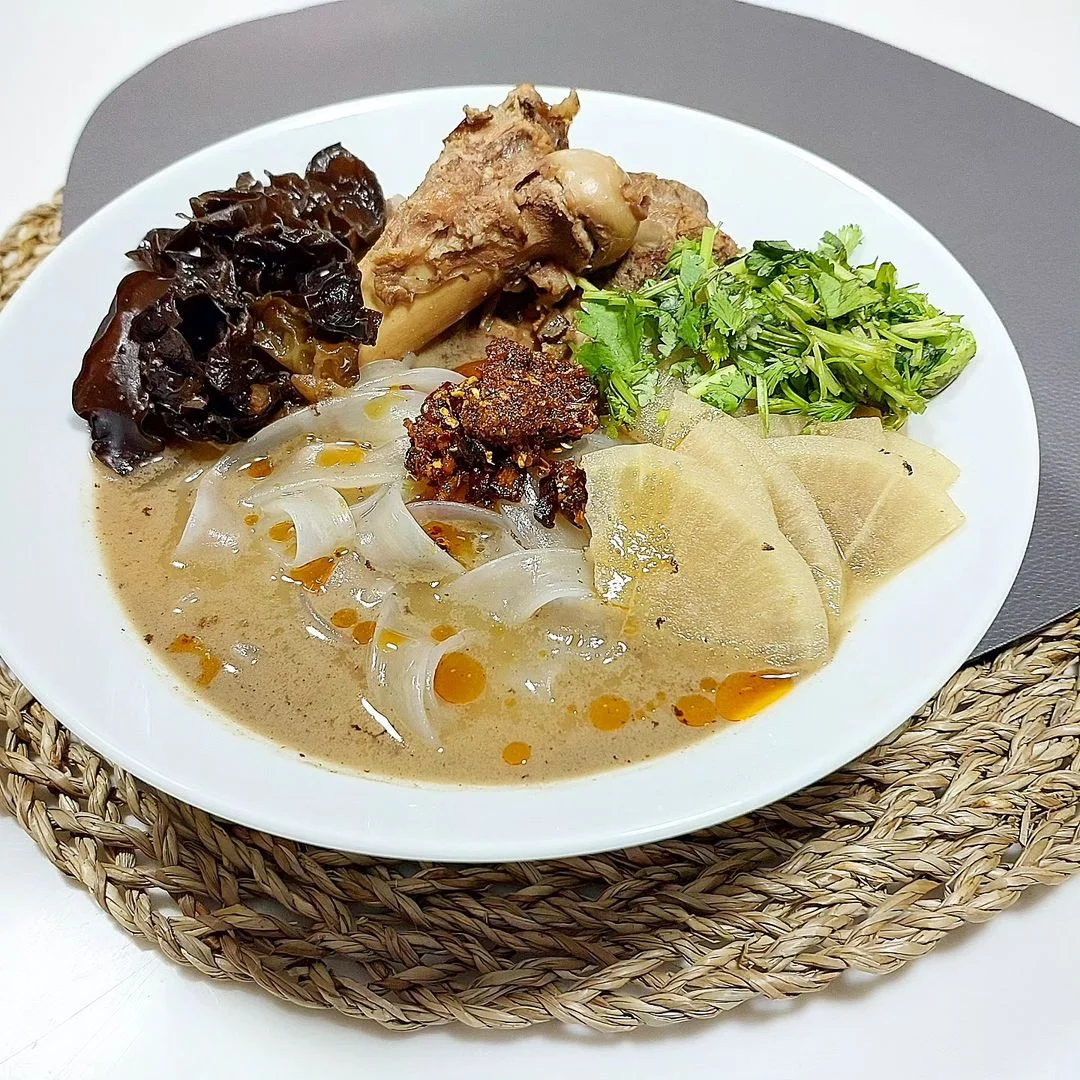
Chinese lamb noodle soup pairs a spiced, slow-simmered lamb broth with noodles, daikon and wood ear mushrooms. It is a warming, filling bowl, finished with fresh coriander and chilli oil.
Ingredients
- 1.5 kglamb mixture (shanks and stewing bones)
- 30 ml (2 tbsp)neutral oil
- 5 cm (2 inches)ginger, sliced
- 240 ml (1 cup)spring onions, chopped into 5 cm (2-inch) pieces, white and green parts separated
- 2.8 litres (12 cups)water
- 7 clovesgarlic, smashed
- about 7 g (¼ cup)dried wood ear mushrooms, rinsed thoroughly
- about 120 g (1 cup)daikon, sliced
- 3 tspsalt
- 1 packetdried noodles of choice, cooked according to the packet
- about 8 g (½ cup)coriander, chopped
- 15 ml (1 tbsp)chilli oil
- 3dried red chillies
- 6green cardamom pods
- 1black cardamom pod
- 2star anise
- 2bay leaves
- 7.5 cm (3 inches)cinnamon stick
- 1 tspcoriander seeds
- ½ tspfennel seeds
- ½ tspSichuan peppercorns
- ½ tspwhite peppercorns
Instructions
- 1
Rinse the lamb
Soak the lamb in a pot of cold water for 20 minutes. Rinse it, then pat it dry with kitchen paper.
- 2
Cook the aromatics
Heat a large pot over medium-high heat. Add the oil, ginger and the white parts of the spring onions, and cook for 1 minute.
- 3
Brown the lamb
Add the lamb and brown it on all sides until lightly golden, about 5–7 minutes.
- 4
Add broth ingredients
Pour in the water, then add the garlic and the remaining spring onions.
- 5
Bundle the spices
Put the spices in a piece of cheesecloth and add the bundle to the pot.
- 6
Simmer the broth
Cover and simmer for 30 minutes, until the broth begins to turn cloudy. Reduce the heat to medium and simmer for 1 hour.
- 7
Add vegetables
Add the dried wood ear mushrooms, daikon and salt. Cook for another 30 minutes over low heat.
- 8
Check the seasoning
Taste and adjust the seasoning, then continue cooking until the meat and soup reach the desired result.
- 9
Assemble the bowls
Put cooked noodles in each bowl. Add 2–3 ladlefuls of broth, a few pieces of lamb and bone, sliced daikon and chopped wood ear mushrooms. Finish with chopped coriander and chilli oil.
What is Chinese lamb noodle soup?
This is a bowl of noodles served with lamb, vegetables and a richly flavoured broth infused with whole spices. Lamb-and-noodle soups are found in several Chinese regional traditions, and this version draws its character from warming spices, ginger and chilli.
The long simmer gives the broth time to take on flavour from the lamb and bones. Daikon, spring onions and wood ear mushrooms add contrasting textures to the finished bowl.
Nutrition and macros by portion
The nutrition label shows one serving as written: 780 calories, 43g protein, 83g carbs, 29g fat.
| Portion | Adjustment | kcal | Protein | Carbs | Fat |
|---|---|---|---|---|---|
| Lighter | Less noodle, more daikon | 546 kcal | 30g | 58g | 20g |
| This serving | As written | 780 kcal | 43g | 83g | 29g |
| Hungry | Extra noodles and lamb | 1170 kcal | 65g | 125g | 44g |
The lamb contributes most of the protein and much of the fat, while the noodles provide most of the carbohydrates; the oil and chilli oil add further fat. Serve a moderate portion of noodles with plenty of daikon and broth, and add vegetables on the side to balance the bowl.
Build flavour before simmering
Ginger and spring onions: frying the white parts briefly in oil starts the broth with a savoury aromatic base. Browning the lamb afterwards adds colour and flavour to the pot.
Whole spices: cardamom, star anise, cinnamon, peppercorns, fennel and coriander give the broth its fragrant warmth. Keeping them together in cheesecloth makes them easy to remove before serving.
Why soak and brown the lamb?
Soaking the lamb in cold water for 20 minutes, then rinsing and drying it, is the preparation specified here before cooking. Patting it dry helps it brown rather than steam when it goes into the hot pot.
Brown the pieces on all sides, working in batches if the pot is crowded. A light golden colour is the cue in the method; the lamb will continue cooking in the broth.
Follow the simmering stages
First simmer: cover the pot for 30 minutes, until the broth starts to look cloudy, then lower the heat to medium and simmer for 1 hour. Keep the liquid at a gentle simmer rather than a vigorous boil.
Final stage: add the mushrooms, daikon and salt for another 30 minutes over low heat. The recipe gives no fixed final cooking time beyond this, so check the meat and broth and continue until they reach the result you want.
Cook the noodles separately
Noodles: cook them according to the packet, rather than in the broth. This keeps their cooking time and texture easier to control.
Serving: divide the noodles among bowls, then ladle in broth and add lamb, daikon and chopped mushrooms. Garnish with coriander and chilli oil just before eating.
Aromatic additions and texture
Wood ear mushrooms: rinse them thoroughly before adding them to the pot. Once cooked, they give the soup a pleasantly springy, slightly chewy texture.
Daikon: slice it before simmering so it softens in the broth. The recipe adds it during the final 30 minutes, alongside the mushrooms.
What to serve alongside it
The noodles, lamb and broth make this a substantial one-bowl meal. For a fresh contrast, serve it with a simple salad or steamed green vegetables.
Keep any extra chilli oil at the table so each person can adjust the heat. Add it gradually, as the broth already contains dried chillies and peppercorns.
Recipe notes & tips
- Pat the lamb thoroughly dry before browning to help it colour in the pot.
- Keep the pot at a gentle simmer once the water is added.
- Bundle the spices securely so they are easy to lift out before serving.
- Rinse the wood ear mushrooms thoroughly before adding them.
- Cook the noodles separately and assemble each bowl just before serving.
Variations
- Change the noodles: use your preferred dried noodle and cook it according to its packet.
- Adjust the heat: use less chilli oil at serving for a milder bowl.
- Add leafy greens: stir them into the broth near the end of cooking until wilted.
- Use extra daikon: add more sliced radish for a vegetable-forward bowl.
- Make it more aromatic: add a little extra ginger when frying the aromatics.
Common mistakes to avoid
- Wet lamb: it is harder to brown; pat it dry after rinsing.
- Crowded pot: the lamb may steam rather than colour; brown it in batches if needed.
- Hard boiling: it can agitate the broth; lower the heat to maintain a gentle simmer.
- Unrinsed mushrooms: grit can end up in the soup; rinse the dried mushrooms thoroughly.
- Overcooked noodles: they can turn soft in the broth; cook them separately and add them to bowls at serving.
How to store
Refrigerate leftover broth, lamb and vegetables in a covered container for up to 3 days. Store cooked noodles separately if possible, then reheat the broth and lamb gently on the hob and add the noodles just before serving.
Frequently asked questions
Can I use a different cut of lamb?
Yes, use a lamb cut suitable for simmering, ideally with some bone for the broth. Cooking time may vary, so check the meat for tenderness.
Do I need to soak the lamb?
The method calls for soaking it in cold water for 20 minutes, then rinsing and drying it. This is the preparation step to follow for this version.
Can I cook the noodles in the soup?
The recipe specifies cooking them according to the packet and serving them in the bowls. Cooking them separately helps keep the broth clear of excess starch and prevents the noodles from sitting in the soup as they soften.
How do I know when the lamb is ready?
Continue simmering until the meat reaches the tenderness you prefer. The method does not give a set total cooking time beyond its stated simmering stages.
Can I make the broth ahead?
Yes. Keep the broth, lamb and vegetables chilled, and cook or store the noodles separately; reheat the soup gently before assembling the bowls.
Cook it from the original
This recipe comes from fooooods.com. Their page has the author’s own photos, notes and tips — the best place to cook it from.
Open the recipe on fooooods.com