
Spaghetti carbonara
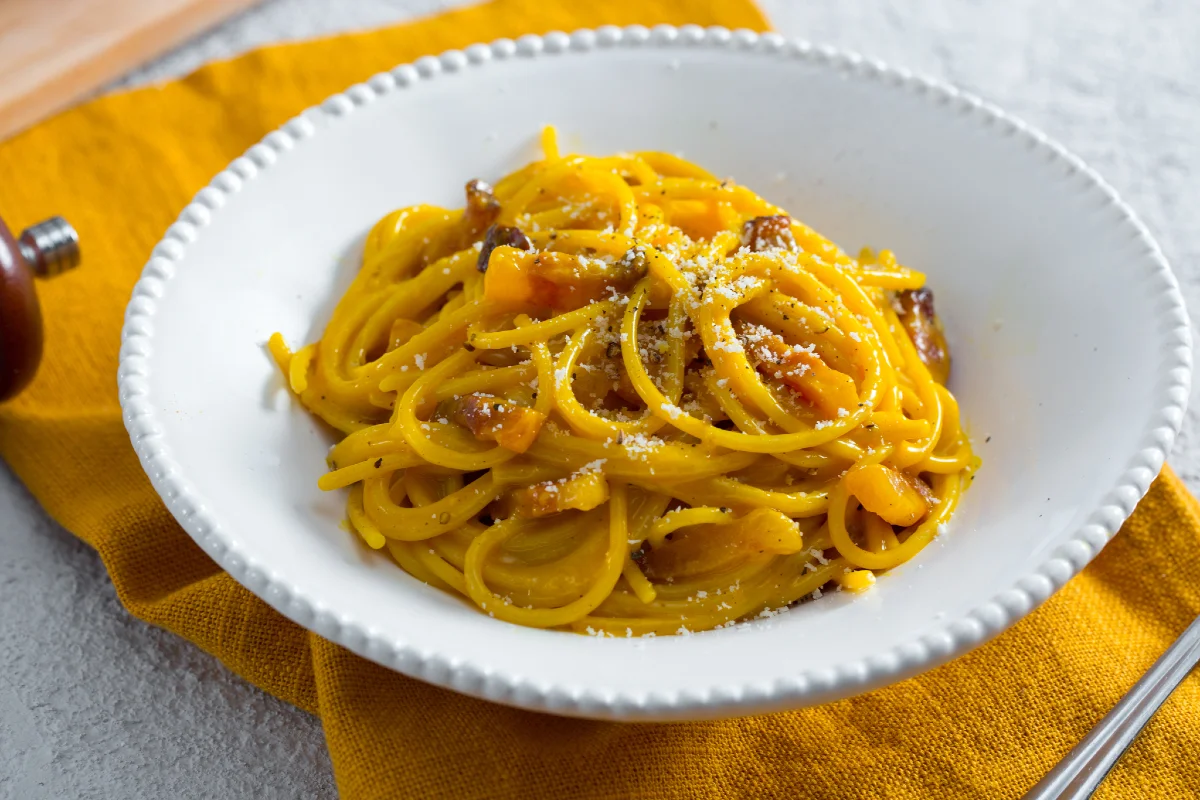
Spaghetti carbonara is a Roman pasta dish coated in a silky sauce of egg yolks, Pecorino Romano and the rendered fat from guanciale. It comes together quickly, making it a good choice when you want a rich, satisfying meal without a long list of ingredients.
Ingredients
- 320 gspaghetti
- 150 gguanciale
- 6yolks from medium eggs
- 50 gPecorino Romano
- to tasteblack pepper
Instructions
- 1
Prepare the ingredients
Bring a pan of salted water to the boil for the spaghetti. Meanwhile, remove the skin from the guanciale, cut it into slices, then into strips about 1 cm wide.
- 2
Cook the guanciale
Put the guanciale in a non-stick frying pan and cook over a medium-high heat for about 10 minutes, taking care not to burn it. Meanwhile, cook the spaghetti in the boiling water until al dente, and put the egg yolks in a bowl.
- 3
Mix the sauce
Add the Pecorino and black pepper to the yolks. Whisk by hand until smooth and creamy.
- 4
Reserve the guanciale
Once the guanciale is cooked, turn off the heat and lift it out of the pan with a ladle, leaving the rendered fat in the pan. Put the guanciale in a small bowl to set aside, then add a tablespoon of pasta water to the pan.
- 5
Combine the pasta
Drain the spaghetti while it is al dente, directly into the pan with the rendered fat. Toss briefly, then take the pan off the heat and quickly stir in the egg and Pecorino mixture.
- 6
Finish and serve
For a creamier sauce, add a little pasta water if needed. Stir in the guanciale, mix once more and serve immediately with extra Pecorino and a little black pepper.
What is spaghetti carbonara?
Carbonara is a Roman pasta dish traditionally built around pasta, guanciale, eggs, Pecorino Romano and black pepper. This version keeps the ingredient list short and uses egg yolks for a rich, glossy coating.
The key is to combine the egg mixture with the pasta off the heat. That helps the sauce turn creamy rather than setting into scrambled egg.
Nutrition and macros by portion
The nutrition label shows one serving as written: 680 calories, 0g protein, 67g carbs, 37g fat.
| Portion | Adjustment | kcal | Protein | Carbs | Fat |
|---|---|---|---|---|---|
| Lighter | Serve a smaller pasta portion | 476 kcal | 0g | 47g | 26g |
| This serving | As written | 680 kcal | 0g | 67g | 37g |
| Hungry | Add a larger portion | 1020 kcal | 0g | 100g | 56g |
The spaghetti supplies most of the carbohydrates, while the guanciale, egg yolks and Pecorino contribute much of the fat; the yolks and cheese also provide protein. For a more balanced plate, serve a moderate portion with a side of vegetables or salad.
Choose the right ingredients
Guanciale: This cured pork cheek renders fat as it cooks, bringing savoury flavour to the pan. Cut it into strips about 1 cm wide so it browns evenly.
Pecorino Romano: Its salty, sharp flavour gives the yolk mixture its character. Finely grated cheese is easier to whisk into a smooth sauce.
Make a smooth egg sauce
Whisk the yolks, Pecorino and pepper until the mixture is even, with no dry pockets of cheese. Keep it ready while the pasta cooks so you can stir it in promptly.
Take the pan off the heat before adding the egg mixture. Residual warmth helps coat the spaghetti, while a splash of pasta water can loosen the sauce if it looks too thick.
Watch the guanciale
Steady heat: Cook the strips over medium-high heat for about 10 minutes, watching closely towards the end. They should render their fat and brown without burning.
Keep the pan fat: Lift out the cooked guanciale but leave the rendered fat behind. The spaghetti is tossed in this flavourful base before the egg mixture is added.
Get the pasta texture right
Cook the spaghetti until al dente, then drain it straight into the frying pan. A brief toss helps it take on the guanciale flavour before the sauce goes in.
The finished coating should be creamy, not dry or clumpy. Add pasta water a little at a time if needed, and serve at once.
Serve it straight away
Carbonara is best served as soon as the sauce is mixed, while it is still glossy. Finish each serving with extra Pecorino and black pepper, as suggested in the method.
A simple green salad or lightly cooked vegetables can add freshness alongside the rich pasta. Keep accompaniments straightforward so the carbonara remains the focus.
Recipe notes & tips
- Cut the guanciale into evenly sized strips so it cooks at a similar rate.
- Keep an eye on the guanciale as it browns, since burnt pieces can taste harsh.
- Have the yolk and cheese mixture ready before the spaghetti finishes cooking.
- Reserve the rendered fat in the pan when lifting out the guanciale.
- Take the pan off the heat before stirring in the egg mixture.
- Add pasta water gradually if the sauce needs loosening.
Variations
- More pepper: Add a little extra black pepper at the table for a sharper finish.
- Extra Pecorino: Grate more over each serving just before eating.
- Short pasta: Use another pasta shape if you prefer, and cook it until al dente.
- Milder cheese: Replace some of the Pecorino with a less sharp hard cheese for a gentler flavour.
Common mistakes to avoid
- Burnt guanciale: Keep the heat controlled and check the pan often as it cooks.
- Overcooked pasta: Start checking before the end of the cooking time and drain it al dente.
- Scrambled egg sauce: Take the pan off the heat before adding the yolk mixture.
- Thick sauce: Stir in a little pasta water until the spaghetti is coated smoothly.
- Dry pasta: Toss it briefly in the rendered fat before adding the egg and cheese mixture.
- Waiting to serve: Bring the dish to the table straight after mixing so the sauce stays creamy.
How to store
Carbonara is best eaten immediately. If you have leftovers, refrigerate them in a covered container and use within 2 days; reheat gently in a pan with a small splash of water, stirring until hot.
Frequently asked questions
Can I make carbonara ahead of time?
It is best made just before serving, because the sauce can thicken as it stands. You can prepare the guanciale and whisk the yolks with the Pecorino ahead, then cook and combine everything at mealtime.
How do I stop the eggs from scrambling?
Remove the pan from the heat before adding the yolk mixture and stir quickly. If the sauce is too thick, loosen it with a little pasta water.
What does al dente mean?
It means the spaghetti is cooked through but still has a slight firmness when bitten. Drain it at that point so it does not become soft as you toss it in the pan.
Can I use another pasta shape?
Yes. Another pasta shape can work, but follow its cooking time and drain it while it is still al dente.
Why add pasta water?
The method uses a tablespoon of pasta water with the guanciale fat, and a little more can be added at the end if the sauce needs loosening.
Cook it from the original
This recipe comes from giallozafferano.es. Their page has the author’s own photos, notes and tips — the best place to cook it from.
Open the recipe on giallozafferano.es