
Garlic And Ginger Chicken Korma
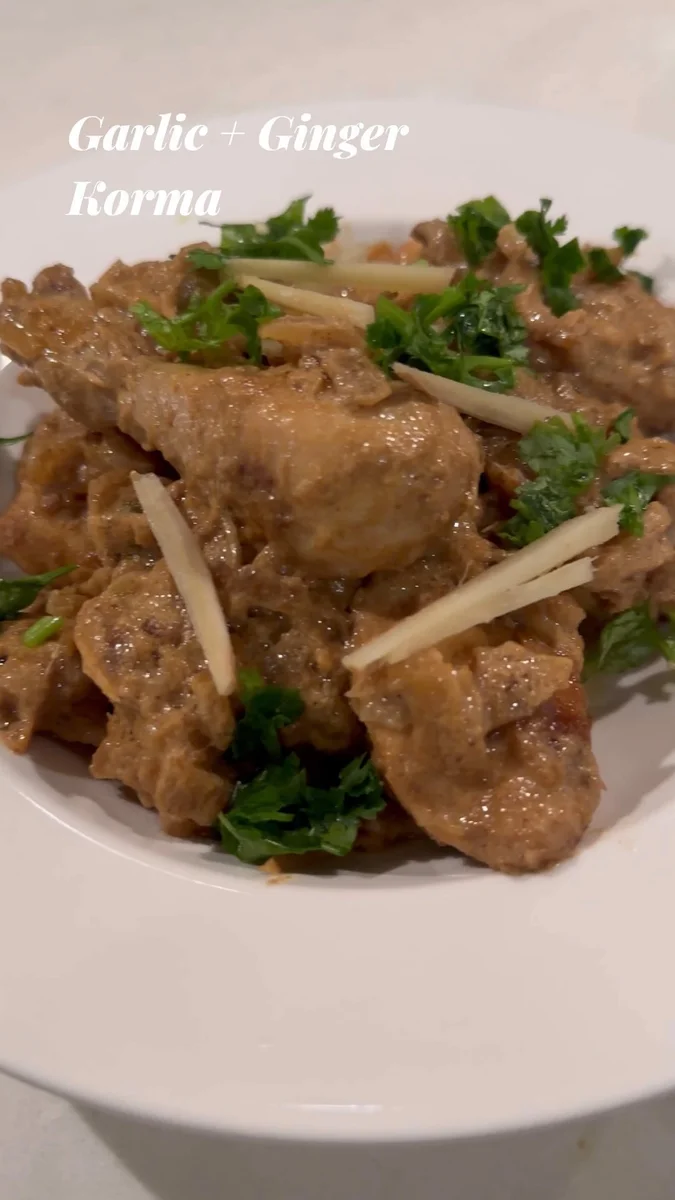
Garlic and ginger chicken korma is a gently simmered chicken curry with onions, yoghurt and warming spices. It makes a comforting meal with a rich, savoury sauce and a little heat from green chillies.
Ingredients
- 4 tbspolive oil
- 1 tbspfresh ginger, sliced
- 4 clovesgarlic, chopped
- 2 mediumonions, sliced
- 1 tbspgarlic and ginger paste
- 1 wholechicken, cut into pieces
- 1 tspground cumin
- 1½ tspground coriander
- 6 tbspGreek yoghurt
- to tastesalt
- 2green chillies, chopped
- 240 ml (1 cup)water
- ¾ tspsugar
- to garnishfresh ginger and coriander
Instructions
- 1
Heat the oil
Heat the olive oil, then add the sliced fresh ginger and chopped garlic.
- 2
Cook the onions
Add the sliced onions and sauté them.
- 3
Add the spices
When the onions turn translucent, stir in the ground cumin and coriander.
- 4
Brown the chicken
Add the chicken and stir over high heat until it starts to brown.
- 5
Add the liquids
Add the yoghurt, salt, chopped green chillies and water, then mix.
- 6
Simmer gently
Simmer over low heat for about 25 minutes.
- 7
Stir in sugar
Add the sugar and mix it through the curry.
- 8
Garnish and serve
Garnish with fresh ginger and coriander.
What is chicken korma?
Korma is a family of South Asian dishes in which meat or vegetables are cooked gently with spices and a rich, often yoghurt-based sauce. Its exact form varies across regions and recipes.
This version builds flavour from garlic, ginger, onions and ground spices, then simmers chicken with yoghurt and water. The result is a savoury sauce rather than a heavily spiced dry coating.
Nutrition and macros by portion
The nutrition label shows one serving as written: 660 calories, 48g protein, 13g carbs, 44g fat.
| Portion | Adjustment | kcal | Protein | Carbs | Fat |
|---|---|---|---|---|---|
| Lighter | Use less olive oil | 462 kcal | 34g | 9g | 31g |
| This serving | As written | 660 kcal | 48g | 13g | 44g |
| Hungry | Serve with extra rice | 990 kcal | 72g | 20g | 66g |
Chicken provides most of the protein, while the olive oil and yoghurt contribute much of the fat. The chicken, onions and small amount of sugar provide most of the carbohydrates; serving it with rice or flatbread will add more. For a more balanced plate, pair a moderate serving with plenty of vegetables.
Building the flavour
Fresh aromatics: ginger and garlic go into the warm oil first, giving them a brief chance to flavour it before the onions are added.
Ground spices: cumin and coriander are stirred into the softened onions. Keep them moving so they combine with the onion and oil without catching.
Getting the chicken ready
Cut pieces: use chicken pieces of similar size where possible so they cook at a similar rate. The recipe does not specify which cuts to use.
Browning: stir the pieces over high heat until they start to colour, as directed. This step adds flavour before the yoghurt and water go in.
Keeping the sauce smooth
Yoghurt: mix it into the chicken with the water, salt and chillies before lowering the heat. A gentle simmer helps the sauce cook without a rapid boil.
Consistency: the recipe does not give a target thickness, so follow the stated simmer and check that the chicken is cooked through before serving.
Timing and doneness
The method gives about 25 minutes of simmering time, but the total cooking time is not specified. The size of the chicken pieces can affect how long they need.
Check the thickest piece before serving: it should be fully cooked through. If it needs longer, continue simmering gently and check again.
What to serve with it
Serve the korma with rice or flatbread to make the most of the sauce. Add a vegetable side, such as a simple salad or cooked greens, for freshness and contrast.
Finish with the fresh ginger and coriander garnish just before serving so their bright flavours remain distinct.
Recipe notes & tips
- Slice the onions evenly so they soften at a similar pace.
- Have the spices, yoghurt and water ready before you start cooking.
- Keep the chicken moving over high heat until it begins to brown.
- Lower the heat for the simmer rather than letting the sauce boil rapidly.
- Taste before serving and adjust the salt to suit your preference.
Variations
- Adjust the heat: use fewer green chillies for a milder curry.
- Add vegetables: stir in suitable vegetables and cook until tender.
- Use chicken thighs: swap in cut-up thighs if you prefer darker meat.
- Change the garnish: finish with extra coriander for a fresher note.
- Serve with flatbread: use it to scoop up the yoghurt sauce.
Common mistakes to avoid
- Adding spices to very hot oil: they can catch quickly; stir them into the onions as directed.
- Rushing the onions: give them time to turn translucent before adding the spices.
- Crowding the pan: the chicken may brown less evenly; use a pan large enough for the pieces to move.
- Boiling the sauce hard: yoghurt may lose its smooth texture; keep the heat low for the simmer.
- Skipping the doneness check: cooking time can vary with piece size, so check the thickest piece before serving.
How to store
Refrigerate leftovers in a covered container for up to 3 days. Reheat gently in a saucepan until piping hot throughout, adding a splash of water if the sauce has thickened.
Frequently asked questions
Can I make this korma less spicy?
Yes. Use one green chilli or leave them out, then taste and adjust the seasoning before serving.
Can I use chicken pieces without bones?
Yes. Use boneless pieces cut to a similar size, and check them for doneness as they may cook faster than bone-in pieces.
How do I know when the chicken is cooked?
Check the thickest piece to make sure it is cooked through. The recipe gives about 25 minutes of simmering, but piece size affects the timing.
Can I prepare it in advance?
You can cook it ahead and refrigerate it once cooled. Reheat gently until piping hot throughout.
What can I serve with chicken korma?
Rice or flatbread works well with the sauce. A fresh salad or cooked greens make a good vegetable side.
Cook it from the original
This recipe comes from fooooods.com. Their page has the author’s own photos, notes and tips — the best place to cook it from.
Open the recipe on fooooods.com