
Creamy Garlic Pasta
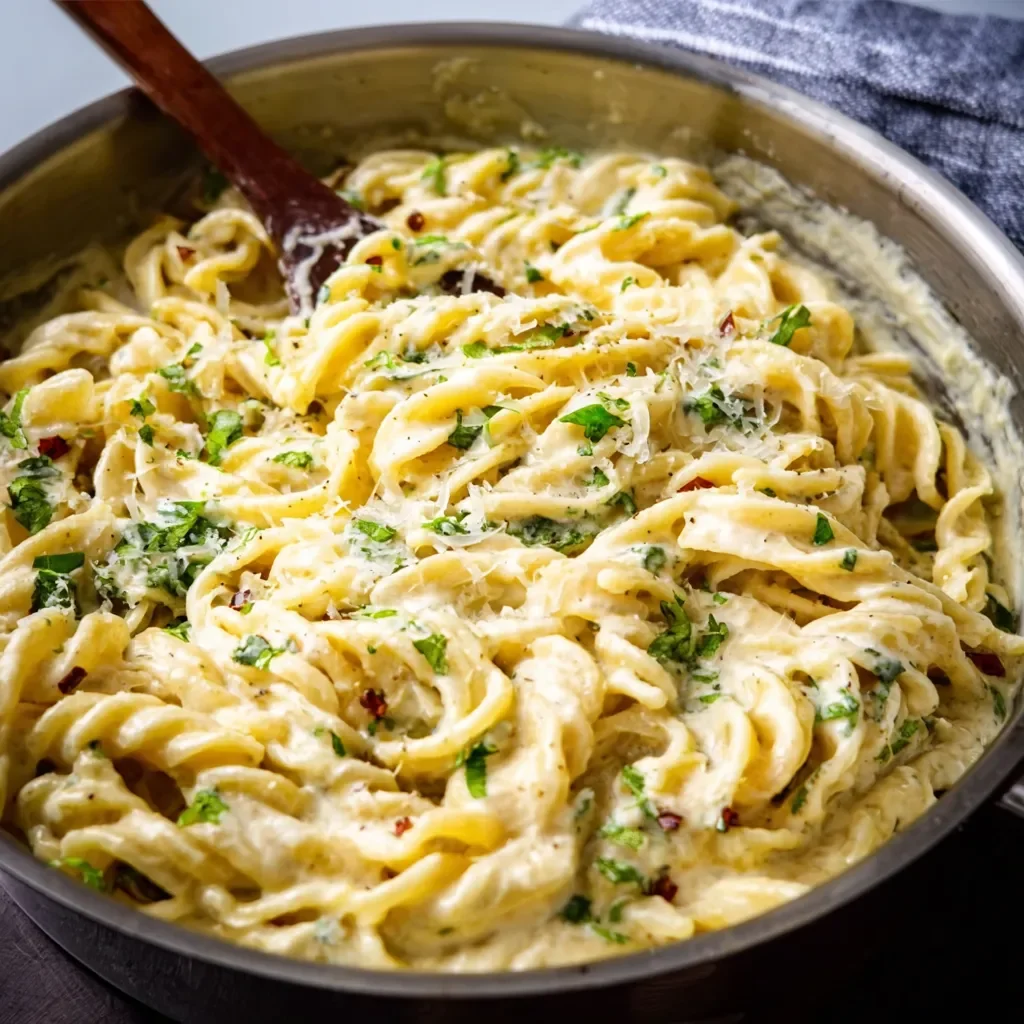
Creamy Garlic Pasta coats al dente pasta in a smooth sauce of butter, garlic, cream and Parmesan. It comes together in about 20 minutes, making it a comforting choice when you want a quick pasta supper.
Ingredients
- 454 gpasta (fettuccine, spaghetti or linguine)
- 56 gunsalted butter
- 6 clovesgarlic, minced
- 240 mldouble cream
- 50 gParmesan cheese, freshly grated
- 60 mlreserved pasta water
- to tastesalt
- to tasteblack pepper
- to tastered pepper flakes (optional)
- to tastefresh parsley, chopped, for garnish (optional)
Instructions
- 1
Boil the water
Bring a large pot of salted water to a rolling boil.
- 2
Cook the pasta
Add the pasta and cook according to the packet directions until al dente.
- 3
Save pasta water
Before draining, scoop out about 60 ml of the pasta water and set it aside.
- 4
Drain the pasta
Drain the pasta and set it aside.
- 5
Melt the butter
In the same pot or a large frying pan, melt the butter over a medium heat.
- 6
Cook the garlic
Add the minced garlic and cook for about 1–2 minutes, until fragrant and lightly golden. Take care not to let it burn.
- 7
Simmer the cream
Pour in the double cream and bring it to a simmer, then turn the heat down to low.
- 8
Melt in Parmesan
Stir in the Parmesan until melted and the sauce is smooth.
- 9
Season the sauce
Season with salt, black pepper and red pepper flakes, if using.
- 10
Toss the pasta
Add the cooked pasta to the sauce and toss until evenly coated.
- 11
Adjust the texture
If the sauce is too thick, add a little reserved pasta water, one tablespoon at a time, until it reaches the consistency you want.
- 12
Serve immediately
Serve at once, garnished with chopped fresh parsley if desired.
What is creamy garlic pasta?
Creamy garlic pasta is a quick pasta dish in which cooked noodles are tossed in a rich sauce flavoured with garlic and cheese. It draws on familiar Italian pasta ingredients, while its cream-based sauce gives it a particularly comforting, contemporary feel.
Here, butter softens the garlic, cream creates the body of the sauce, and Parmesan brings savoury depth. Reserved pasta water helps the sauce cling to the noodles.
Nutrition and macros by portion
The nutrition label shows one serving as written: 450 calories, 0g protein, 0g carbs, 0g fat.
| Portion | Adjustment | kcal | Protein | Carbs | Fat |
|---|---|---|---|---|---|
| Lighter | Use less cream | 315 kcal | 0g | 0g | 0g |
| This serving | As written | 450 kcal | 0g | 0g | 0g |
| Hungry | Add another portion | 675 kcal | 0g | 0g | 0g |
Most of the carbohydrates come from the pasta, while the butter and double cream supply much of the fat; Parmesan contributes some protein as well as fat. Pair a serving with vegetables or salad for a more balanced plate.
Choosing the pasta and cheese
Pasta shape: Fettuccine, spaghetti and linguine all work; choose a shape that is easy to coat and twirl. Cook it just to al dente, since it will be tossed briefly in the hot sauce.
Parmesan: Freshly grated cheese melts more smoothly than many pre-grated options. Keep it ready before you start making the sauce so it can be stirred in while the cream is warm.
Keep the garlic gentle
Garlic: Cook it in melted butter for only 1–2 minutes, until fragrant and lightly golden. Burnt garlic can make the sauce taste bitter, so lower the heat or take the pot off it briefly if it colours too quickly.
Build a smooth sauce
Cream and cheese: Bring the cream just to a simmer, then reduce the heat before adding Parmesan. Stir until the cheese has melted and the sauce looks smooth rather than letting it boil hard.
Pasta water: Add it gradually, one tablespoon at a time, if the sauce seems too thick. The starchy water loosens the sauce and helps it coat the pasta.
Timing the pasta and sauce
Pasta first: Follow the packet timing and reserve the pasta water before draining. Have the cooked pasta ready to add as soon as the sauce is made.
Serve promptly: The sauce thickens as it stands, so toss the pasta with it and bring it to the table straight away. Add a little of the reserved water if needed to restore a silky coating.
What to serve alongside
A crisp green salad or simply cooked vegetables make a fresh contrast to the rich sauce. Crusty bread can also be served alongside to mop up any sauce left on the plate.
For extra seasoning at the table, offer black pepper and red pepper flakes separately so everyone can adjust their serving.
Recipe notes & tips
- Grate the Parmesan finely so it melts into the warm sauce more easily.
- Reserve the pasta water before draining; it is difficult to retrieve once the pasta is gone.
- Keep the garlic moving in the butter and stop cooking it as soon as it is lightly golden.
- Add the pasta water gradually so you can control the sauce’s consistency.
- Toss the pasta with the sauce just before serving for the best coating.
Variations
- Add peas: Stir in cooked peas when you toss the pasta with the sauce.
- Bring the heat: Add red pepper flakes to the sauce for a gentle chilli kick.
- Add herbs: Finish with extra chopped parsley for a fresh note.
- Try another shape: Use fettuccine, spaghetti or linguine according to what you have.
- Add greens: Serve with cooked spinach or broccoli alongside the pasta.
Common mistakes to avoid
- Burning the garlic: Cook it over medium heat only until fragrant and lightly golden.
- Overcooking the pasta: Check the packet timing and stop when it is al dente.
- Boiling the sauce hard: Bring the cream to a simmer, then lower the heat before adding the cheese.
- Adding all the pasta water at once: Stir it in one tablespoon at a time to avoid thinning the sauce too much.
- Leaving the dish to stand: Serve promptly, as the sauce thickens as it cools.
How to store
Refrigerate leftovers in a covered container for up to 3 days. Reheat gently in a saucepan, stirring in a small splash of water or cream to loosen the sauce; avoid boiling it.
Frequently asked questions
Can I use a different pasta shape?
Yes. Fettuccine, spaghetti and linguine are all listed for this recipe, and another pasta shape can also be used.
What does al dente mean?
It means the pasta is cooked through but still has a slight firmness when bitten. Follow the packet directions and check it near the end of the cooking time.
Can I make the sauce without double cream?
Double cream gives this sauce its rich texture. A lighter cream may produce a thinner sauce, so add it carefully and adjust with pasta water as needed.
Why is my sauce too thick?
It may thicken as the cheese melts or as the pasta sits in the sauce. Stir in reserved pasta water a tablespoon at a time until it coats the noodles smoothly.
Can I prepare this pasta ahead?
It is best served just after cooking, when the sauce is smooth and freshly coated around the pasta. You can grate the cheese and mince the garlic ahead to make cooking quicker.
How can I make it spicy?
Add red pepper flakes to taste when seasoning the sauce, or let everyone add them at the table.
Cook it from the original
This recipe comes from besthomemaderecipes.com. Their page has the author’s own photos, notes and tips — the best place to cook it from.
Open the recipe on besthomemaderecipes.com