
Sicilian cannoli
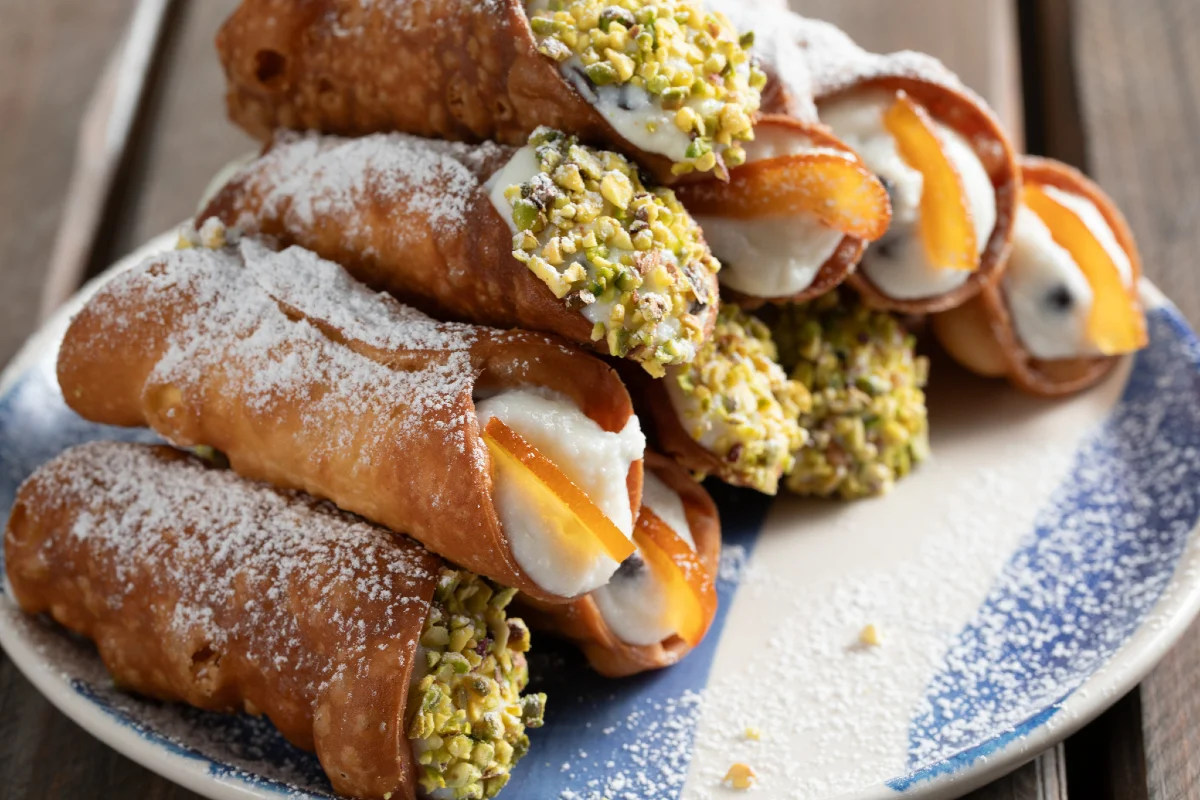
Sicilian cannoli are crisp, fried pastry shells filled with sweetened sheep’s ricotta and chocolate chips. This traditional recipe makes 30, with pistachios and candied orange for the finish.
Ingredients
- 250 g00 flour
- 30 gsugar
- 30 glard
- 50 gMarsala
- 1 medium eggegg
- 10 gwhite wine vinegar
- 1 pinchfine salt
- 1orange zest
- 2 gground cinnamon
- 1 kgsheep’s ricotta
- 300 gsugar
- as neededdark chocolate chips
- as neededegg yolk
- 1 lseed oil
- as neededicing sugar
- as neededchopped pistachios
- as neededcandied orange
Instructions
- 1
Drain the ricotta
Leave the fresh ricotta to drain in a sieve overnight so it loses its whey. To begin the dough, dissolve the salt in the vinegar in a small bowl. Sift the flour and add the cinnamon.
- 2
Mix the dough
Add the lard and start working it into the flour by hand, then add the sugar.
- 3
Add the flavourings
Mix in the orange zest, then add the egg and Marsala.
- 4
Finish the dough
Pour in the vinegar and salt mixture. Knead by hand until the ingredients come together, then move the dough to a lightly floured surface and shape it into a block.
- 5
Chill and sweeten
Cover the dough with cling film and refrigerate for 2 hours. Take the ricotta drained overnight and add the sugar.
- 6
Make the filling
Mix with a spatula, then push the mixture through a sieve for a smooth, velvety texture. Fold in the chocolate chips.
- 7
Rest the filling
Cover the ricotta mixture with cling film and refrigerate it until you are ready to fill the cannoli. Take one-third of the dough and keep the rest covered so it does not dry out. Pass the block through a pasta machine, starting at its widest setting.
- 8
Roll the dough
Fold the dough sheet so its edges meet, then pass it through the rollers again, reducing the thickness at each pass until it is 1.5 mm thick.
- 9
Shape the shells
Use a 10 cm round cutter to cut out discs. Wrap each disc around a cannoli tube.
- 10
Seal the shells
Brush a little egg yolk onto one edge of the dough at the join, taking care not to get any on the tube. Close the dough and press lightly to seal. Place each prepared shell on a tray and cover it with a cloth.
- 11
Fry the shells
Heat the seed oil to 175°C. Lower the cannoli into the oil with one end pointing down, then let them fry until golden. Turn them from time to time as they cook; the characteristic bubbles will form. Drain on kitchen paper.
- 12
Fill the cannoli
Once the shells have cooled, press gently on each tube and pull it out. Fill the shells with the ricotta cream using a piping bag, then decorate with chopped pistachios.
- 13
Add the finish
Add candied orange and dust with icing sugar. Serve the homemade Sicilian cannoli straight away.
What are Sicilian cannoli?
Cannoli are a classic Sicilian pastry: a crisp, fried shell wrapped around a sweet ricotta filling. Their name refers to the tube-like shape formed around a metal mould.
This version uses sheep’s ricotta, chocolate chips, pistachios and candied orange. The contrast between the crunchy shell and smooth filling is what makes them so appealing.
Nutrition and macros by portion
The nutrition label shows one serving as written: 220 calories, 5g protein, 25g carbs, 11g fat.
| Portion | Adjustment | kcal | Protein | Carbs | Fat |
|---|---|---|---|---|---|
| Lighter | Smaller cannoli | 154 kcal | 4g | 18g | 8g |
| This serving | As written | 220 kcal | 5g | 25g | 11g |
| Hungry | Larger portion | 330 kcal | 8g | 38g | 17g |
The pastry and sugar provide most of the carbohydrates, while the ricotta contributes protein and fat; frying adds further fat, though the amount absorbed varies. Enjoy a cannolo as a dessert after a balanced meal, or serve a smaller portion alongside fresh fruit.
The ricotta filling
Drain first: leaving the ricotta in a sieve overnight lets excess whey run off, helping the filling hold its shape. If the ricotta is wet, the finished cream can be loose.
Sieve for smoothness: once the sugar is mixed in, push the ricotta mixture through a sieve before adding the chocolate chips. This gives the filling a fine, even texture.
Building the dough
Work by hand: the lard is rubbed into the flour before the sugar, egg and Marsala are added. The vinegar and salt go in at the end, as described in the method.
Rest it cold: the dough chills for 2 hours, while the ricotta filling stays refrigerated until needed. Keep the unused dough covered while rolling so it does not dry out.
Rolling and shaping
Thin sheets: start at the widest setting on the pasta machine and reduce the thickness gradually, finishing at 1.5 mm. Cut the sheets into 10 cm discs.
Seal carefully: wrap each disc around a cannoli tube and brush egg yolk only onto the pastry edge at the join. Avoid getting yolk on the tube, which can make it harder to remove the shell.
Frying and doneness
Oil temperature: bring the seed oil to 175°C before frying. Lower each shell in with one end pointing down, then turn it occasionally as it cooks.
Look for colour: the shells are ready when golden, with the characteristic bubbles on the surface. Drain them on kitchen paper and let them cool before taking them off the tubes.
Fill just before serving
Keep the parts separate: chill the ricotta cream and leave the empty shells unfilled until you are ready to serve. Filling them too early can soften the crisp pastry.
Finish the ends: pipe the cream into the cooled shells, then add chopped pistachios and candied orange. Dust with icing sugar and serve straight away.
Recipe notes & tips
- Drain the ricotta overnight to remove excess whey before making the filling.
- Keep the unused dough covered while you roll one-third at a time.
- Reduce the pasta machine setting gradually to reach 1.5 mm without tearing the dough.
- Brush egg yolk on the pastry join only, keeping it off the cannoli tube.
- Let the shells cool fully before removing the tubes and filling them.
- Pipe the filling into the shells shortly before serving to preserve their crispness.
Variations
- Citrus finish: add extra candied orange to the ends for a more pronounced citrus note.
- Pistachio topping: press chopped pistachios into the exposed ricotta at each end.
- Chocolate finish: add a few extra dark chocolate chips to the filling.
- Cinnamon accent: add a light dusting of cinnamon alongside the icing sugar.
- Plain topping: leave off the pistachios and candied orange for a simpler finish.
Common mistakes to avoid
- Wet ricotta: drain it overnight in a sieve so the filling is not loose.
- Dry dough: keep the portion you are not rolling covered with cling film.
- Thick shells: reduce the pasta machine setting gradually until the sheet is 1.5 mm thick.
- Loose join: brush egg yolk onto the edge and press the dough lightly to seal it.
- Shells removed too soon: cool them before gently pressing and sliding off the tubes.
- Soft filled shells: pipe in the ricotta cream just before serving.
How to store
Keep the ricotta filling covered in the fridge until you are ready to use it, and store empty shells separately in an airtight container at room temperature. Assemble just before serving; filled cannoli are best eaten straight away because the shells soften over time.
Frequently asked questions
Can I make the ricotta filling ahead?
Yes. Mix and sieve it, fold in the chocolate chips, then cover and refrigerate until you are ready to fill the shells.
Why does the ricotta need to drain overnight?
Draining removes excess whey, which helps the filling stay thick enough to pipe into the shells.
How thin should I roll the dough?
The method specifies a final thickness of 1.5 mm. Reduce the pasta machine setting a little at a time to reach it.
How do I know when the shells are cooked?
They should be golden and have the characteristic bubbles on the surface. Turn them occasionally as they fry at 175°C.
When should I fill the cannoli?
Fill them once the shells have cooled, as close to serving as possible. This helps keep the pastry crisp.
Can I store assembled cannoli?
They are best served immediately after filling, since the ricotta cream gradually softens the shell. Store the filling and shells separately if preparing ahead.
Cook it from the original
This recipe comes from giallozafferano.es. Their page has the author’s own photos, notes and tips — the best place to cook it from.
Open the recipe on giallozafferano.es