
Saltimbocca alla Romana
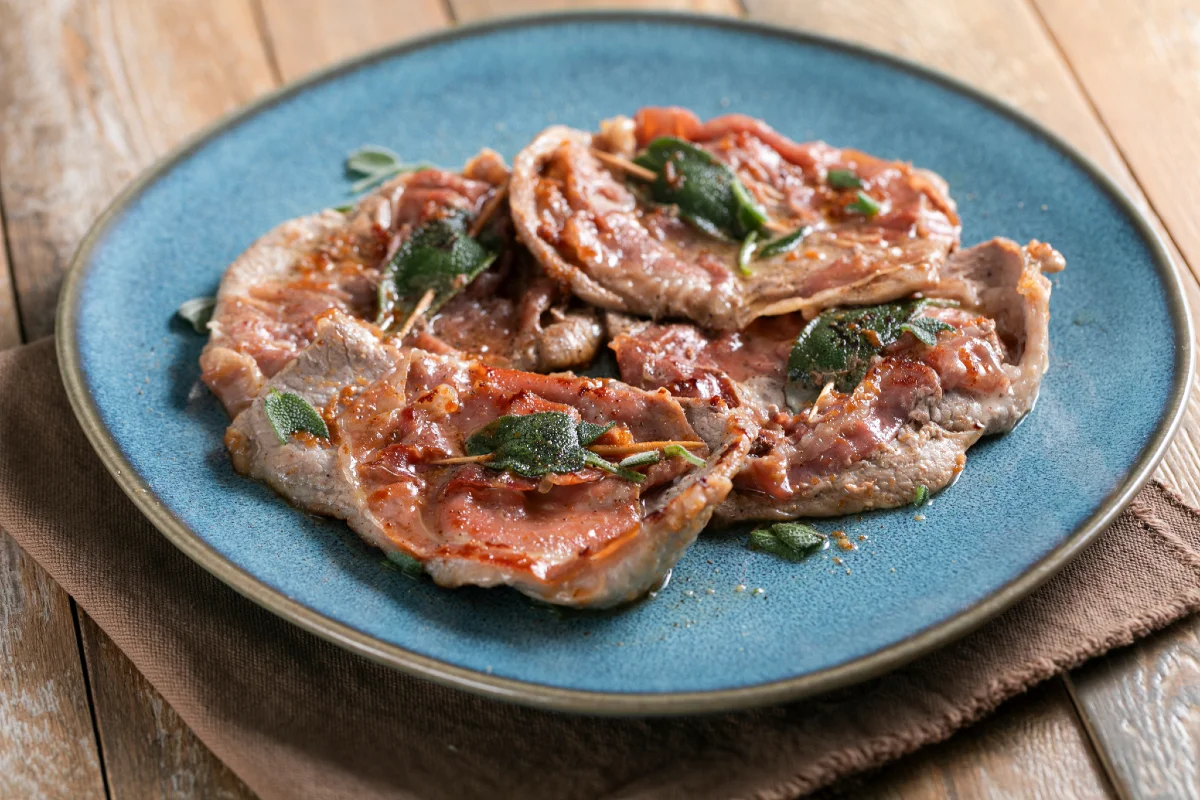
Saltimbocca alla Romana pairs tender veal with cured ham and sage, finished in a quick white-wine pan sauce. It is a classic Italian main course that comes together in about 20 minutes.
Ingredients
- 560 g (8 thin slices)veal
- 80 g (8 slices)Serrano ham
- 8 leavessage
- 100 g00 flour
- 60 gwhite wine
- to tasteblack pepper
- to tastefine salt
- 100 gbutter
- 50 gextra-virgin olive oil
Instructions
- 1
Prepare the veal
Gently pound the veal slices until they are about 0.5 cm thick. Place a slice of ham and a sage leaf on each one, then secure the layers with a cocktail stick.
- 2
Heat the fats
Melt the butter in a wide non-stick frying pan and add the olive oil. Meanwhile, dust only the side of each veal slice without ham with flour, then shake off the excess.
- 3
Fry the slices
Arrange the slices in the pan with the ham facing upwards. Cook over a medium-high heat, without moving them, for 3 minutes until browned. Turn them over and cook for 1 minute, then add the white wine.
- 4
Finish the sauce
Let the wine evaporate, then turn off the heat. Serve the saltimbocca with the pan juices spooned over and finish with freshly ground black pepper.
What is saltimbocca alla Romana?
Saltimbocca alla Romana is a Roman veal dish whose name is often rendered as “jumps in the mouth”. Thin veal is topped with cured ham and sage, then briefly cooked in a pan.
This version keeps to that familiar combination and adds white wine to the buttery pan juices. The quick cooking suits the thin slices and helps keep the meat tender.
Nutrition and macros by portion
The nutrition label shows one serving as written: 600 calories, 38g protein, 19g carbs, 43g fat.
| Portion | Adjustment | kcal | Protein | Carbs | Fat |
|---|---|---|---|---|---|
| Lighter | Use less butter and oil | 420 kcal | 27g | 13g | 30g |
| This serving | As written | 600 kcal | 38g | 19g | 43g |
| Hungry | Add potatoes or bread | 900 kcal | 57g | 29g | 65g |
The veal and Serrano ham provide most of the protein, while the flour contributes carbohydrates. Butter and olive oil account for much of the fat. Add a generous serving of vegetables alongside, and choose bread or potatoes according to how filling you want the meal to be.
Choosing the ingredients
Veal: Thin slices cook quickly, so aim for an even thickness of about 0.5 cm after pounding. Serrano ham brings a savoury, cured flavour; use slices that are easy to lay flat over the veal.
Sage: A whole leaf on each portion gives a distinct herbal note. Fresh leaves are easiest to secure neatly with the ham.
Flour only one side
Floured side: Coat the side without ham and shake away any extra flour. This helps the veal brown while avoiding a thick coating over the ham and sage.
Pan space: Use a wide pan and arrange the slices without crowding them. If they do not fit in one layer, cook them in batches so they brown rather than steam.
Watch the quick cook
First side: Leave the slices undisturbed for the full 3 minutes over a medium-high heat. The underside should be browned before you turn them.
Second side: Cook for 1 minute after turning, then add the wine. The thin veal needs little time in the pan, so avoid extending the cooking unnecessarily.
Build the pan juices
Wine: Add the white wine after turning the slices, then allow it to evaporate as directed. It lifts the browned flavours from the pan and joins the butter and oil.
Serving: Spoon the cooking juices over the saltimbocca just before serving, and add black pepper at the end for a fresh, fragrant finish.
What to serve alongside
Vegetables: Serve with green beans or a simple salad to bring freshness alongside the rich pan juices. Keep them simply dressed so they do not compete with the sage.
Starchy sides: Bread, potatoes or plain rice can soak up the sauce and make the meal more substantial. Serve the saltimbocca promptly while the coating and meat are at their best.
Recipe notes & tips
- Pound the veal gently and evenly so the slices cook at the same rate.
- Secure the ham and sage with a cocktail stick before flouring the meat.
- Shake off loose flour to avoid a heavy coating in the pan.
- Let the pan heat properly before adding the slices so they can brown.
- Keep the ham facing upwards during the first 3 minutes of cooking.
- Spoon the pan juices over the meat at the table or just before serving.
Variations
- Use prosciutto: Replace the Serrano ham with thin slices of prosciutto for a milder cured-ham flavour.
- Add lemon: Finish with a little lemon juice for a brighter contrast to the butter.
- Try another herb: Use a small thyme leaf in place of sage for a different herbal note.
- Serve with greens: Pair the saltimbocca with sautéed spinach or green beans.
- Make it gluten-free: Use a suitable gluten-free flour for dusting the veal.
Common mistakes to avoid
- Pounding too hard: The slices can tear; tap them gently until they reach an even 0.5 cm thickness.
- Flouring the ham side: The coating can become heavy; dust only the exposed veal.
- Leaving excess flour on: It can cloud the pan juices; shake each slice before cooking.
- Crowding the pan: The meat may steam instead of browning; cook in batches if needed.
- Cooking for too long: Thin veal can become tough; stick to the stated 3 minutes and 1 minute.
- Adding the wine too early: Follow the method and add it after turning the slices.
How to store
Refrigerate leftovers in an airtight container and eat within 2 days. Reheat gently in a covered pan over low heat with a splash of water; avoid prolonged heating, which can toughen the veal.
Frequently asked questions
Can I prepare the saltimbocca ahead of time?
You can layer the veal with ham and sage shortly ahead and keep it covered in the fridge. Flour and cook it just before serving for the best browning.
Do I need to secure the ham with a cocktail stick?
Yes, it helps keep the ham and sage in place as you handle the slices. Remove the sticks before eating.
What can I use instead of Serrano ham?
Thinly sliced prosciutto is a suitable alternative. Choose a cured ham that is thin enough to sit flat on the veal.
How do I know when the veal is cooked?
The first side should be browned after 3 minutes, followed by 1 minute after turning. The slices are thin, so avoid leaving them in the pan longer than needed.
Can I leave out the wine?
The wine is part of the pan sauce and adds flavour as it evaporates. If you omit it, the result will have less sauce and a different flavour.
Cook it from the original
This recipe comes from giallozafferano.es. Their page has the author’s own photos, notes and tips — the best place to cook it from.
Open the recipe on giallozafferano.es