
Greek Yogurt Bagels
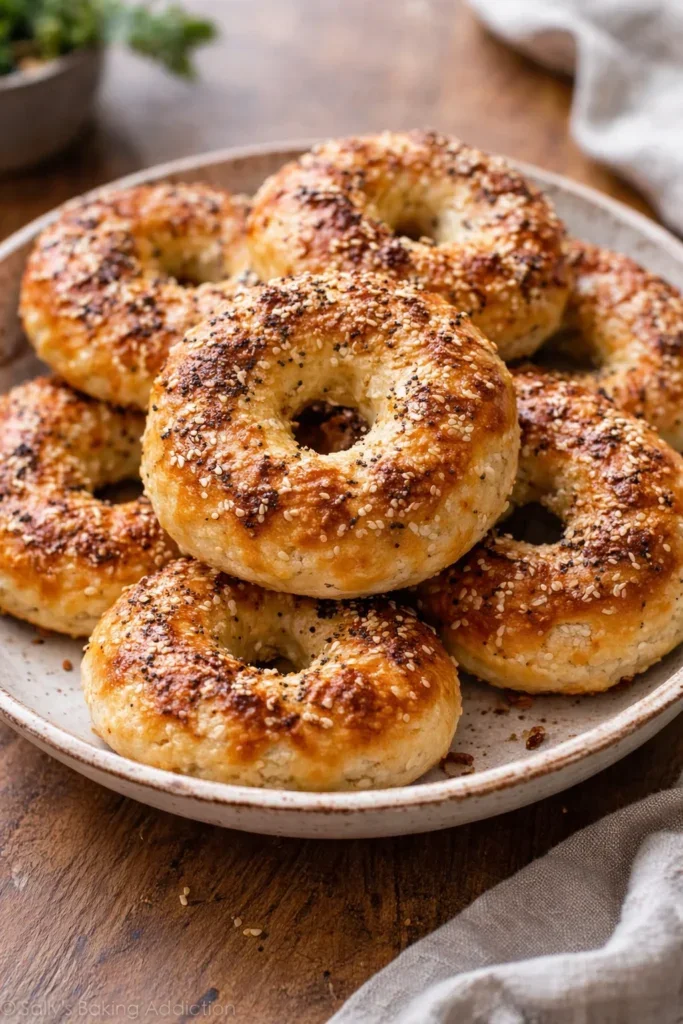
These soft, slightly tangy Greek yoghurt bagels use a simple yoghurt-and-self-raising-flour dough and bake in about 25 minutes. Make them for a quick homemade breakfast or lunch, with sweet or savoury toppings to suit.
Ingredients
- About 360 g (1½ cups)plain Greek yoghurt
- About 180 g (1½ cups)self-raising flour, plus extra for dusting if needed
- 15–30 ml (1–2 tablespoons)honey or sugar, optional
- 1 largeegg
- To tastesesame seeds
- To tastepoppy seeds, optional
- To tasteeverything seasoning
- To tastecoarse salt
- To tastecinnamon sugar
Instructions
- 1
Preheat the oven
Heat the oven to 200°C (400°F) and line a baking sheet with baking parchment.
- 2
Mix the dough
Stir the Greek yoghurt and honey together in a large bowl. Add the self-raising flour gradually, mixing until a shaggy dough forms; it should be a little sticky but still possible to shape.
- 3
Knead gently
Turn the dough onto a floured surface and knead gently for 1–2 minutes, until smooth. If it is too sticky, work in an extra tablespoon of flour at a time.
- 4
Shape the bagels
Divide the dough into 6 equal pieces and roll each into a ball. Push your thumb through the centre of each ball, then gently stretch the dough into a ring.
- 5
Brush with egg
Arrange the bagels on the prepared baking sheet. Beat the egg and lightly brush it over the tops to help the toppings stick and give the bagels a golden finish.
- 6
Add the toppings
Sprinkle the bagels generously with your chosen toppings.
- 7
Bake and cool
Bake for 20–25 minutes, until golden and firm. Transfer to a rack and leave to cool for 10 minutes.
- 8
Serve warm
Slice and enjoy warm with cream cheese, jam, or olive oil and herb-packed tzatziki.
What are Greek yoghurt bagels?
Bagels are ring-shaped bread rolls associated with Jewish baking traditions in Central and Eastern Europe, and they became a familiar staple in the United States. This quick American-style version skips the usual boiling step and uses Greek yoghurt with self-raising flour for a simpler dough.
The yoghurt brings moisture and a mild tang, while the flour gives the dough its structure and lift. A selection of toppings lets you take the same batch in either a savoury or sweet direction.
Nutrition and macros by portion
The nutrition label shows one serving as written: 180 calories, 8g protein, 30g carbs, 3g fat.
| Portion | Adjustment | kcal | Protein | Carbs | Fat |
|---|---|---|---|---|---|
| Lighter | Use less topping | 126 kcal | 6g | 21g | 2g |
| This serving | As written | 180 kcal | 8g | 30g | 3g |
| Hungry | Serve with extra yoghurt | 270 kcal | 12g | 45g | 5g |
The flour provides most of the carbohydrates, while the Greek yoghurt and egg contribute protein; the yoghurt and egg also supply some of the fat. For a more balanced plate, serve a bagel with fresh vegetables or salad alongside your chosen topping.
Choosing the ingredients
Yoghurt: Full-fat Greek yoghurt gives the dough a richer taste, as suggested in the recipe. Thick yoghurt helps make a dough that is sticky but still shapeable.
Flour: Self-raising flour provides the rise, so use it rather than plain flour. Keep a little extra to hand for dusting and for adjusting a very sticky dough.
Sweetener: Honey or sugar is optional and adds a touch of sweetness. The method mixes in honey; if using sugar instead, stir it into the yoghurt in the same way.
Getting the dough right
Mix gradually: Add the flour a little at a time and stop when the dough comes together in a rough mass. The exact feel can vary, so avoid adding extra flour unless the dough is genuinely difficult to handle.
Knead lightly: A brief 1–2 minutes is enough to bring the dough together smoothly. Too much kneading can make shaping less easy, so handle it gently.
Shaping even rings
Equal pieces: Divide the dough into 6 similar portions so the bagels bake at about the same rate. Roll each into a ball before making the hole.
Open centres: Push your thumb through the middle and stretch the ring gently. Keep the hole open, as the dough may puff while baking.
Toppings and finish
Egg wash: A light coating helps the toppings adhere and encourages a golden surface. Brush the tops rather than soaking them.
Choose a direction: Sesame seeds, poppy seeds, everything seasoning and coarse salt suit savoury bagels; cinnamon sugar makes a sweet option. You can vary the toppings across the batch.
How to tell they are done
Colour: Look for a golden top after 20–25 minutes in the 200°C (400°F) oven. The recipe also describes the finished bagels as firm.
Cooling: Leave them on a rack for 10 minutes before slicing. This gives the freshly baked dough a little time to settle while keeping the bagels warm to serve.
What to serve with them
For breakfast or a snack, serve the bagels warm with cream cheese or jam. For a savoury plate, try the suggested olive oil and herb-packed tzatziki.
If you are serving the bagels as part of a meal, pair them with fresh vegetables or a salad for a contrasting, crisp side.
Recipe notes & tips
- Measure the flour and yoghurt before mixing so the dough comes together without interruption.
- Dust the work surface lightly to make the dough easier to handle.
- Add extra flour a tablespoon at a time if the dough is too sticky to shape.
- Keep the bagel holes generous so they remain visible after baking.
- Use different toppings on individual bagels to make a mixed batch.
- Let the bagels cool on a rack for 10 minutes before slicing.
Variations
- Sesame finish: Sprinkle sesame seeds over the egg-washed bagels before baking.
- Poppy seed tops: Add poppy seeds for a different savoury crunch.
- Everything seasoning: Use everything seasoning for a more savoury, seasoned topping.
- Sweet version: Finish the tops with cinnamon sugar instead of savoury toppings.
- Honey dough: Mix honey into the yoghurt for a gently sweet note.
Common mistakes to avoid
- Adding flour too quickly: Mix it in gradually so you can judge when the dough is shaggy and moldable.
- Over-flouring the dough: Add extra flour only a tablespoon at a time if the dough is too sticky.
- Kneading too hard: Knead gently for just 1–2 minutes, until the dough is smooth.
- Closing the holes: Stretch the centres gently and leave them open before baking.
- Skipping the egg wash: Brush the tops lightly so the chosen toppings can adhere.
- Slicing straight from the oven: Cool the bagels on a rack for 10 minutes first.
How to store
Keep cooled bagels in an airtight container at room temperature and eat within 2 days for the best texture. Reheat briefly in a warm oven or toast sliced bagels before serving.
Frequently asked questions
Can I use plain flour instead of self-raising flour?
The recipe relies on self-raising flour for its rise, so plain flour will not behave the same way. Use self-raising flour for the stated method.
Why is my dough sticky?
The dough is meant to be slightly sticky but moldable. If it is too difficult to shape, add extra flour a tablespoon at a time.
Can I leave out the honey or sugar?
Yes, the sweetener is optional. The bagels will simply have less sweetness.
How do I stop the bagel holes from closing?
Make the hole clearly open when shaping and gently stretch the ring. The dough may puff in the oven, so a generous opening helps.
Can I use more than one topping?
Yes. Sprinkle your chosen toppings over the egg-washed tops, or use different toppings on different bagels.
How do I know when the bagels are baked?
Bake for 20–25 minutes at 200°C (400°F), until the tops are golden and the bagels feel firm.
Cook it from the original
This recipe comes from benefitrecipes.com. Their page has the author’s own photos, notes and tips — the best place to cook it from.
Open the recipe on benefitrecipes.com