
Peperonata
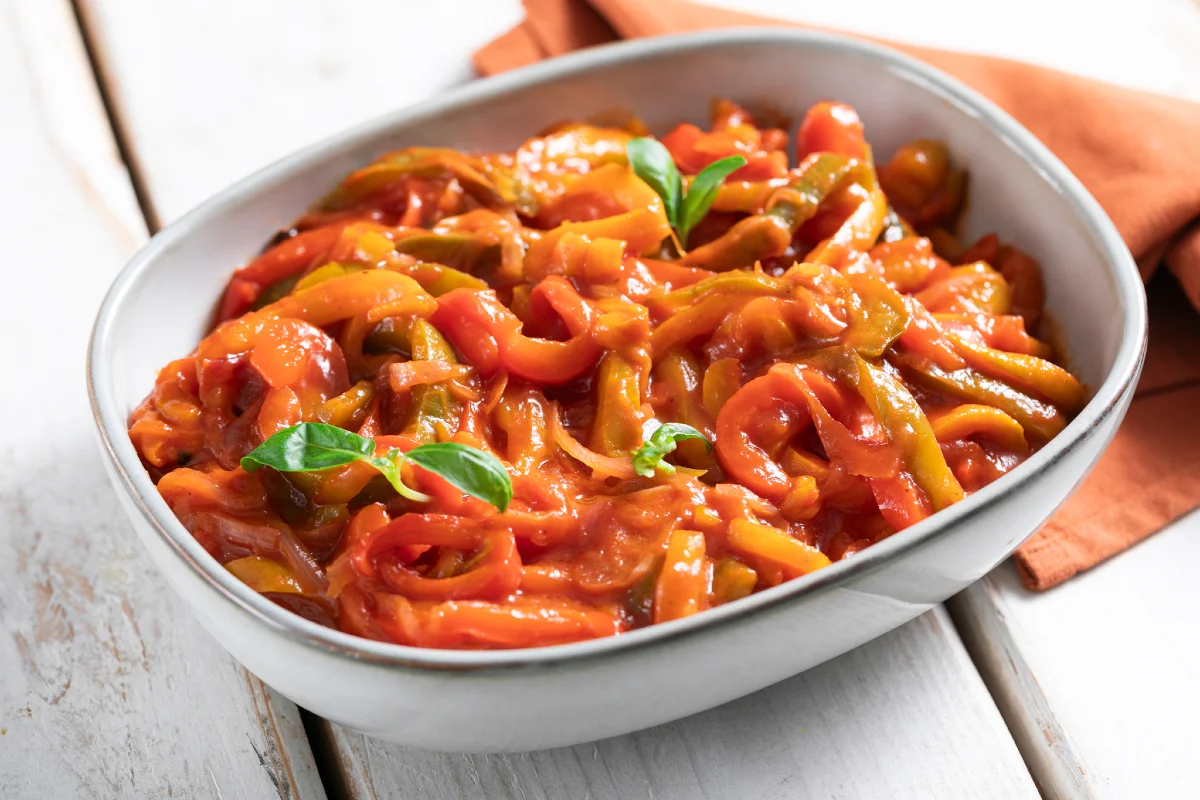
Peperonata is a slow-cooked mix of sweet peppers, Tropea onions and tomato, served warm or at room temperature. Make it as a colourful summer side, or enjoy a generous bowl with bread as a simple meal.
Ingredients
- 1 kgred, yellow and green peppers
- 350 gtomato passata
- 300 gTropea red onions
- 2 clovesgarlic
- as neededbasil
- 50 gwater
- as neededextra-virgin olive oil
- to tastefine salt
- to tasteblack pepper
Instructions
- 1
Prepare the peppers
Halve the peppers lengthways and remove the stalks. Tap them over a chopping board to dislodge any remaining seeds, then open them out.
- 2
Slice the vegetables
Remove the inner ribs and cut the peppers into strips about 0.5 cm wide. Clean the Tropea onions and slice them thinly.
- 3
Cook the onions
Warm the olive oil in a large frying pan with the garlic cloves to flavour it, then add the onions. Cook over a low heat for 10 minutes, stirring from time to time. Once the onions have softened, remove the garlic.
- 4
Add the peppers
Add the peppers and raise the heat slightly. Cook over a medium-high heat for 15 minutes, stirring occasionally. When the peppers are tender, lower the heat and pour in the passata.
- 5
Simmer the mixture
Add enough water to rinse out the passata carton, then season with salt and black pepper. Cook for a further 15 minutes with the lid ajar.
- 6
Finish the peperonata
Stir in the basil leaves. Raise the heat again and let the mixture reduce for a few minutes, until it reaches the consistency you want.
What is peperonata?
Peperonata is an Italian preparation of peppers cooked slowly with onions and tomatoes until soft and full of flavour. This version pairs mixed-colour peppers with sweet Tropea onions and passata for a straightforward summer dish.
The ingredients are cooked in stages: first the onions soften, then the peppers cook before the tomato is added. That order helps each vegetable keep its character while the sauce comes together.
Nutrition and macros by portion
The nutrition label shows one serving as written: 194 calories, 4g protein, 26g carbs, 7g fat.
| Portion | Adjustment | kcal | Protein | Carbs | Fat |
|---|---|---|---|---|---|
| Lighter | Use less olive oil | 136 kcal | 3g | 18g | 5g |
| This serving | As written | 194 kcal | 4g | 26g | 7g |
| Hungry | Serve with bread | 291 kcal | 7g | 39g | 11g |
The peppers, passata and onions provide most of the carbohydrates, while olive oil contributes most of the fat; the vegetables provide only a modest amount of protein. Pair a portion with beans, eggs or another protein-rich food, and bread if you want a more filling plate.
Choosing the ingredients
Peppers: A mix of red, yellow and green gives the dish varied sweetness and colour. Slice them into strips of similar width so they cook at a similar pace.
Tropea onions: Their mild, sweet flavour suits the tomato and peppers. Thin slices soften readily during the initial gentle cooking.
Passata: Smooth tomato passata coats the vegetables without adding chunks. The small amount of water helps rinse the carton and loosen the sauce.
Build the flavour in stages
Onions first: Cook them gently in the garlic-scented oil for the full 10 minutes, stirring now and then. Remove the garlic once the onions have softened so it does not dominate the finished dish.
Peppers next: The medium-high heat and 15-minute cook give the strips time to become tender before the passata goes in. Stir occasionally to help them cook evenly.
Judge the texture
Tender peppers: They should be soft enough to eat easily but still hold their shape. If they need more time, continue cooking gently and check them before adding the passata.
Thick sauce: Simmering with the lid ajar lets moisture escape. The final few minutes uncovered help you reduce the sauce to your preferred consistency.
Timing and serving
The method includes 10 minutes for the onions, 15 minutes for the peppers and a further 15 minutes with the passata, followed by a short reduction. Allow extra time for preparing the vegetables; the stated total time is 65 minutes.
Serve peperonata warm or at room temperature as a side dish. For a more substantial meal, pair it with bread, or serve it alongside grilled vegetables, fish or meat.
Seasoning and basil
Seasoning: Salt and black pepper go in with the passata, giving them time to mingle with the sauce. Taste near the end and adjust if needed.
Basil: Add the leaves towards the end of cooking, as directed, to keep their aroma noticeable. Stir them through before the final reduction.
Recipe notes & tips
- Cut the pepper strips to a similar width so they soften evenly.
- Keep the heat low while the onions cook, and stir them occasionally.
- Use a wide frying pan so the peppers have room to cook rather than pile up.
- Keep the lid ajar during the tomato simmer to help the sauce reduce.
- Add the basil near the end so its aroma remains distinct.
- Let the peperonata stand briefly before serving if you prefer it at room temperature.
Variations
- Add chilli: Include a little chopped chilli with the garlic for gentle heat.
- Use fresh tomatoes: Replace the passata with peeled, chopped ripe tomatoes and allow for a looser sauce.
- Add courgette: Cut it into strips and cook it with the peppers.
- Make it heartier: Serve with cooked chickpeas stirred through near the end.
- Try fresh herbs: Add a little oregano alongside the basil for a different herbal note.
Common mistakes to avoid
- Burning the garlic: Keep the oil gentle and remove the cloves once the onions have softened.
- Uneven pepper strips: Cut them to a consistent width so some do not turn soft before others.
- Rushing the onions: Give them the full 10 minutes over low heat to soften properly.
- Adding passata too soon: Cook the peppers for the stated 15 minutes first so they have time to become tender.
- Watery sauce: Simmer with the lid ajar, then reduce for a few more minutes if needed.
- Overcooking the basil: Add it towards the end rather than at the start of the long simmer.
How to store
Cool leftovers promptly and store them in a covered container in the fridge for up to 3 days. Reheat gently in a pan until hot, adding a splash of water if the sauce has thickened too much.
Frequently asked questions
Can peperonata be served cold?
Yes. It can be served warm or at room temperature, so it works well when made ahead.
How do I know when the peppers are ready for the passata?
They should be tender after the 15-minute cook but still hold their shape. If they are firm, give them a little longer before adding the tomato.
Can I use just one colour of pepper?
Yes. The method works with a single colour, though a mixture gives the finished dish a broader range of colour and sweetness.
Why is the lid left ajar?
Leaving it ajar allows some steam to escape as the passata simmers, helping the sauce thicken.
What can I serve with peperonata?
Serve it as a side with fish, meat or other vegetables, or pair it with bread for a simple meal.
Can I make it ahead?
Yes. Cook it ahead and refrigerate it in a covered container, then reheat gently or serve it at room temperature.
Cook it from the original
This recipe comes from giallozafferano.es. Their page has the author’s own photos, notes and tips — the best place to cook it from.
Open the recipe on giallozafferano.es