
Melt-in-Your-Mouth Cake: A Simple Delight That Costs Next to Nothing
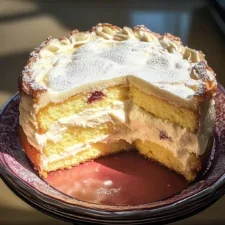
This soft, buttery cake is filled with a creamy milk-and-egg custard and finished with a dusting of icing sugar. It uses familiar, inexpensive ingredients and makes a generous centrepiece for a family gathering or casual celebration.
Ingredients
- 150 gplain flour
- 100 mlwater
- 100 mlmilk
- 80 gbutter
- 4 largeeggs
- 1 teaspoonbaking powder
- ½ teaspoonsalt
- 500 mlmilk (for the filling)
- 150 gsugar (for the filling)
- 100 gplain flour (for the filling)
- 2 largeeggs (for the filling)
- 180 gbutter (for the filling)
- to tasteicing sugar, for garnish
Instructions
- 1
Prepare the oven
Heat the oven to 180°C (350°F) and grease a 23 cm (9-inch) round cake tin.
- 2
Mix the batter
In one bowl, combine the flour, baking powder and salt. In another, beat the eggs with sugar until fluffy, then gradually mix in the melted butter, water and milk. Fold the dry ingredients in gently. The method does not specify how much sugar to use in the cake batter; the listed sugar is labelled for the filling.
- 3
Bake the cake
Pour the batter into the prepared tin and bake for about 40 minutes, or until a toothpick inserted into the cake comes out clean.
- 4
Cook the filling
Warm the milk and sugar in a saucepan until the sugar dissolves. In a separate bowl, whisk the flour and eggs together, then add this mixture to the pan. Stir constantly until thickened, then leave it to cool slightly.
- 5
Fill and finish
Once the cake and filling have cooled, slice the cake horizontally into layers if desired and spread the filling between them. Dust with icing sugar before serving.
What is melt-in-your-mouth cake?
This is a simple home-style cake built from a tender baked sponge and a rich, cooked milk filling. The recipe does not give a specific regional origin, but its combination of cake and custard-style filling is familiar in many home-baking traditions.
The contrast is what makes this version appealing: a soft cake is paired with a smooth, thick filling, then finished with a light dusting of icing sugar. The method leaves the choice to split the cake into layers, so the filling can be tucked inside or served with the cake in another way.
Nutrition and macros by portion
The nutrition label shows one serving as written: 300 calories, 5g protein, 36g carbs, 15g fat.
| Portion | Adjustment | kcal | Protein | Carbs | Fat |
|---|---|---|---|---|---|
| Lighter | Smaller cake slice | 210 kcal | 4g | 25g | 11g |
| This serving | As written | 300 kcal | 5g | 36g | 15g |
| Hungry | Larger cake slice | 450 kcal | 8g | 54g | 23g |
The flour and sugar provide much of the carbohydrate, while the butter contributes most of the fat; the eggs and milk supply some protein as well as richness. Pair a slice with fresh fruit, or serve it after a meal with plenty of vegetables and a savoury protein source.
The cake batter
Dry ingredients: mix the flour, baking powder and salt evenly before adding them to the wet mixture. Folding them in gently helps avoid a dense cake.
Sugar: the method says to beat sugar with the eggs, but the ingredient list only gives sugar for the filling. Check this detail before baking; no separate quantity for the cake batter is provided.
Cooking the filling
Egg mixture: whisk the filling flour and eggs until smooth before adding them to the pan. This makes it easier to incorporate them into the warm milk without leaving lumps.
Stirring: keep the filling moving as it heats, especially around the base and corners of the saucepan. Stop when it has thickened, then cool it slightly before spreading.
Check for doneness
Cake: begin checking at around 40 minutes, as specified in the method. A toothpick coming out clean is the recipe’s cue that the centre is baked.
Filling: it should be thick enough to spread and hold between layers. Let the cake cool before assembling so the filling does not run off.
Layering and finishing
For layers: slice the cooled cake horizontally if you want the filling inside. Use a steady hand and spread the filling evenly across the cut surface.
For the finish: dust icing sugar over the top just before serving for a delicate finish. Add it after the filling is in place so it stays visible.
Serving ideas
Serve the cake in modest slices alongside tea or coffee, or add fresh fruit for a bright contrast to the buttery cake and creamy filling. If serving after a larger meal, keep the accompaniments simple so the filling remains the focus.
Recipe notes & tips
- Measure the ingredients before you start, and keep the filling ingredients separate from those for the cake.
- Melt the cake batter butter before mixing it in, as the method specifies.
- Fold the dry ingredients into the wet mixture gently rather than beating them vigorously.
- Stir the filling continuously as it thickens to help keep it smooth.
- Cool the cake before slicing it into layers and adding the filling.
- Dust the icing sugar over the cake close to serving time.
Variations
- Fresh fruit: serve slices with berries or sliced seasonal fruit for a fresh contrast.
- Citrus note: add finely grated lemon zest to the filling for a brighter flavour.
- Vanilla: stir vanilla extract into the filling after it thickens for a warm aroma.
- Single-layer serving: leave the cake whole and serve the filling alongside each slice.
- Decorative top: arrange a few pieces of fruit over the icing sugar just before serving.
Common mistakes to avoid
- Unclear batter sugar: the method mentions sugar with the eggs but gives no separate batter quantity; check the source recipe rather than guessing.
- Lumpy filling: whisk the filling flour and eggs together smoothly before adding them to the milk.
- Scorched filling: stir constantly and scrape the base and sides of the saucepan as it thickens.
- Warm assembly: let the cake cool before filling it so the filling is less likely to slide.
- Overmixing: fold in the dry ingredients gently to avoid a heavy texture.
How to store
Cover and refrigerate leftover cake because it contains a milk-and-egg filling, and use it within 3 days. Serve chilled or let a portion stand briefly at room temperature; avoid reheating the assembled cake, as the filling may soften too much.
Frequently asked questions
Can I make the cake ahead?
Yes. Bake the cake and cook the filling ahead, then cool and refrigerate them separately. Assemble once both are cool, or the day you plan to serve it.
How do I know when the cake is baked?
Bake for about 40 minutes and test the centre with a toothpick. It is ready when the toothpick comes out clean.
Why is the amount of sugar for the cake unclear?
The method says to beat sugar with the eggs, but the ingredient list only specifies 150 g for the filling. It does not provide a separate amount for the cake batter.
Can I skip slicing the cake into layers?
Yes. The method says to slice it horizontally if desired. You can serve the filling alongside slices instead, though that changes how the cake is presented.
Can I use a different-sized tin?
The method specifies a 23 cm (9-inch) round tin. A different size may change the cake’s thickness and baking time, so check for doneness with a toothpick.
Cook it from the original
This recipe comes from bazarecipe.com. Their page has the author’s own photos, notes and tips — the best place to cook it from.
Open the recipe on bazarecipe.com