
Omelette
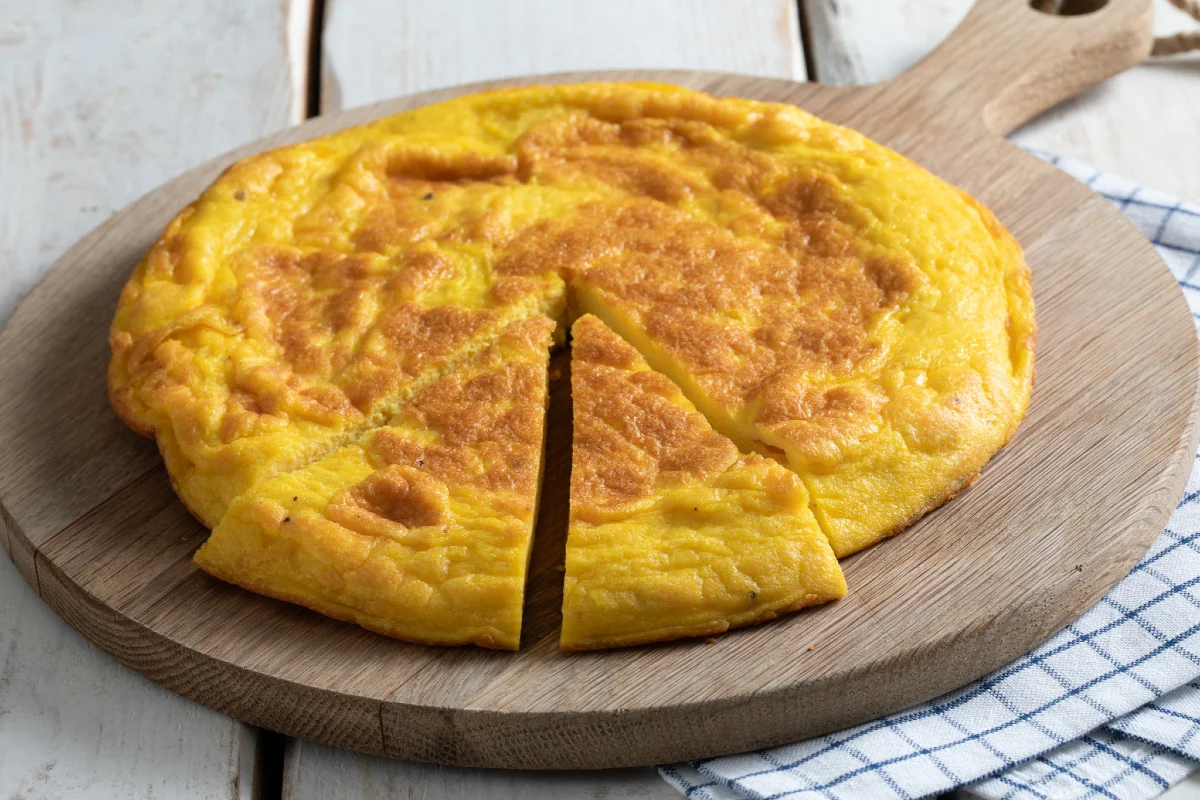
This simple cheese omelette combines beaten eggs with grated Pecorino and Parmigiano Reggiano, then cooks gently in a covered pan before being turned. It makes a filling meal with a crisp-golden surface and a soft, savoury centre.
Ingredients
- 8medium eggs
- 50 gPecorino, for grating
- 50 gParmigiano Reggiano DOP, for grating
- to tastefine salt
- to tasteblack pepper
- 30 ml (2 tablespoons)extra-virgin olive oil, for greasing the pan
Instructions
- 1
Beat the eggs
Crack the eggs into a bowl and season with salt and pepper. Beat them with a whisk or fork.
- 2
Add the cheeses
Add the grated Parmigiano Reggiano and Pecorino. Whisk again until the mixture is well combined.
- 3
Cook the first side
Grease a 25 cm non-stick frying pan with 30 ml (2 tablespoons) of oil and pour in the egg mixture. Cover and cook over a low heat for about 15 minutes. Use a spatula to loosen the edges, then check that the base is cooked.
- 4
Turn and finish
Take the pan off the heat briefly and place a flat plate, slightly larger than the pan, over it. Turn the omelette over in one quick movement, then slide it back into the pan. Cook the other side uncovered for a further 5–7 minutes, until lightly golden on top, then serve.
What is this omelette?
An omelette is a dish of beaten eggs cooked in a pan, either folded or left whole. This version is cooked as one large, thick round and turned partway through, giving both sides time to set.
It draws on familiar Italian cheeses, Parmigiano Reggiano and Pecorino, for a savoury, salty flavour. The combination works well because the eggs provide a tender base while the grated cheeses blend through the mixture.
Nutrition and macros by portion
The nutrition label shows one serving as written: 410 calories, 29g protein, 2g carbs, 31g fat.
| Portion | Adjustment | kcal | Protein | Carbs | Fat |
|---|---|---|---|---|---|
| Lighter | Use less oil | 287 kcal | 20g | 1g | 22g |
| This serving | As written | 410 kcal | 29g | 2g | 31g |
| Hungry | Serve a larger wedge | 615 kcal | 44g | 3g | 47g |
The eggs and cheeses provide most of the protein and fat, while the eggs also contribute a small amount of carbohydrate. Olive oil adds further fat, and the cheeses are the main source of salt. Serve a wedge with vegetables or salad to balance the plate with something fresh.
Why use two cheeses?
Pecorino: Made from sheep’s milk, it brings a pronounced, savoury saltiness. Season the egg mixture lightly at first, since the cheese is already salty.
Parmigiano Reggiano: Its firm texture makes it easy to grate finely, so it disperses evenly through the eggs. Grating both cheeses just before mixing helps them combine smoothly.
Getting the mixture right
Beat the eggs with a whisk or fork until the yolks and whites are blended, then mix in the grated cheeses. Avoid vigorous whisking for too long; the aim is an even mixture rather than lots of foam.
A 25 cm non-stick pan gives the omelette room to cook as a single round. Grease the base evenly so it can be loosened and turned without sticking.
Cook gently, then check the base
Covered cooking over a low heat lets the eggs set gradually without rushing the surface. Keep to the recipe’s approximate 15 minutes, but check the edges and base before turning.
The bottom should be set enough to release from the pan, while the top may still look a little soft. If the centre is very liquid, give it more time over low heat before attempting to flip.
How to turn the omelette
Choose a flat plate slightly wider than the pan and hold it firmly over the top. Turn the pan and plate together in one controlled movement, keeping them pressed together.
Slide the omelette back into the pan and cook it uncovered for another 5–7 minutes. It is ready when the second side is lightly golden and the centre is set.
Serving ideas
Serve the omelette hot, cut into wedges, as a simple main course or a substantial lunch. A green salad or cooked vegetables make a fresh accompaniment.
For a more filling plate, add bread or potatoes alongside. Keep any accompaniments separate so the cheese and egg flavours remain the focus.
Recipe notes & tips
- Grate the cheeses finely so they mix evenly into the beaten eggs.
- Use a non-stick pan that measures 25 cm across for the cooking time and thickness described.
- Keep the heat low while the pan is covered so the base does not brown too quickly.
- Loosen the edges with a spatula before turning the omelette.
- Use a plate slightly wider than the pan to make the flip easier to control.
Variations
- Add herbs: Stir chopped parsley into the egg mixture before cooking.
- Add vegetables: Mix in cooked, well-drained vegetables so they do not release excess moisture.
- Use one cheese: Replace either cheese with the same amount of the other for a simpler flavour.
- Add spring onion: Finely slice it and stir it into the eggs before they go into the pan.
Common mistakes to avoid
- Heat too high: The base can brown before the middle sets; cook the omelette over a low heat.
- Too much salt: The cheeses are already savoury; season cautiously and taste the mixture if needed.
- Sticking edges: Grease the pan evenly and loosen the omelette around its edge before turning.
- Rushing the flip: Check that the base is set and use a plate slightly larger than the pan.
- Overcooking: Check the centre after the stated cooking time and stop once it is set.
How to store
Cool leftovers promptly, cover, and refrigerate for up to 3 days. Reheat gently in a covered pan over low heat until warmed through, or serve cold.
Frequently asked questions
Can I make this omelette without a lid?
The method uses a lid to help the top set while the base cooks. Without one, the top may take longer to cook; check that the base is not browning too quickly.
How do I know when it is ready to turn?
The edges should be set and the base should release when loosened with a spatula. If the centre is very liquid, cook it for longer over low heat.
Can I use pre-grated cheese?
Yes, though freshly grated cheese tends to mix more evenly into the eggs. Use the same quantities.
What can I serve with it?
A green salad or cooked vegetables make a good accompaniment. Bread or potatoes work well if you want a more substantial meal.
Can I cook it in a smaller pan?
A smaller pan will make the omelette thicker, so it may need longer to set through. The recipe is written for a 25 cm pan.
Cook it from the original
This recipe comes from giallozafferano.es. Their page has the author’s own photos, notes and tips — the best place to cook it from.
Open the recipe on giallozafferano.es