
Omelette (basic recipe)
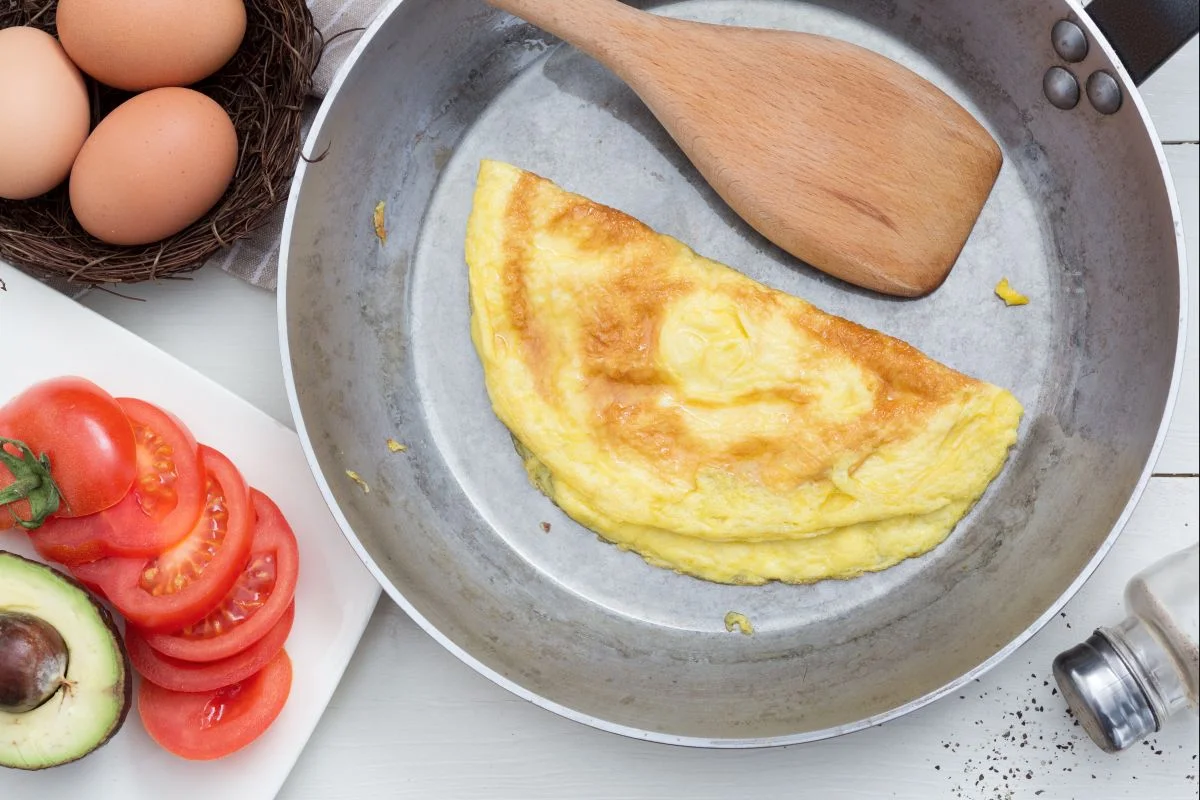
A classic French-style omelette made with eggs, a little milk and olive oil. It cooks quickly and can be served plain or filled with seasonal vegetables.
Ingredients
- 2large eggs
- 30 gwhole milk
- to tastefine salt
- 15 gextra-virgin olive oil
Instructions
- 1
Combine ingredients
Break the eggs into a bowl. Add the milk and a pinch of salt.
- 2
Beat the eggs
Whisk the eggs and milk together until the mixture falls from the whisk in a thin stream when you lift it.
- 3
Cook the omelette
Heat a frying pan and add a little of the extra-virgin olive oil. Once hot, pour in the egg mixture; test the oil with a few drops of egg first if needed. Cook over a moderate heat so the eggs set gently. When the edges begin to set, cover the pan with a lid. If the heat seems too high, take the pan off the heat for a few seconds, keeping the lid on. Gently move the pan so the omelette does not stay in one spot for too long. Once the surface is still soft, or just a little runny, and the underside is golden when lifted with a spatula, fold the omelette in half. Leave it in the pan for a few more seconds, then serve hot.
What is an omelette?
An omelette is a quick dish of beaten eggs cooked in a pan and folded while still tender. This version follows a simple French-style approach, with milk for a soft mixture and a gentle cook for a lightly browned exterior.
Serve it plain for a quick meal, or pair it with seasonal vegetables. The method also makes a useful starting point for adding a filling.
Nutrition and macros by portion
The nutrition label shows one serving as written: 287 calories, 0g protein, 2g carbs, 25g fat.
| Portion | Adjustment | kcal | Protein | Carbs | Fat |
|---|---|---|---|---|---|
| Lighter | Use less olive oil | 201 kcal | 0g | 2g | 17g |
| This serving | As written | 287 kcal | 0g | 2g | 25g |
| Hungry | Add a vegetable filling | 431 kcal | 0g | 3g | 37g |
The eggs provide most of the protein, while the olive oil is the main source of fat; the milk contributes a small amount of carbohydrate. To balance the plate, serve the omelette with seasonal vegetables and, if you want a more substantial meal, some bread.
The ingredients that matter
Eggs: beat them thoroughly with the milk so the mixture is even before it reaches the pan.
Milk: 30 g adds a little moisture to the egg mixture without making it difficult to fold.
Olive oil: use it to coat the pan and help the omelette release as it cooks. The recipe specifies 15 g in total.
Whisk to a smooth mixture
Beat the eggs and milk until they are well combined. The method's visual cue is a thin stream falling from the whisk when it is lifted.
Season with a pinch of fine salt before cooking, so it is mixed through rather than sprinkled unevenly over the finished omelette.
Control the heat
Moderate heat gives the eggs time to set while keeping the inside soft. If the pan seems too hot, move it off the heat briefly and keep the lid on.
The recipe suggests testing the oil with a few drops of egg before adding the full mixture. Once the edges start to set, cover the pan and gently shift it from time to time.
Know when it is ready
Look for a soft, slightly runny surface before folding; the underside should be golden when you lift an edge with a spatula.
Fold the omelette in half and leave it in the pan for a few more seconds. Serve it straight away while hot and tender.
What to serve with it
Seasonal vegetables make a simple accompaniment or filling, as suggested in the recipe description. Add them cooked and ready to eat so the brief cooking time for the eggs is not extended.
For a fuller plate, serve with bread or a crisp salad. The omelette is also described as a possible breakfast dish with crisp bacon.
Recipe notes & tips
- Whisk until the egg and milk mixture falls from the whisk in a thin stream.
- Test the oil with a few drops of egg before pouring in the full mixture.
- Keep the heat moderate to help the eggs stay soft.
- Cover the pan once the edges begin to set.
- Move the pan gently so the omelette does not cook in one spot for too long.
- Fold when the surface is still soft and the underside is golden.
Variations
- Seasonal vegetables: add cooked vegetables as a filling before folding.
- Crisp bacon: serve with crisp bacon for a breakfast-style meal.
- Fresh herbs: scatter chopped herbs over the eggs before folding.
- Black pepper: add a little freshly ground pepper with the salt.
- Cheese: add a small amount of grated cheese as a filling before folding.
Common mistakes to avoid
- Pan too hot: the eggs can brown before the middle sets, so lower the heat or lift the pan off it briefly.
- Skipping the lid: the top may remain unset while the base browns, so cover the pan once the edges start to set.
- Overcooking the surface: the omelette can lose its soft centre, so fold while the top is still slightly runny.
- Uneven cooking: leaving the pan still can overcook one area, so shift it gently during cooking.
- Folding too early: the underside may not be golden yet, so lift an edge with a spatula to check first.
How to store
This omelette is best eaten hot, just after cooking. If needed, refrigerate leftovers in a covered container and eat within 1 day; reheat gently in a pan until warmed through.
Frequently asked questions
How do I know when to fold the omelette?
Fold when the surface is still soft and the underside is golden when you lift an edge with a spatula.
Should the pan be covered?
Yes. Cover it once the edges begin to set, and keep the lid on if you briefly take the pan off the heat.
Can I add vegetables?
Yes. Use seasonal vegetables that are already cooked, then add them as a filling before folding.
Why is my omelette browning too quickly?
The pan may be too hot. Lower the heat or take the pan off it for a few seconds while keeping the lid on.
Can I make it without milk?
The recipe includes 30 g of whole milk. You can leave it out, though the egg mixture and finished texture may differ.
Can I prepare it ahead?
It is best cooked just before serving, since the method is quick and the omelette is at its softest when freshly made.
Cook it from the original
This recipe comes from giallozafferano.es. Their page has the author’s own photos, notes and tips — the best place to cook it from.
Open the recipe on giallozafferano.es