
Roman-style artichokes
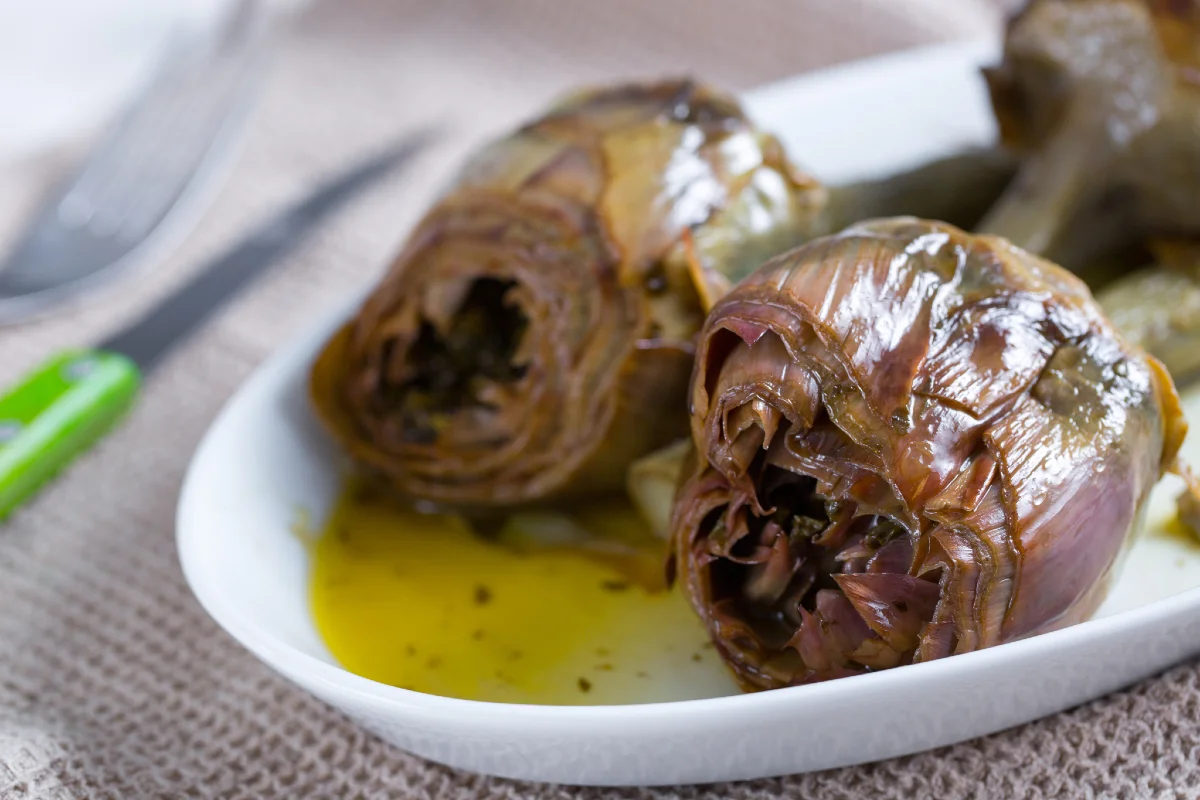
Roman-style artichokes are braised with garlic, parsley and mint until tender and fragrant. Browning them first builds flavour, while white wine and hot water create a savoury cooking liquor to spoon over at the table.
Ingredients
- 6Romanesco artichokes
- 1 bunchmint
- 1 bunchparsley
- 3 clovesgarlic
- 170 gwhite wine
- to tastefine salt
- as neededhot water
- as needed, generouslyextra-virgin olive oil
- 1lemon
Instructions
- 1
Clean the artichokes
Remove the tougher outer leaves until the pale base of the artichoke is exposed. Trim and peel the base and stem with a small knife, then cut off the leaf tips. If you like, trim around the ends of the leaves to give each artichoke a more flower-like shape.
- 2
Season the artichokes
Rub the lemon over the leaves and stems to help prevent browning. Trim the stems to your preferred length, keeping the cut pieces to cook alongside the artichokes. Gently open each artichoke with your hands, season inside and out with salt, and set the mint and parsley on a chopping board.
- 3
Chop the herbs
Finely chop the mint and parsley. Remove the inner germ from the garlic cloves, chop them finely too, then combine the garlic and herbs in a bowl.
- 4
Fill and brown
Press the herb mixture gently into each artichoke, then squeeze the leaves lightly to close the flower. Heat a generous amount of olive oil in a large, heavy-based saucepan. Set the artichokes upside down in the pan to brown, tucking in the stems if using, and turn up the heat.
- 5
Turn and deglaze
Once the tops of the artichokes are browned, turn them onto their sides and brown them all over, turning with tongs. Pour in the white wine to deglaze the pan. After a few seconds, once the alcohol has evaporated, add enough hot water to come halfway up the artichokes.
- 6
Braise until tender
Bring the liquid to a boil, then lower the heat, cover the pan and cook for about 30 minutes. For the optional covered-paper method, lay a sheet of dampened and wrung-out baking paper over the pan before putting on the lid. The artichokes should be cooked but still fairly firm; for a softer result, cook for about 10 minutes longer.
- 7
Finish the sauce
You can remove the baking paper after about 20 minutes, then continue cooking covered for another 10 minutes. Remove the lid towards the end if the cooking liquid needs reducing. Serve the artichokes drizzled with the pan juices.
What are Roman-style artichokes?
Carciofi alla romana is a classic Roman way to prepare artichokes, using herbs, garlic, olive oil and a gentle braise. This version fills whole artichokes with mint and parsley, then browns and simmers them in the same pan.
The result balances a savoury, aromatic centre with tender leaves and a flavourful cooking liquor. Romanesco artichokes suit the method because their rounded shape can hold the herb filling.
Nutrition and macros by portion
The nutrition label shows one serving as written: 250 calories, 5g protein, 17g carbs, 19g fat.
| Portion | Adjustment | kcal | Protein | Carbs | Fat |
|---|---|---|---|---|---|
| Lighter | Use less olive oil | 175 kcal | 4g | 12g | 13g |
| This serving | As written | 250 kcal | 5g | 17g | 19g |
| Hungry | Serve two artichokes | 375 kcal | 8g | 26g | 29g |
The artichokes provide most of the carbohydrates and fibre, while the olive oil carries most of the fat and the herbs contribute only a small amount of protein. Serve one artichoke per person alongside a protein-rich main and another vegetable for a more balanced plate.
Choosing and cleaning the artichokes
Trim the tough outer leaves until you reach the pale base, and peel the stem so it cooks at a similar rate to the heart. Rub the cut surfaces with lemon as you work to slow discolouration.
Keep the stems if they are attached and in good condition; they can cook in the pan between the artichokes. Open each artichoke gently rather than pulling the leaves apart.
The herb and garlic filling
Fine chopping: mince the mint, parsley and garlic so they can be distributed through the leaves without falling out in large pieces.
Garlic germ: remove the inner germ before chopping, as directed, then press the mixture into the opened artichokes. A gentle squeeze helps the leaves close around the filling.
Browning before braising
Hot oil: set the artichokes upside down first so the tops brown, then turn them carefully to colour the sides. This gives the braise a deeper flavour before the liquid goes in.
Wine and water: let the wine bubble briefly before adding hot water to halfway up the artichokes. Keep the heat controlled once the pan comes to a boil so the cooking stays gentle.
How to judge doneness
After about 30 minutes covered, check an artichoke by testing a leaf and the base with a small knife. The recipe aims for cooked artichokes that still hold their shape.
For softer artichokes, continue cooking for about 10 minutes longer. If the pan juices are still very loose, uncover the pan near the end and let them reduce.
Serving the artichokes
Spoon the reduced cooking juices over the artichokes just before serving, so the herbs and wine-seasoned oil are not left behind in the pan.
Serve them as a side with roast meat, fish or beans, or alongside bread to soak up the juices. They can also be part of a spread of Roman-style antipasti.
Recipe notes & tips
- Rub the cut surfaces with lemon as soon as you trim them to limit browning.
- Keep the trimmed stems and tuck them between the artichokes while they cook.
- Chop the herbs finely so the filling fits neatly between the leaves.
- Use tongs to turn the artichokes without pulling their leaves apart.
- Check the artichokes after 30 minutes, then extend the cooking time if you prefer them softer.
Variations
- Add lemon zest: mix a little finely grated zest into the herb filling for a brighter aroma.
- Use dried mint: replace fresh mint with a smaller amount of dried mint if fresh is unavailable.
- Add chilli: include a pinch of chilli flakes with the herbs for gentle heat.
- Swap the wine: use extra hot water in place of the white wine for a wine-free braise.
- Finish with herbs: scatter a little freshly chopped parsley over the artichokes just before serving.
Common mistakes to avoid
- Leaving tough leaves on: remove the outer leaves until the base is pale and tender.
- Skipping the lemon: rub trimmed surfaces with lemon so they are less likely to discolour.
- Overfilling the artichokes: press in the herbs gently and close the leaves without forcing them.
- Adding water too soon: let the wine bubble for a few seconds before pouring in the hot water.
- Cooking too long: check at about 30 minutes and extend the braise only if you want softer artichokes.
How to store
Cool the artichokes and refrigerate them in an airtight container with their cooking juices for up to 3 days. Reheat gently in a covered pan over low heat, adding a splash of water if the juices have reduced too much.
Frequently asked questions
Can I prepare the artichokes ahead?
You can clean and fill them shortly before cooking, keeping the trimmed artichokes rubbed with lemon. For the best texture, brown and braise them close to serving time.
How can I tell when the artichokes are cooked?
A leaf should pull away more easily, and a small knife should pass into the base without much resistance. The artichokes should still hold their shape unless you have cooked them longer for a softer result.
Do I have to use the baking paper?
No. It is an optional trick in the recipe; you can simply cover the pan with its lid and cook the artichokes as directed.
Can I use a different type of artichoke?
The recipe specifies rounded Romanesco artichokes, which are convenient to fill. Other whole artichokes may work, but their size and firmness can affect how long they need to cook.
What should I do if the artichokes are still firm after 30 minutes?
Continue braising for about 10 minutes, as the recipe suggests, then check again. Add a little hot water if the pan is running dry.
Can I make this without white wine?
Yes. Replace the wine with hot water, though the cooking juices will have a different flavour. Let the water simmer with the herbs and artichokes as usual.
Cook it from the original
This recipe comes from giallozafferano.es. Their page has the author’s own photos, notes and tips — the best place to cook it from.
Open the recipe on giallozafferano.es