
Salsa verde
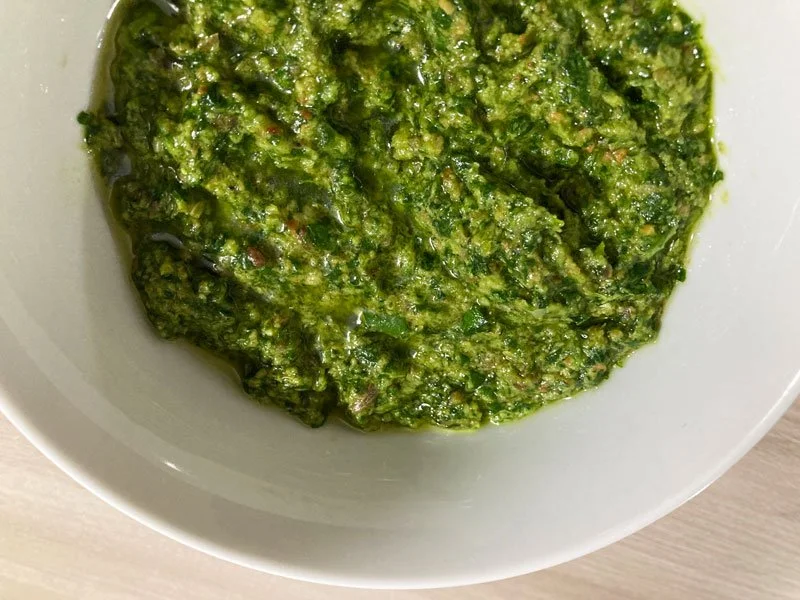
Italian salsa verde is a quick, punchy sauce made with parsley, egg yolk, bread, anchovy and olive oil. Serve it with fish, boiled meat or cold poached eggs to add a bright, savoury finish.
Ingredients
- 1hard-boiled egg yolk
- 1 tablespoonchopped parsley
- 50 gbread crumb, soaked in water and squeezed dry
- 1 teaspoon (or 2)anchovy paste (or crushed anchovies)
- 1 tablespoonwhite wine vinegar
- 70 mlextra-virgin olive oil
- to tastesalt
- to tasteblack pepper
Instructions
- 1
Mash the yolk
Mash the hard-boiled egg yolk in a bowl. Mix in the sieved, squeezed bread crumb, parsley and anchovy paste, then gradually drizzle in the oil, stirring until the sauce reaches the consistency you want.
- 2
Season the sauce
Stir in the vinegar, then season with salt and pepper to taste.
What is Italian salsa verde?
Italian salsa verde is a herb-based sauce traditionally served alongside fish or boiled meat. It is different from Mexican salsa verde: this version is built around parsley, olive oil, vinegar and savoury additions.
Here, egg yolk and soaked bread give the sauce body, while anchovy adds depth. The result is quick to make and easy to adjust for a spoonable or thicker texture.
Nutrition and macros by portion
The nutrition label shows one serving as written: 203 calories, 2g protein, 6g carbs, 19g fat.
| Portion | Adjustment | kcal | Protein | Carbs | Fat |
|---|---|---|---|---|---|
| Lighter | Use less olive oil | 142 kcal | 1g | 4g | 13g |
| This serving | As written | 203 kcal | 2g | 6g | 19g |
| Hungry | Serve a larger spoonful | 305 kcal | 3g | 9g | 29g |
Olive oil supplies most of the energy and fat, while the bread crumb contributes most of the carbohydrates. Egg yolk and anchovy add a little protein. Serve a modest spoonful with fish or eggs and vegetables to make a more balanced plate.
The ingredients that build the sauce
Parsley: use it freshly chopped for a lively herbal flavour. A tablespoon gives the sauce its green character without overwhelming the other ingredients.
Bread and yolk: the squeezed bread crumb thickens the mixture, and the mashed yolk helps bring the oil into a cohesive sauce.
Anchovy: a teaspoon of paste is convenient, while two crushed anchovies make a suitable alternative. Both add saltiness and savoury flavour.
Adding the oil gradually
Slow drizzling: add the olive oil little by little while mixing, rather than pouring it in all at once. This gives you better control over how thick and smooth the sauce becomes.
Texture check: stop when the sauce is easy to spoon but still holds some body. If it seems too thick, loosen it with a little more oil, added gradually.
Balancing the seasoning
Vinegar: stir it in after the oil to bring a sharp note to the rich, savoury mixture. Taste before adding salt, since anchovy paste or crushed anchovies can already be salty.
Pepper: add it to taste at the end, so its warmth stays distinct from the parsley and vinegar.
Serving it well
Fish and meat: spoon the sauce over cooked fish or boiled meat just before serving, or offer it at the table so everyone can choose how much to add.
Eggs: it also suits cold poached eggs, where the herb and vinegar notes cut through the mild flavour. Serve it alongside rather than heating the sauce.
Making it ahead
Fresh preparation: the method is brief, so you can make the sauce close to serving time and adjust the consistency after mixing.
Before serving: if the mixture has thickened while standing, stir it well and check the seasoning. Keep it covered and chilled if preparing it in advance.
Recipe notes & tips
- Squeeze the soaked bread crumb firmly so excess water does not thin the sauce.
- Sieve the bread crumb before mixing to help keep the texture even.
- Mash the yolk thoroughly before adding the other ingredients.
- Drizzle the olive oil in slowly and stop when the consistency suits your dish.
- Taste the sauce before adding salt, especially when using anchovy paste.
Variations
- Use whole anchovies: crush two anchovies in place of the teaspoon of paste.
- Make it sharper: add the vinegar gradually and taste as you go.
- Coarser texture: leave the bread crumb unsieved for a less uniform sauce.
- Serve with vegetables: spoon it over boiled vegetables as another savoury accompaniment.
Common mistakes to avoid
- Adding all the oil at once: it is harder to control the texture, so drizzle it in gradually.
- Leaving the bread too wet: excess water can make the sauce thin, so squeeze the crumb well.
- Over-salting: anchovy is already salty, so taste before seasoning.
- Adding too much vinegar: stir it in and taste before adding more.
- Making the sauce too thick: add any extra oil slowly while mixing until it loosens.
How to store
Keep the salsa verde covered in the fridge and use it within 1–2 days. Stir before serving; do not reheat it, as it is best served cold or at room temperature.
Frequently asked questions
What can I serve salsa verde with?
It is especially suited to fish, boiled meat and cold poached eggs. You can also serve it with boiled vegetables.
Can I use anchovies instead of anchovy paste?
Yes. The recipe gives two crushed anchovies as an alternative to one teaspoon of paste.
How do I get the right consistency?
Add the olive oil in a slow drizzle while mixing, and stop when the sauce is as thick or spoonable as you prefer.
Can I make salsa verde ahead of time?
Yes, prepare it ahead and keep it covered in the fridge for up to 1–2 days. Stir it well before serving and check the seasoning.
Should salsa verde be served hot?
No reheating is needed; serve it cold or at room temperature alongside the food.
Cook it from the original
This recipe comes from fragolosi.it. Their page has the author’s own photos, notes and tips — the best place to cook it from.
Open the recipe on fragolosi.it