
Rice Kheer
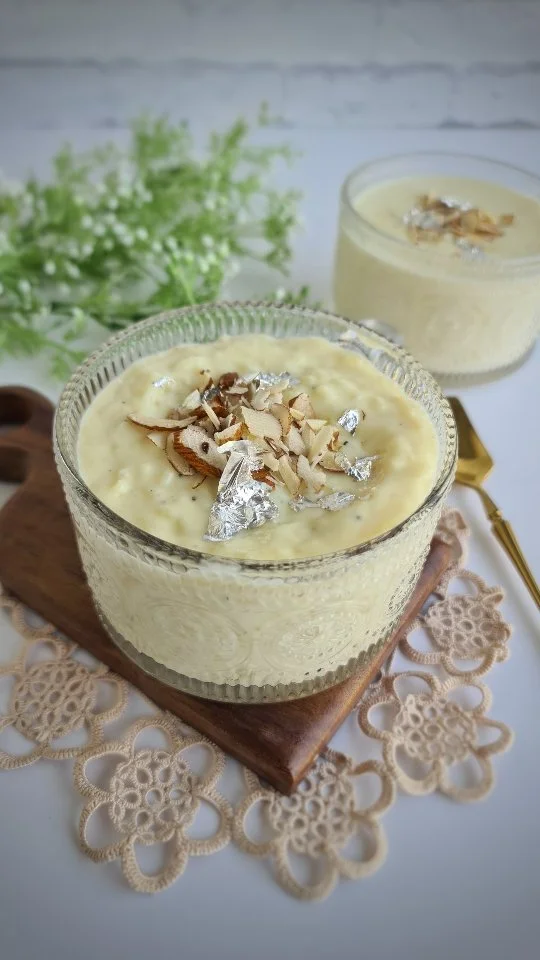
Rice kheer is a creamy South Asian rice pudding simmered with milk and scented with saffron, cardamom and rose water. It makes a comforting dessert that can be served warm or chilled.
Ingredients
- 1/4 cup (about 45 g)basmati rice
- 1 litremilk
- 2 tablespoonsground almonds
- 20saffron strands
- 1/4 teaspoonground cardamom
- 1/2 tin (192.5 g, from a 385 g tin; use less if wanted)condensed milk
- 1/4 cup (about 60 ml)cream
- 1 tablespoonrose water
- To garnishsliced almonds
- To garnishedible silver paper
Instructions
- 1
Soak the rice
Soak the rice in hot water for 1 hour, then drain and discard the soaking water.
- 2
Combine ingredients
Put the milk, drained rice, ground almonds, cardamom and saffron into a non-stick pot.
- 3
Cook until thick
Bring to the boil over high heat and cook uncovered until thick, stirring from time to time to prevent the mixture scorching.
- 4
Add flavourings
Stir in the condensed milk, cream and rose water.
- 5
Boil to finish
Mix well and bring back to the boil, cooking until the kheer reaches your preferred consistency. Keep in mind that it thickens further as it cools.
- 6
Garnish and serve
Garnish with sliced almonds and edible silver paper, then serve warm or cold.
What is rice kheer?
Kheer is a South Asian rice pudding, traditionally made by cooking rice slowly in milk until the mixture turns creamy. This version uses condensed milk for extra sweetness and body, with saffron, cardamom and rose water for fragrance.
Basmati rice gives the pudding a distinct aroma, while ground almonds add a softly nutty note. The recipe keeps the method straightforward: simmer the rice in milk, then add the richer ingredients near the end.
Nutrition and macros by portion
The nutrition label shows one serving as written: 420 calories, 14g protein, 49g carbs, 19g fat.
| Portion | Adjustment | kcal | Protein | Carbs | Fat |
|---|---|---|---|---|---|
| Lighter | Use less condensed milk | 294 kcal | 10g | 34g | 13g |
| This serving | As written | 420 kcal | 14g | 49g | 19g |
| Hungry | Serve a larger bowl | 630 kcal | 21g | 74g | 29g |
Most of the carbohydrates come from the rice, milk and condensed milk; the milk, cream and almonds contribute much of the fat, while milk and almonds provide most of the protein. Serve a moderate bowl alongside fresh fruit to balance the richness.
The ingredients that shape the flavour
Basmati rice: its fragrance suits the floral and spice notes, and soaking it first helps it cook more evenly. Drain it well before adding it to the pot.
Saffron and cardamom: these provide the pudding’s warm, aromatic character. The rose water goes in later so its delicate scent remains noticeable.
Keep the milk from catching
A non-stick pot helps, but the milk still needs occasional stirring as it heats and thickens. Pay particular attention to the base and corners, where rice and milk solids can settle.
The method uses high heat to bring the mixture to the boil. Once it is boiling, keep watch and stir regularly rather than leaving the pot unattended.
Judge the consistency
The kheer is ready for the next additions when the milk and rice mixture has thickened. The rice should be tender, and the mixture should look creamy rather than watery.
After adding the condensed milk, cream and rose water, boil it again until it suits your preference. It will become thicker as it cools, so take it off the heat a little looser than your intended serving texture.
Serving it warm or cold
Serve the pudding warm for a soft, freshly cooked texture, or chill it for a firmer dessert. Add the sliced almonds and edible silver paper just before serving for a decorative finish.
Because kheer is rich and sweet, small bowls are a natural way to serve it after a meal. Fresh fruit on the side can provide a bright contrast.
Planning the cooking time
Allow 1 hour to soak the rice before cooking. The recipe does not give a cooking duration, so use the texture cues rather than relying on a fixed time.
The final simmer also depends on how thick you like your kheer. Stir as it cooks and remember that cooling will make it thicker.
Recipe notes & tips
- Measure the rice before soaking, then drain it thoroughly.
- Use a non-stick pot and stir along the bottom as the mixture thickens.
- Add the rose water with the condensed milk and cream, as directed, rather than cooking it from the start.
- Taste the kheer before adding all the condensed milk if you prefer it less sweet.
- Take the pudding off the heat while it is slightly looser than you want to serve it.
- Add the garnish just before serving so the almonds stay distinct.
Variations
- More saffron: Add a few extra strands for a stronger saffron aroma.
- Less sweet: Use less condensed milk, as the recipe allows.
- Extra cardamom: Add a little more ground cardamom for a bolder spice note.
- Chilled pudding: Refrigerate the finished kheer and serve it cold once set to your liking.
- Nut garnish: Add extra sliced almonds on top for more crunch.
Common mistakes to avoid
- Skipping the soak: Soak the rice in hot water for 1 hour, then drain it before cooking.
- Leaving the pot unattended: Stir from time to time to stop the milk and rice catching on the base.
- Cooking until very firm: Remove the kheer while it is a little looser, because it thickens as it cools.
- Adding too much condensed milk: Start with less if you want a less sweet pudding.
- Using rose water too early: Add it with the cream and condensed milk, as directed, to retain its fragrance.
How to store
Cool the kheer and store it covered in the refrigerator, where it keeps for up to 3 days. Reheat gently in a saucepan, stirring and adding a splash of milk if it has become too thick; it can also be served cold.
Frequently asked questions
Can I make rice kheer ahead of time?
Yes. Make it ahead and refrigerate it covered; it will thicken as it chills. Stir before serving, and loosen with a little milk if needed.
Can I serve this kheer cold?
Yes. The recipe can be served warm or cold, and chilling gives it a firmer texture.
How do I stop the kheer scorching?
Use a non-stick pot and stir the mixture regularly as it boils, paying attention to the bottom of the pan.
Why is my kheer thicker after cooling?
The recipe naturally thickens as it cools. Stop cooking when it is slightly thinner than the texture you want to serve.
Can I use less condensed milk?
Yes. The ingredient note specifically allows using less, so adjust it to your preferred sweetness.
Cook it from the original
This recipe comes from fooooods.com. Their page has the author’s own photos, notes and tips — the best place to cook it from.
Open the recipe on fooooods.com