
Ribollita
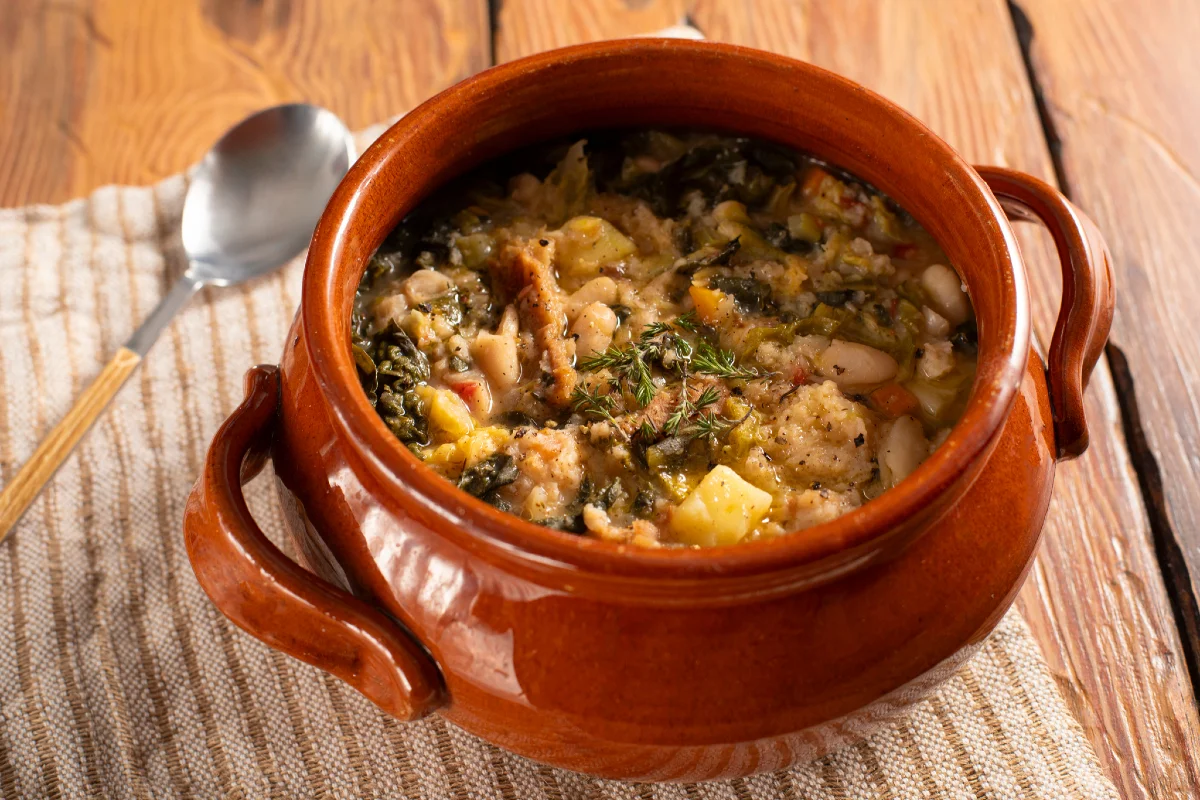
Ribollita is a hearty Tuscan soup of cannellini beans, leafy vegetables and stale bread. Its long, slow cooking and overnight rest give the bread time to soak up the broth and the flavours to meld.
Ingredients
- 400 gdried cannellini beans
- 300 gstale Tuscan bread, wood-fired
- 300 g before trimmingcabbage
- 400 g before trimmingblack kale
- 300 g before trimmingSwiss chard
- 300 gpotatoes
- 300 gpeeled tomatoes
- 100 gcarrots
- 100 gcelery
- 1onion
- 1 clovegarlic
- as neededfresh thyme
- as neededextra-virgin olive oil
- as neededfine salt
- as neededblack pepper
Instructions
- 1
Soak the beans
Soak the beans overnight in cold water. Drain and rinse them, then put them in a large pot with plenty of fresh, unsalted cold water. Bring to the boil and cook for 1 hour. Meanwhile, dice the celery into 3–4 mm pieces.
- 2
Prepare the aromatics
Dice the carrot in the same way. Peel and finely chop the onion and garlic.
- 3
Cut the vegetables
Peel the potatoes and cut them into pieces about 2 cm across. Remove the central rib from the cabbage and slice the leaves into 1–2 cm strips. Cut the chard into small pieces.
- 4
Prepare the kale
Trim the woody base from the kale stems and slice the remaining leaves into strips. If the stems are too tough, strip off the leaves and discard the stems. Crush the peeled tomatoes with a fork. Once the beans are cooked, remove about half and set them aside.
- 5
Blend the beans
Purée the remaining beans with their cooking water using a hand blender. In a very large pot, add a glug of oil, then add the onion, celery, carrot and garlic.
- 6
Soften the vegetables
Add the thyme and cook the vegetables gently over low heat for about 10 minutes. Add the potatoes and leafy vegetables.
- 7
Add the broth
Season with salt and pepper and stir well; let everything cook for a few minutes. Add the crushed tomatoes and bean broth, adding more water if needed to cover all the vegetables.
- 8
Simmer the soup
Bring the soup to the boil, then simmer over medium-low heat for 45 minutes. Stir in the reserved cooked beans.
- 9
Add the bread
Cut the stale Tuscan bread into slices and place them in the pot, pressing them down into the broth with a ladle. Once all the slices are submerged, cover the pot and let the soup cool to room temperature. Refrigerate for at least 2 hours, or preferably overnight.
- 10
Reheat the soup
After chilling, take the soup out and stir it, then return it to the heat. Bring it to the boil, adjusting the consistency with extra water if needed. Ladle into bowls and finish with a drizzle of raw olive oil.
- 11
Finish and serve
Season with pepper, add thyme for aroma and serve the ribollita straight away.
What is ribollita?
Ribollita is a traditional Tuscan bread and vegetable soup whose name means “reboiled”. It grew from the practical habit of making a substantial meal from leftover bread, beans and vegetables.
This version uses cannellini beans, cabbage, kale and chard, with some of the beans blended into the cooking liquid. The bread is added before a long rest, so it absorbs the broth and makes the soup thick and satisfying.
Nutrition and macros by portion
The nutrition label shows one serving as written: 450 calories, 23g protein, 79g carbs, 8g fat.
| Portion | Adjustment | kcal | Protein | Carbs | Fat |
|---|---|---|---|---|---|
| Lighter | Use less bread and oil | 315 kcal | 16g | 55g | 6g |
| This serving | As written | 450 kcal | 23g | 79g | 8g |
| Hungry | Serve a larger bowl | 675 kcal | 35g | 119g | 12g |
The beans and bread provide most of the carbohydrates, while the beans also contribute much of the protein. Olive oil is the main source of fat, and the vegetables add fibre; the exact nutrition varies with the amount of oil, salt and bread used. For a balanced plate, serve a bowl with a fresh salad or another non-starchy vegetable.
The beans make the broth
Bean choice: Dried cannellini beans give the soup its creamy texture and mild flavour. Soak them overnight and cook them in unsalted water until tender before blending some with their cooking liquid.
Two textures: Keep about half the cooked beans whole, then stir them back in after the vegetables simmer. The puréed beans thicken the broth while the reserved ones make each spoonful more substantial.
Prepare the greens carefully
Cabbage and chard: Remove any damaged or especially tough parts, then cut the leaves into manageable pieces so they soften evenly.
Kale stems: Trim away the woody base. If the stems still seem tough, separate the leaves and leave the stems out, as directed in the method.
Build flavour gently
Soffritto: Cook the onion, celery, carrot, garlic and thyme over low heat for about 10 minutes. Gentle cooking softens the vegetables without browning them heavily.
Layering: Add the potatoes and greens before the tomatoes and bean broth. Once the liquid is in, check that the vegetables are covered and add water if needed.
Let the bread soak
Bread choice: Stale, sturdy Tuscan bread is useful here because it can absorb plenty of broth without disappearing straight away. Slice it and press each piece below the surface.
Resting time: The recipe calls for at least 2 hours in the fridge after cooling, with an overnight rest preferred. The bread softens and the soup thickens as it stands.
Check the final texture
Before serving: Stir the chilled soup thoroughly as you bring it back to the boil. If it has become too dense, add water a little at a time until it reaches the consistency you like.
Finish: Serve hot with a drizzle of olive oil, black pepper and thyme. A robust soup like this needs little alongside it, though a simple green salad can bring freshness to the meal.
Recipe notes & tips
- Soak the dried beans overnight so they cook more evenly.
- Keep the beans’ cooking liquid to blend with the reserved whole beans.
- Cut the vegetables to similar sizes where practical so they cook at a similar pace.
- Use a very large pot to leave room for the greens before they wilt.
- Press the bread well beneath the broth before covering the pot.
- Add water gradually when reheating, since the bread continues to absorb liquid.
Variations
- Use vegetable stock: Replace some of the water with stock for a more savoury broth.
- Add rosemary: Use it alongside or instead of thyme for a different herbal note.
- Change the greens: Use more cabbage or chard if black kale is unavailable.
- Add chilli: Include a little chilli with the garlic for gentle heat.
- Finish with Parmesan: Grate a little over each bowl for a savoury finish.
Common mistakes to avoid
- Salting the bean water: The method calls for unsalted water; season the soup later.
- Leaving tough kale stems in: Trim the woody base and discard any stems that remain too firm.
- Skipping the bean purée: Blend about half the cooked beans with their liquid to help thicken the soup.
- Adding bread without submerging it: Press every slice into the broth so it can soften evenly.
- Reheating without checking the consistency: The bread thickens the soup; loosen it with water if needed.
- Serving it straight after cooking: Allow the covered soup to cool and chill for at least 2 hours, preferably overnight, before reheating.
How to store
Cool the soup to room temperature, cover and refrigerate for at least 2 hours or overnight as directed. Keep leftovers covered in the fridge and reheat thoroughly in a pot, adding a little water if the bread has made the soup too thick.
Frequently asked questions
Can I use tinned cannellini beans?
The recipe is written for dried beans, soaked overnight and boiled for 1 hour. Tinned beans are already cooked, so they would need a different method and would not provide the same bean cooking liquid for blending.
Why does the soup need to rest before serving?
The resting period lets the bread absorb the broth and gives the soup its characteristic thick texture. The method recommends chilling it for at least 2 hours, preferably overnight.
Can I make ribollita without stale Tuscan bread?
Use another sturdy, unsweetened loaf that can soak up liquid without falling apart immediately. The texture may differ from the version made with Tuscan bread.
How do I stop the soup becoming too thick?
Add water gradually as you bring it back to the boil, stirring between additions until the consistency is right.
Can I leave out the kale stems?
Yes. The method specifically advises removing the stems if they are too tough, while keeping the leaves.
What can I serve with ribollita?
It is a filling meal on its own. A simple green salad or another fresh vegetable side provides contrast to the soft, hearty soup.
Cook it from the original
This recipe comes from giallozafferano.es. Their page has the author’s own photos, notes and tips — the best place to cook it from.
Open the recipe on giallozafferano.es