
Taiwanese Beef Noodle Soup
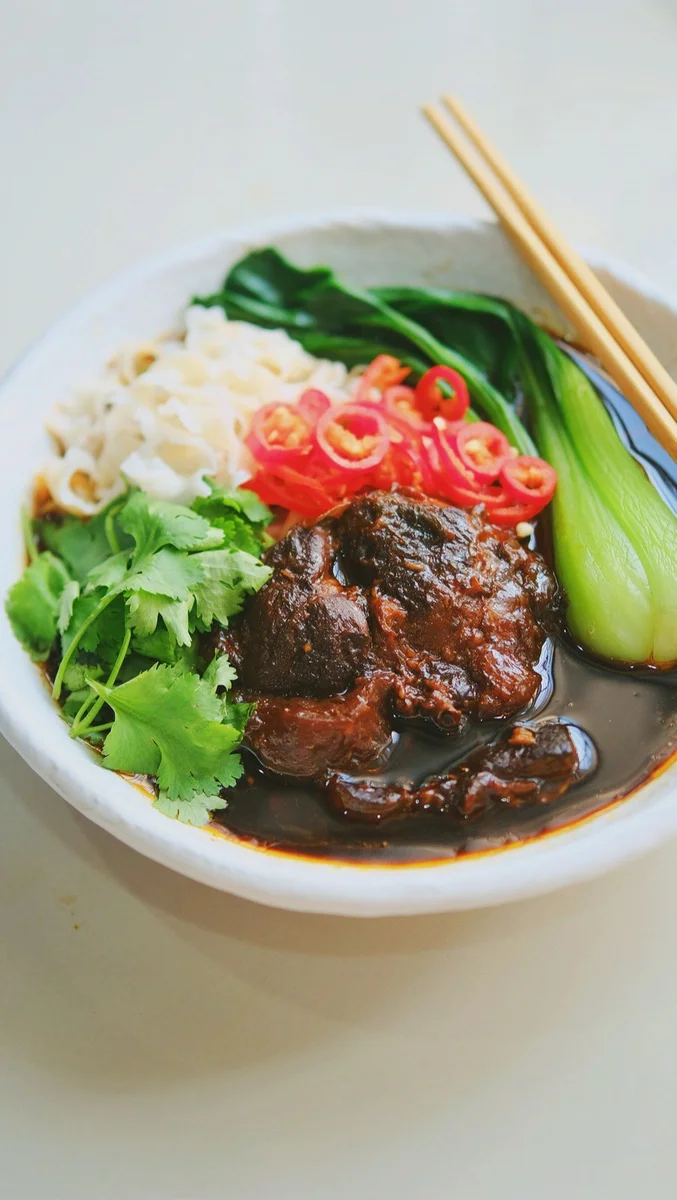
Taiwanese beef noodle soup pairs slow-braised beef and a savoury, gently sweet broth with wheat noodles and bok choy. It is a comforting bowl to make when you have time for the beef to turn tender and absorb the seasoning.
Ingredients
- 1 kgbeef shin
- 2 (200 g)tomatoes, quartered
- 30 ml (2 tbsp)chilli bean paste
- To tastewheat noodles
- To tastepak choi
- 3–4 litreswater
- 60 ml (¼ cup)oil
- 60 g (¼ cup)soy sauce
- 60 g (¼ cup)dark soy sauce
- 60 g (¼ cup)Chinese cooking wine
- 60–70 g, or 45–60 ml (3–4 tbsp)rock sugar or white sugar
- 1 tspstock powder
- ½ tspwhite pepper
- ½ tsp, adjust to tastesalt
- To tastechillies, chopped
- To tastecoriander leaves
Instructions
- 1
Blanch the beef
Put the beef in a pot and cover it with water. Add half the ginger slices, green onion and star anise, then blanch for 5–10 minutes. Drain and rinse the beef under cold running water; discard the spices. If the shin is in one large piece, cut it into smaller pieces.
- 2
Fry the aromatics
Heat the oil in a separate large pot. Fry all the aromatics that remain, except the bay leaves, until fragrant. Add the chilli bean paste and rock sugar or white sugar, then cook for 3–5 minutes, until the mixture has softened and looks translucent.
- 3
Add beef and sauce
Add the beef, tomatoes and seasoning sauce. Stir for 5–10 minutes, allowing the beef to take on some of the liquid.
- 4
Add water and seasonings
Pour in 3 litres of water, add the bay leaves and dry seasonings, and bring the pot to the boil. If your pot is not large enough, add the water gradually.
- 5
Braise until tender
Cover the pot, turn the heat to its lowest setting and cook gently for 2–3 hours, or until the beef is soft and tender.
- 6
Cook noodles and greens
Cook the noodles according to the packet instructions. Blanch the pak choi for 2–3 minutes, then rinse it in cold water for 1 minute.
- 7
Serve the soup
Serve the beef and broth with the noodles and pak choi. Garnish with coriander leaves and chopped chillies.
What is Taiwanese beef noodle soup?
Taiwanese beef noodle soup is a bowl of noodles served with beef braised until tender in a richly seasoned broth. It is associated with Taiwanese cooking, where long-simmered beef and fragrant seasonings make a substantial, comforting meal.
This version builds flavour by blanching the beef first, then frying aromatics and chilli bean paste before the slow braise. Tomatoes and sugar round out the savoury sauce, while pak choi adds a fresh green contrast.
Nutrition and macros by portion
The nutrition label shows one serving as written: 850 calories, 53g protein, 78g carbs, 32g fat.
| Portion | Adjustment | kcal | Protein | Carbs | Fat |
|---|---|---|---|---|---|
| Lighter | More pak choi, fewer noodles | 595 kcal | 37g | 55g | 22g |
| This serving | As written | 850 kcal | 53g | 78g | 32g |
| Hungry | Larger noodle portion | 1275 kcal | 80g | 117g | 48g |
The beef supplies most of the protein and a substantial share of the fat, while the noodles and sugar contribute most of the carbohydrates. Soy sauces and stock powder are the main sources of sodium, so serve with extra greens or a modest portion of noodles to balance the bowl.
Why blanch the beef first?
Blanching: A brief boil, followed by rinsing, removes the initial cooking foam and leaves the beef ready for the seasoned pot. Keep this step to the stated 5–10 minutes rather than trying to cook the meat through.
Cutting: If the shin comes as one large piece, divide it after blanching so it is easier to serve and fits the pot.
Build flavour in the pot
Aromatics: Fry the aromatics until fragrant, taking care not to let them scorch. The method specifies leaving out the bay leaves at this stage; they go into the pot with the water later.
Chilli bean paste: Fry it with the sugar for 3–5 minutes, until the mixture softens and turns translucent. This helps the paste mingle with the oil before the beef and liquid are added.
Let the beef turn tender
Low heat: Once the soup boils, cover the pot and reduce the heat to its lowest setting. A gentle simmer over 2–3 hours gives the beef time to soften without rapidly boiling the broth away.
Doneness: Check whether the beef is tender and soft, rather than relying on the clock alone. If it still feels firm, continue cooking gently and check again.
Noodles and pak choi
Noodles: Cook them according to their packet, as cooking times vary by type. Keeping them separate from the long-simmering broth helps prevent them becoming over-soft.
Pak choi: Blanch for 2–3 minutes, then rinse in cold water for 1 minute as directed. Add it when serving so its colour and texture remain distinct from the braised beef.
Adjust the broth and serve
Liquid: The method calls for 3 litres of water, with more added gradually if needed. Choose a pot with enough room for the beef and broth to simmer safely.
Finish: Serve the beef and broth with the noodles and greens, then add coriander and chopped chillies. Taste the broth before serving; the recipe suggests adjusting the salt to taste.
Recipe notes & tips
- Use a pot large enough to hold the beef and the full amount of water.
- Rinse the blanched beef under cold running water before adding it to the seasoned pot.
- Keep the braise at a gentle simmer once the pot is covered.
- Add any extra water gradually if the pot is too small for all 3 litres at once.
- Cook the noodles separately and add them to bowls when serving.
- Taste the broth before serving and adjust the salt to your preference.
Variations
- More heat: Add extra chopped chillies at the table.
- Sweeter broth: Use the upper end of the stated sugar range.
- Milder bowl: Use fewer chopped chillies as a garnish.
- Extra greens: Serve with more blanched pak choi.
- Noodle choice: Use a different wheat noodle and follow its packet cooking instructions.
Common mistakes to avoid
- Skipping the rinse: Rinse the blanched beef under cold running water before braising.
- Scorching the aromatics: Fry them until fragrant over controlled heat rather than letting them burn.
- Boiling vigorously: Turn the heat to its lowest setting after bringing the soup to the boil.
- Adding all the water to a small pot: Pour it in gradually if the pot cannot hold the full amount.
- Overcooking the noodles: Follow the packet instructions and keep them separate from the slow-cooked soup.
- Relying only on the timer: Check that the beef is soft and tender after 2–3 hours.
How to store
Cool leftover broth and beef promptly, then refrigerate in a covered container for up to 3 days. Store cooked noodles separately where possible, and reheat the broth and beef until piping hot before serving with freshly prepared noodles and greens.
Frequently asked questions
Can I use a whole piece of beef shin?
Yes. The method says to cut it into smaller pieces if it arrives as one large piece, after blanching and rinsing.
How do I know when the beef is ready?
It should be tender and soft after 2–3 hours of gentle cooking. If it is still firm, continue simmering and check again.
Can I add all the water at once?
Add 3 litres as directed if your pot has room. If it does not, add the water gradually.
Should I cook the noodles in the soup?
The method says to cook them according to the packet, separately from the braise, then serve them with the beef soup.
Can I use white sugar instead of rock sugar?
Yes. The recipe gives 3–4 tablespoons of white sugar as an alternative to 60–70 g of rock sugar.
Cook it from the original
This recipe comes from fooooods.com. Their page has the author’s own photos, notes and tips — the best place to cook it from.
Open the recipe on fooooods.com