
Sea bream en papillote
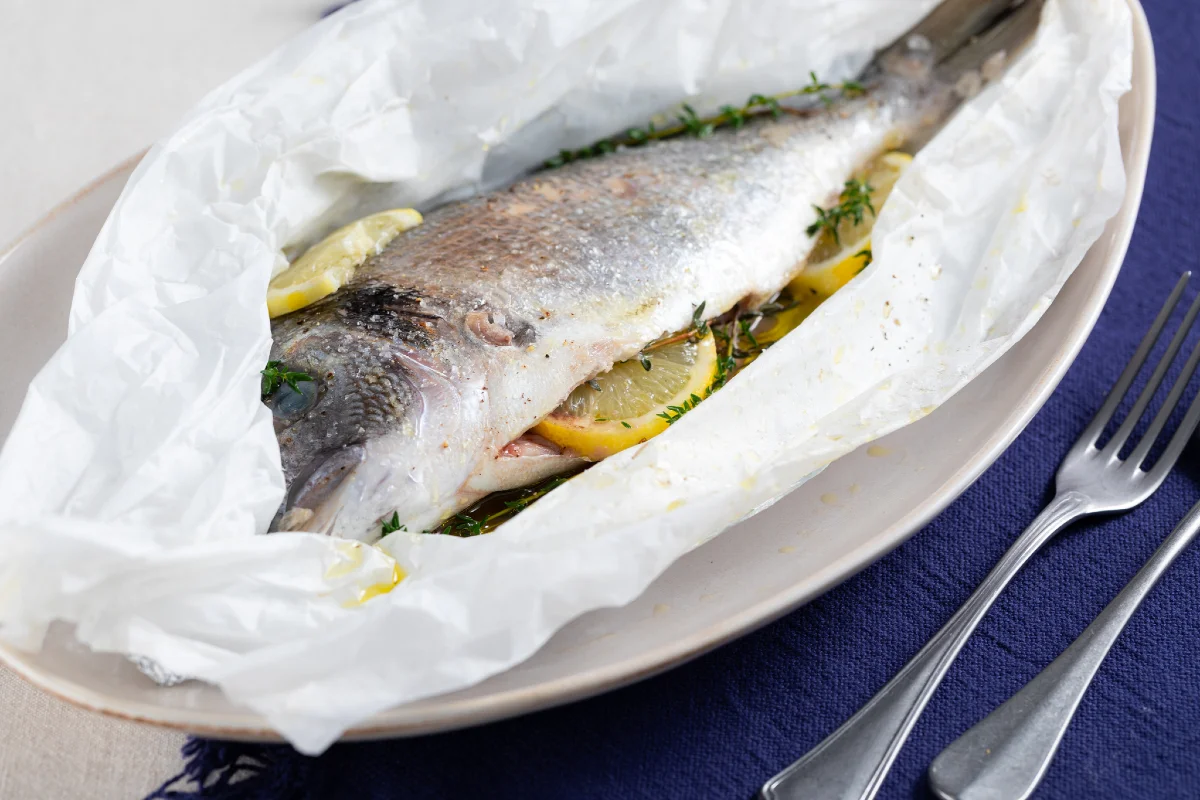
Sea bream en papillote is whole fish baked in a sealed parcel with herbs, garlic, lemon and olive oil. The parcel keeps the aromas together and makes this a straightforward centrepiece to serve at the table.
Ingredients
- 900 g (2 sea bream, 450 g each)sea bream
- 1 clovegarlic
- 2 bunchesparsley
- 2 sprigsthyme
- 1 slicelemon
- 20 gextra-virgin olive oil
- to tasteblack pepper
- to tastefine salt
Instructions
- 1
Clean the fish
Using kitchen scissors, cut along the belly towards the head and remove the entrails. Rinse the cavity thoroughly under running water. Trim the side, lower belly and dorsal fins, then turn the fish over and remove the fins on the other side. Scale it carefully from tail to head with a fish scaler or the back of a knife, then rinse the fish all over.
- 2
Season the fish
Wash and finely chop the parsley. Lay a sheet of baking paper on a tray and place the cleaned sea bream in the middle. Season the inside with salt and pepper.
- 3
Add the aromatics
Fill the fish with the washed and dried thyme sprigs, a peeled garlic clove for each sea bream, 1 or 2 lemon wedges and the extra-virgin olive oil.
- 4
Wrap the parcels
Drizzle a little oil over the fish, then roll up the ends of the baking paper to make a parcel, like a wrapped sweet. Wrap the parcel in aluminium foil.
- 5
Bake and serve
Twist the ends again to seal the parcel. Put the sea bream on a tray and bake in a preheated static oven at 180°C for about 35–40 minutes. Remove from the oven, leave to cool slightly, then serve in the parcel, sprinkled with fresh parsley.
What is sea bream en papillote?
En papillote is a French cooking method in which food is enclosed in a parcel and baked. The sealed wrapper holds in steam and concentrates the aromas around the fish.
This version uses whole sea bream with thyme, garlic, lemon and parsley. Baking the fish whole gives the aromatics room to perfume it as it cooks.
Nutrition and macros by portion
The nutrition label shows one serving as written: 165 calories, 20g protein, 1g carbs, 9g fat.
| Portion | Adjustment | kcal | Protein | Carbs | Fat |
|---|---|---|---|---|---|
| Lighter | Use less olive oil | 115 kcal | 14g | 1g | 6g |
| This serving | As written | 165 kcal | 20g | 1g | 9g |
| Hungry | Add a larger fish portion | 248 kcal | 30g | 2g | 14g |
The sea bream provides most of the protein, while the olive oil contributes most of the fat; the fish itself supplies some fat too. Carbohydrate is minimal in the listed ingredients. Serve it with potatoes or rice and vegetables for a more balanced plate.
Preparing the sea bream
Cleaning: remove the entrails, trim the fins and scale the fish before rinsing it. Take care to clean the belly cavity well so no residue remains.
Whole fish: the recipe uses two 450 g sea bream. Keeping them whole helps the parcels hold together and makes for a simple presentation at the table.
Building the flavour
Herbs: thyme goes inside the fish, while chopped parsley is used for serving. Dry the thyme after washing so excess water does not collect in the parcel.
Citrus and garlic: lemon wedges and peeled garlic add fragrance as the fish bakes. The olive oil seasons the fish and helps keep the flesh moist.
Making a tight parcel
Baking paper: place each fish in the centre and roll the ends securely around it. The parcel should be closed, but leave enough room inside for steam to circulate.
Foil: the method wraps the baking-paper parcel in aluminium foil and twists the ends to seal it. Use a tray to support the parcels when moving them in and out of the oven.
Checking when it is done
Timing: bake in a preheated static oven at 180°C for 35–40 minutes. The recipe gives this range for the whole fish, so check towards the end of the cooking time.
Doneness: open a parcel carefully to avoid the hot steam. The flesh should be opaque and should separate readily from the bone; allow the fish to cool slightly before serving.
Serving the fish
At the table: serve the sea bream in its parcel and finish it with fresh parsley, as directed. Open the paper carefully so the trapped steam escapes away from you.
On the side: boiled or roasted potatoes, rice, or a simple green salad make practical accompaniments. They can be prepared separately while the fish bakes.
Recipe notes & tips
- Ask your fishmonger to clean and scale the sea bream if you would rather not do it yourself.
- Dry the fish and herbs after rinsing so excess water does not dilute the flavours in the parcel.
- Prepare the baking-paper parcels on the tray to make them easier to handle.
- Seal the ends securely so the parcel holds its steam during baking.
- Let the parcels rest briefly after baking, then open them carefully to avoid escaping steam.
Variations
- Add fennel: tuck a few thin slices into the fish for a mild aniseed note.
- Use rosemary: replace the thyme with a small sprig of rosemary for a more resinous aroma.
- Add orange: use a little orange alongside the lemon for a sweeter citrus fragrance.
- Include vegetables: add a few thinly sliced courgette pieces to each parcel.
- Finish with capers: scatter a few capers over the fish when serving for a briny accent.
Common mistakes to avoid
- Leaving scales behind: run a hand gently over the skin after scaling and remove any rough patches.
- Rushing the cleaning: rinse the belly cavity thoroughly after removing the entrails.
- Loose wrapping: twist and fold the parcel ends securely so they stay closed in the oven.
- Opening too quickly: hot steam escapes from the parcel, so keep your face and hands clear.
- Overcooking: begin checking at the lower end of the 35–40 minute range, as oven performance can vary.
How to store
Refrigerate leftover fish in an airtight container within 2 hours and eat within 2 days. Reheat gently in a covered ovenproof dish until piping hot, or flake it into a cold salad.
Frequently asked questions
Can I ask the fishmonger to prepare the sea bream?
Yes. Ask for the fish to be gutted, scaled and trimmed, then rinse and dry it at home before filling the parcels.
Can I use frozen sea bream?
Yes, provided it is fully thawed in the fridge first. Pat it dry before seasoning and wrapping.
How can I tell when the fish is cooked?
The flesh should be opaque and separate easily from the bone. Open the parcel carefully and check near the thickest part.
Can I prepare the parcels ahead?
You can assemble them shortly before cooking and keep them chilled. For best texture, bake them soon after wrapping.
Can I cook the fish without aluminium foil?
The recipe uses foil around the baking-paper parcel to help seal it. If avoiding foil, fold the baking paper securely and check that the parcel stays closed on the tray.
Cook it from the original
This recipe comes from giallozafferano.es. Their page has the author’s own photos, notes and tips — the best place to cook it from.
Open the recipe on giallozafferano.es