
Chicken and Vegetables Skillet
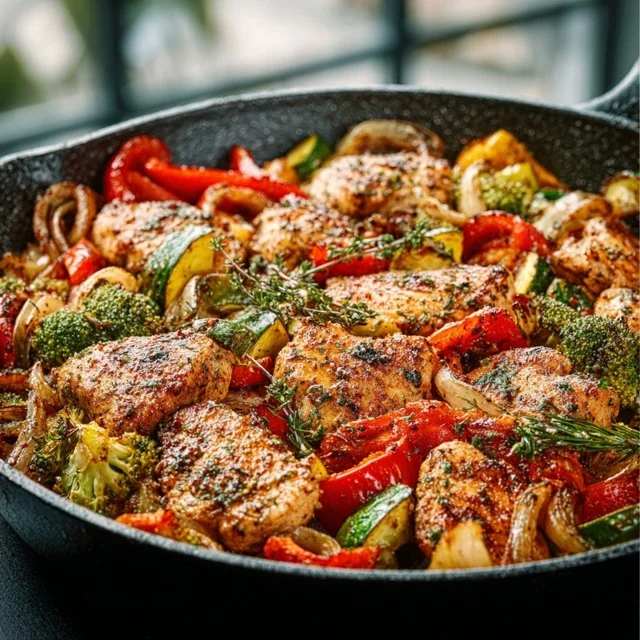
This one-pan chicken and vegetables skillet pairs browned chicken with crisp-tender vegetables in a savoury-sweet soy, honey and ginger sauce. It makes a quick weeknight dinner, with rice, quinoa or noodles ready to serve alongside.
Ingredients
- 680 g (1.5 lb)chicken breast, cut into bite-sized pieces
- 15 ml (1 tbsp)olive oil
- 1 mediumonion, chopped
- 2 clovesgarlic, minced
- 90 g (1 cup)broccoli florets
- 1red bell pepper
- 1yellow bell pepper
- 60 ml (1/4 cup)soy sauce
- 30 ml (2 tbsp)honey
- 5 ml (1 tsp)grated ginger
- 5 ml (1 tsp)sesame oil
- 8 g (1 tbsp)cornflour
- to tastesalt
- to tastepepper
- optional, to tastesesame seeds, for garnish
- optional, to tastespring onions, chopped, for garnish
Instructions
- 1
Season the chicken
Cut the chicken breast into bite-sized pieces, then season with salt and pepper.
- 2
Heat the oil
Warm the olive oil in a large frying pan over a medium-high heat.
- 3
Brown the chicken
Add the chicken and sear until golden on all sides. Lift it out of the pan and set it aside.
- 4
Cook the aromatics
Add the onion and garlic to the pan and sauté until softened and fragrant.
- 5
Cook the vegetables
Add the broccoli and both bell peppers, then cook until tender-crisp.
- 6
Mix the sauce
In a small bowl, whisk together the soy sauce, honey, ginger, sesame oil and cornflour.
- 7
Simmer the sauce
Pour the sauce over the vegetables and bring it to a simmer.
- 8
Return the chicken
Put the chicken back in the pan and toss it with the sauce and vegetables.
- 9
Finish cooking
Simmer for a few minutes, until the sauce thickens and the chicken is cooked through. Check that the chicken reaches an internal temperature of 74°C (165°F).
- 10
Serve the skillet
Serve straight away over rice, quinoa or noodles. Add sesame seeds and spring onions for garnish, if you like.
What is chicken and vegetables skillet?
A skillet dinner is a one-pan meal in which the main ingredients are cooked together on the hob. This American-style version brings chicken and vegetables together with a soy, honey and ginger sauce.
The method works by browning the chicken first, then cooking the vegetables in the same pan. That builds flavour while keeping the vegetables crisp-tender and the finish quick.
Nutrition and macros by portion
The nutrition label shows one serving as written: 450 calories, 0g protein, 0g carbs, 0g fat.
| Portion | Adjustment | kcal | Protein | Carbs | Fat |
|---|---|---|---|---|---|
| Lighter | Serve without rice | 315 kcal | 0g | 0g | 0g |
| This serving | As written | 450 kcal | 0g | 0g | 0g |
| Hungry | Add extra rice | 675 kcal | 0g | 0g | 0g |
Chicken supplies most of the protein, while the honey and vegetables contribute carbohydrates. The olive and sesame oils, along with the chicken, provide much of the fat. Serve with a moderate portion of rice, quinoa or noodles and add extra vegetables to balance the plate.
Why these ingredients work
Chicken breast: Bite-sized pieces cook quickly and are easy to coat in the sauce. Cutting them to a similar size helps them finish at roughly the same time.
Broccoli and peppers: The broccoli adds a firm bite, while red and yellow peppers bring colour and sweetness. Keep the pieces fairly even so they cook consistently.
Soy, honey and ginger: Soy sauce provides savoury depth, honey balances its saltiness, and ginger adds a warm, fresh note. Sesame oil gives the sauce a toasted aroma.
Get a good sear
Heat the pan before adding the chicken, and arrange the pieces so they have room to brown. If the pan is crowded, work in batches; chicken releases moisture and can steam rather than sear.
Set the chicken aside once it is golden. It will finish cooking after it goes back into the pan, so avoid leaving it in for too long during the first stage.
Keep the vegetables crisp-tender
Cook the onion and garlic until softened and fragrant before adding the broccoli and peppers. Stir the vegetables as they cook, stopping when they are tender but still have a little bite.
The exact cooking time depends on how large the pieces are and how hot the pan is. Check the broccoli and peppers as you go rather than waiting for them to become very soft.
Thicken the sauce evenly
Whisk the cornflour into the liquid ingredients before adding the sauce to the pan. This helps disperse it and reduces the chance of dry lumps forming.
Once the sauce simmers, return the chicken and toss everything together. Give it a few minutes to thicken and check that the chicken is cooked through, reaching 74°C (165°F) internally.
What to serve alongside
Rice, quinoa or noodles make a simple base and catch the glossy sauce. Prepare your chosen accompaniment while the chicken and vegetables cook, so everything is ready to serve together.
For a lighter plate, serve the skillet with extra vegetables or a simple side salad. Sesame seeds and spring onions add a fresh, crunchy finish if you have them.
Recipe notes & tips
- Pat the chicken dry before seasoning to help it brown in the pan.
- Cut the chicken and peppers into similarly sized pieces for more even cooking.
- Whisk the cornflour thoroughly into the sauce ingredients before pouring them into the pan.
- Keep the vegetables moving in the pan and stop cooking while they still have some bite.
- Use a food thermometer to check that the thickest chicken pieces reach 74°C (165°F).
Variations
- Add mushrooms: Slice them and cook them with the peppers for another savoury vegetable.
- Use tamari: Replace the soy sauce with tamari for a similar savoury sauce.
- Add chilli: Stir chilli flakes into the sauce for a little heat.
- Swap the vegetables: Use sliced carrots or sugar snap peas in place of some of the peppers.
- Finish with lime: Squeeze a little lime over the skillet just before serving for a bright note.
Common mistakes to avoid
- Crowded pan: The chicken may steam instead of browning; sear it in batches if needed.
- Uneven pieces: Large pieces can take longer to cook; cut the chicken into similar bite-sized pieces.
- Lumpy sauce: Cornflour added directly to the hot pan can clump; whisk it into the sauce ingredients first.
- Overcooked vegetables: They can turn soft; cook until tender-crisp and check them as they go.
- Guessing doneness: Colour alone is not a reliable check; confirm the chicken reaches 74°C (165°F) internally.
How to store
Refrigerate leftovers in an airtight container and use within 3 days. Reheat in a frying pan over a medium heat, stirring until steaming hot throughout; add a splash of water if the sauce has thickened too much.
Frequently asked questions
Can I use chicken thighs instead of breast?
Yes. Cut boneless, skinless thighs into bite-sized pieces and cook until they reach 74°C (165°F) internally. They may need a little longer than breast pieces.
Can I prepare the sauce ahead?
Yes. Whisk the sauce ingredients together shortly before cooking, then give them another stir before pouring into the pan because the cornflour can settle.
How do I know when the chicken is cooked?
Check a thick piece with a food thermometer; it should reach 74°C (165°F) internally. If it has not, continue simmering and check again.
Can I use frozen broccoli?
You can, but thaw and drain it first so it does not add excess water to the pan. Add it with the peppers and cook until heated through and tender.
What can I serve with this skillet?
Serve it over rice, quinoa or noodles, as suggested in the method. A side salad or extra vegetables also work alongside.
Cook it from the original
This recipe comes from besthomemaderecipes.com. Their page has the author’s own photos, notes and tips — the best place to cook it from.
Open the recipe on besthomemaderecipes.com