
Seafood carbonara
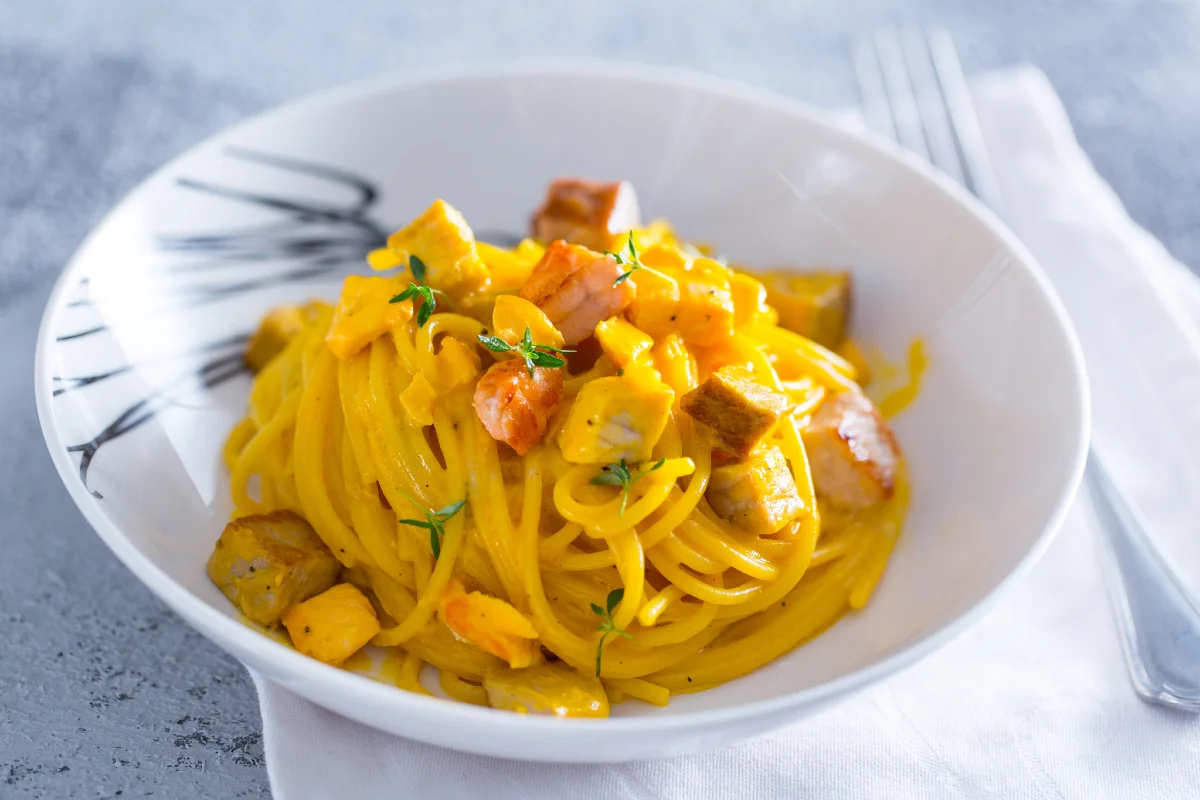
Seafood carbonara is a pasta dish inspired by classic carbonara, with salmon, swordfish and tuna replacing guanciale. The egg-and-Parmesan sauce and quick-cooked fish make it a rich, savoury first course.
Ingredients
- 320 gspaghetti
- 100 gtuna
- 100 gswordfish
- 100 gsalmon
- 6egg yolks
- 60 gwhite wine
- 60 gParmigiano Reggiano DOP
- 1 clovegarlic
- 6 sprigsthyme
- as neededextra-virgin olive oil
- as neededfine salt
- as neededblack pepper
- as neededParmigiano Reggiano DOP
- as neededblack pepper
Instructions
- 1
Prepare the sauce
Bring a pan of water to the boil and salt it once boiling. Meanwhile, separate the eggs, using the 6 yolks for this recipe. Put the yolks in a bowl with the grated Parmigiano, thyme leaves, salt and pepper.
- 2
Cut the fish
Whisk the yolk mixture together and set it aside. Check the salmon for bones and cut it into cubes about 2 cm across. Remove the skin from the swordfish and cut it into similarly sized cubes.
- 3
Cook the pasta
Cut the tuna into cubes about 2 cm across. Add the spaghetti to the boiling water and cook it for 2 minutes less than the packet instructions. Meanwhile, warm a little oil in a frying pan and add the peeled garlic clove.
- 4
Sear the fish
When the pan is hot, add the fish cubes and stir-fry them over a high heat for a couple of minutes. Remove the garlic, then transfer the fish to a bowl.
- 5
Reduce the wine
Return the pan to the heat and deglaze it with the white wine. Once the alcohol has evaporated completely, add a ladleful of pasta water. Drain the spaghetti while very al dente and finish cooking it in the pan, stirring continuously so it releases its starch.
- 6
Add the fish
When the pasta is ready, add the fish cubes and toss briefly to combine. Take the pan off the heat and pour in the yolk and cheese mixture.
- 7
Finish and serve
Mix everything together, adding a little pasta water if needed. Finish with black pepper and grated Parmigiano to taste, then serve, garnished with thyme leaves.
What is seafood carbonara?
Carbonara is a Roman pasta dish traditionally associated with eggs, cheese, black pepper and cured pork. This seafood version takes inspiration from that combination, using fish in place of guanciale.
Three kinds of fish bring a mix of flavours and textures, while yolks and Parmigiano make the coating rich. The method works best when the pasta is finished in the pan and the egg mixture is added off the heat.
Nutrition and macros by portion
The nutrition label shows one serving as written: 656 calories, 0g protein, 65g carbs, 28g fat.
| Portion | Adjustment | kcal | Protein | Carbs | Fat |
|---|---|---|---|---|---|
| Lighter | Use less oil and cheese | 459 kcal | 0g | 45g | 19g |
| This serving | As written | 656 kcal | 0g | 65g | 28g |
| Hungry | Serve a larger portion | 984 kcal | 0g | 97g | 42g |
The spaghetti provides most of the carbohydrates, while the olive oil, yolks and cheese contribute much of the fat. The fish and egg yolks provide protein, with Parmigiano adding further richness; pair a serving with vegetables or salad for a more balanced plate.
Choosing and preparing the fish
Even cubes: Cut the salmon, swordfish and tuna into pieces about 2 cm across so they cook quickly and evenly. Check the salmon for bones and remove the swordfish skin before cutting.
Gentle handling: The fish is seared briefly over high heat, then set aside while the pasta is finished. Adding it back near the end helps avoid overcooking.
Getting the sauce right
Yolk mixture: Whisk the yolks with grated Parmigiano, thyme leaves, salt and pepper before the pasta is ready. This gives you a smooth mixture to add at the end.
Off the heat: Take the pan away from the heat before stirring in the yolks and cheese. Add pasta water a little at a time if the sauce needs loosening.
Finishing the spaghetti
Starchy water: Cook the spaghetti for 2 minutes less than the packet directs, then finish it in the pan with a ladleful of cooking water. Stir continuously as the pasta releases starch into the liquid.
Doneness cue: The spaghetti should be very al dente when drained, as it will continue cooking in the pan. Taste it before adding the fish to check that it is cooked to your liking.
Serving and timing
Serve promptly: The egg-based sauce is at its best straight after mixing, while it is glossy and coats the spaghetti. Finish with extra grated Parmigiano, black pepper and thyme leaves.
On the plate: This rich pasta can be served as a first course, as described, or as a main with a simple green salad or lightly dressed vegetables alongside.
Recipe notes & tips
- Salt the pasta water only once it has come to the boil.
- Cut all three types of fish into similarly sized cubes for even cooking.
- Keep the fish sear brief, then remove it from the pan as directed.
- Reserve some pasta water before draining in case the sauce needs loosening.
- Take the pan off the heat before adding the yolk mixture.
- Serve as soon as the sauce has coated the spaghetti.
Variations
- Extra thyme: Add a few more thyme leaves to the yolk and cheese mixture.
- More pepper: Grind extra black pepper over each serving at the table.
- Different pasta: Use another long pasta shape that can be coated with the sauce.
- Cheesier finish: Add more grated Parmigiano at the table.
- A single fish: Use 300 g of one of the listed fish in place of the three-fish mix.
Common mistakes to avoid
- Uneven fish cubes: Pieces of different sizes cook at different speeds; cut them to roughly 2 cm.
- Overcooking the fish: It needs only a couple of minutes over high heat; remove it from the pan promptly.
- Draining too late: Cook the spaghetti 2 minutes less than the packet time before finishing it in the pan.
- Adding yolks over heat: They can set rather than form a creamy coating; take the pan off the heat first.
- A thick sauce: Stir in a little pasta water to loosen it.
- Leaving the dish to stand: The sauce is best served as soon as it is mixed.
How to store
For the best texture, eat this dish straight after cooking. If you have leftovers, refrigerate them in a sealed container and use within 1 day; reheat gently in a pan with a splash of water, taking care not to cook the egg sauce too hard.
Frequently asked questions
Can I prepare the fish ahead?
You can cut and refrigerate the fish ahead of time, covered and chilled. Cook it shortly before finishing the pasta.
Why should the yolk mixture go in off the heat?
The residual warmth of the pasta helps coat it without scrambling the yolks. If the sauce is too thick, add pasta water gradually.
Can I use a different type of fish?
You can replace the listed fish with another fish suitable for quick cooking, cut into similar-sized cubes. The flavour and texture will change.
How do I know when the fish is cooked?
The method calls for a brief stir-fry over high heat for a couple of minutes. Avoid leaving the small cubes in the pan while you finish the pasta.
Can I make seafood carbonara in advance?
It is best made just before serving because the sauce depends on freshly cooked pasta and its starchy water. The finished dish does not keep its creamy texture as well.
Cook it from the original
This recipe comes from giallozafferano.es. Their page has the author’s own photos, notes and tips — the best place to cook it from.
Open the recipe on giallozafferano.es