
Sweet Chili Veggie Noodles
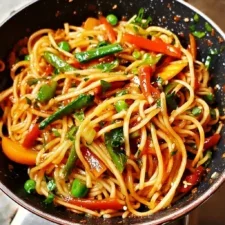
Sweet chilli veggie noodles toss noodles and colourful vegetables in a glossy, tangy-sweet sauce. They make a quick, flexible meal, with the vegetables cooked just until crisp-tender.
Ingredients
- 225 g (8 oz)dried noodles of your choice, such as ramen, udon, soba, rice noodles or spaghetti
- 1 tablespoontoasted sesame oil
- 3 clovesgarlic, minced
- 1-inch piecefresh ginger, grated
- 1 mediumred pepper, thinly sliced
- 2 mediumcarrots, julienned or thinly sliced
- 1 cupbroccoli florets, cut into small pieces
- 1 cupsugar snap peas or mangetout, trimmed
- 60 ml (¼ cup)reduced-salt soy sauce, recommended
- 80 ml (⅓ cup)sweet chilli sauce, shop-bought or homemade
- 1 tablespoonrice vinegar
- 1 tablespoon, optional; adjust to tastebrown sugar or maple syrup
- 1 tablespoonfreshly squeezed lime juice
- 1 teaspoon cornstarch mixed with 2 teaspoons cold water, optionalcornstarch slurry
- To taste, optionaltoasted sesame seeds, chopped spring onions and fresh coriander leaves
Instructions
- 1
Cook the noodles
Bring a large pan of water to the boil. Cook the noodles according to the packet instructions until al dente, then drain well and rinse with cold water to stop them sticking. Set aside; toss with a tiny drizzle of sesame oil if you like.
- 2
Mix the sauce
Whisk the soy sauce, sweet chilli sauce, rice vinegar, optional brown sugar or maple syrup, and lime juice together in a small bowl. Taste and adjust as needed, then set aside.
- 3
Cook the aromatics
Heat 1 tablespoon of toasted sesame oil in a large frying pan, wok or Dutch oven over medium-high heat. When the oil shimmers, add the garlic and ginger and cook for 30–60 seconds, until fragrant, taking care not to burn them.
- 4
Stir-fry firm vegetables
Add the carrots and broccoli and stir-fry for 3–4 minutes, until they start to soften but remain crisp-tender.
- 5
Add softer vegetables
Add the sliced red pepper and snap peas or mangetout. Stir-fry for a further 2–3 minutes, until the pepper softens slightly and the peas turn bright green.
- 6
Toss with noodles
Add the cooked, drained noodles and pour over the prepared sauce. Toss gently but thoroughly to coat everything, then cook for 1–2 minutes so the sauce heats through.
- 7
Thicken the sauce
For a thicker sauce, push the noodles and vegetables to one side of the pan. Pour the optional cornstarch slurry into the clear space and stir as it bubbles and thickens, which should take less than a minute; mix it through the noodles and vegetables.
- 8
Adjust the seasoning
Take the pan off the heat and taste. Add a little more soy sauce for saltiness, lime juice for tang or sweet chilli sauce for sweetness and heat, if needed.
- 9
Garnish and serve
Divide the noodles between serving bowls. Add toasted sesame seeds, chopped spring onions and fresh coriander, if desired, and serve immediately.
What are sweet chilli veggie noodles?
This is a stir-fried noodle dish with vegetables coated in a sweet, mildly spicy sauce. It draws on familiar East and Southeast Asian flavours, including soy, sesame, ginger, rice vinegar and sweet chilli sauce.
This version works with several noodle types and combines vegetables with different cooking times. The sauce is mixed separately, so it can be added all at once when the noodles are ready.
Nutrition and macros by portion
The nutrition label shows one serving as written: 450 calories, 0g protein, 0g carbs, 0g fat.
| Portion | Adjustment | kcal | Protein | Carbs | Fat |
|---|---|---|---|---|---|
| Lighter | Use less sweet chilli sauce | 315 kcal | 0g | 0g | 0g |
| This serving | As written | 450 kcal | 0g | 0g | 0g |
| Hungry | Add extra noodles | 675 kcal | 0g | 0g | 0g |
The noodles provide most of the carbohydrates, while sesame oil and the sweet chilli sauce contribute fat and sugar. The vegetables add fibre, but the listed ingredients contain no substantial protein source; serving the noodles with tofu or edamame can make the plate more balanced.
Choosing the noodles and sauce
Noodles: Ramen, udon, soba, rice noodles or spaghetti can all work here. Cook them to al dente according to their packet, as they will spend another minute or two in the pan.
Sauce: Sweet chilli sauce brings the main sweetness and gentle heat, while soy adds savouriness and rice vinegar and lime provide sharpness. Taste the mixture before adding it to the pan, especially if your sauce is already quite sweet.
Cook the vegetables in stages
Firm vegetables: Carrots and broccoli go in first because they need more time to soften. Cut them into small, even pieces so they cook at a similar pace.
Softer vegetables: Add the red pepper and snap peas or mangetout later. This shorter cooking time helps them retain some bite and keeps the peas bright.
Keep the vegetables crisp-tender
The recipe relies on fairly high heat and frequent stirring. Cook the vegetables until they are beginning to soften but still have a little resistance; they will continue cooking briefly when the noodles and sauce are added.
Use a large pan so you can toss the ingredients without crowding them. If the pan is too full, work in batches to make stirring easier.
Let the sauce cling
Noodles: Drain them well before adding them to the vegetables, so extra water does not dilute the sauce. A cold rinse helps reduce sticking while you finish the stir-fry.
Thickening: The cornstarch slurry is optional. Stir it into a clear space in the pan and let it bubble briefly before mixing it through, stopping once the sauce clings to the noodles as you like.
Serve it straight away
These noodles are best served hot, while the vegetables still have their fresh texture and the sauce is glossy. Sesame seeds, spring onions and coriander add different finishing flavours and textures.
For a more substantial plate, serve with a protein-rich side such as tofu or edamame. Keep any extra sauce or garnish on the table so everyone can adjust their bowl.
Recipe notes & tips
- Prepare and cut all the vegetables before heating the pan so they can be added in quick succession.
- Check the noodle packet for its cooking time and test for al dente before draining.
- Rinse the drained noodles with cold water to help prevent them sticking together.
- Taste the sauce before cooking and adjust its sweetness or tang to suit your chilli sauce.
- Keep the vegetables moving in the pan so they cook evenly without losing all their crunch.
- Add the optional garnishes just before serving for the freshest flavour and texture.
Variations
- Change the noodles: Use rice noodles, soba, udon, ramen or spaghetti, cooking each according to its packet.
- Add tofu: Pan-fry tofu separately and toss it through with the noodles and sauce.
- Use other vegetables: Swap in similarly sized vegetables you have to hand, adding firmer ones earlier.
- Bring more heat: Add a pinch of red pepper flakes to the sauce for extra spice.
- Make it less sweet: Leave out the optional brown sugar or maple syrup and adjust the sauce after tasting.
- Finish with citrus: Add a little extra lime juice at the table for a sharper finish.
Common mistakes to avoid
- Overcooking the noodles: They soften further in the pan, so drain them when just al dente.
- Burning the garlic and ginger: Cook them for only 30–60 seconds and stir as they heat.
- Adding every vegetable at once: Start with carrots and broccoli, then add the pepper and peas later.
- Crowding the pan: The ingredients become difficult to stir; use a larger pan or cook in batches.
- Diluting the sauce: Drain the noodles well before adding them to the pan.
- Adding slurry without stirring: Pour it into a clear space and stir as it bubbles, then mix it through.
How to store
Refrigerate leftovers in a covered container and eat within 3 days. Reheat in a frying pan over medium heat, stirring until hot throughout; add a small splash of water if the noodles seem dry.
Frequently asked questions
Can I use a different type of noodle?
Yes. Ramen, udon, soba, rice noodles and spaghetti are all listed options. Cook whichever you choose according to its packet instructions.
Can I make the sauce less sweet?
Yes. Omit the optional brown sugar or maple syrup and taste the sauce before using it. You can adjust the balance with a little more rice vinegar or lime juice.
How do I stop the noodles sticking together?
Drain and rinse them with cold water after cooking. A tiny drizzle of sesame oil can also help while they wait to be added to the pan.
Do I have to use the cornstarch slurry?
No. It is optional and is only needed if you want a thicker sauce that clings more closely to the noodles.
Can I prepare the vegetables ahead?
Yes. Cut them ahead and keep them covered in the fridge until you are ready to cook. Add them in the order given so the firmer vegetables get more time in the pan.
What can I serve with these noodles?
They can be served on their own or with tofu or edamame for a more substantial meal. Sesame seeds, spring onions and coriander make optional garnishes.
Cook it from the original
This recipe comes from betterhomerecipes.com. Their page has the author’s own photos, notes and tips — the best place to cook it from.
Open the recipe on betterhomerecipes.com