
Ricotta-stuffed courgettes
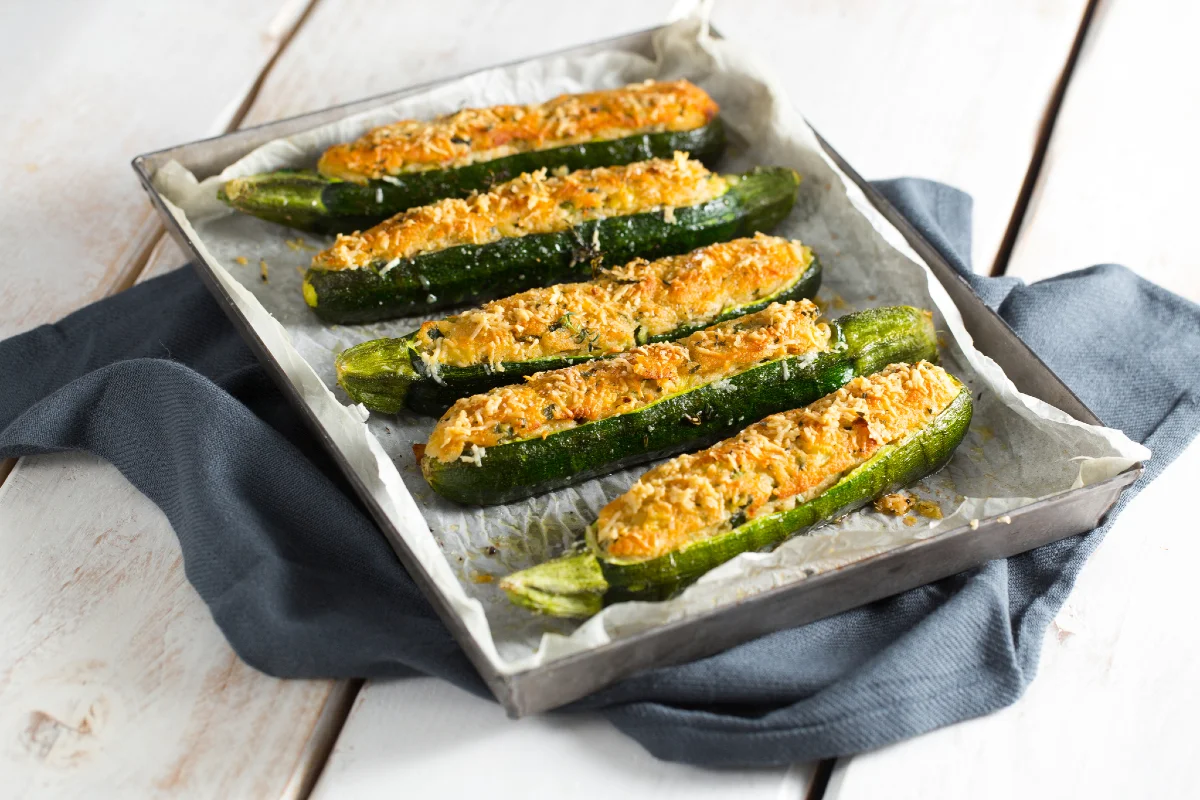
These ricotta-stuffed courgettes are baked until tender, with a savoury filling of sautéed courgette, breadcrumbs and Pecorino. They make a spring-inspired vegetarian main course, or a generous side dish.
Ingredients
- 520 g (6 similar-sized)courgettes
- 250 gcow’s milk ricotta
- 60 gbreadcrumbs
- to tastefine salt
- to tasteblack pepper
- to tasteextra-virgin olive oil
- to tastethyme
- 1 clovegarlic
- 50 gPecorino Romano, for grating
- 30 gPecorino Romano
Instructions
- 1
Prepare courgettes
Slice a lengthwise cap from each courgette, keeping the stalk attached. Scoop out the flesh with a teaspoon, then finely chop the flesh and any scraps of skin.
- 2
Season shells
Salt the insides of the courgette shells and set them aside. Warm the oil with the garlic clove in a frying pan, then add the chopped courgette flesh.
- 3
Cook the filling
Season with salt and pepper and sauté over a high heat for 10–15 minutes. Leave the courgette to cool slightly, then transfer it to a bowl.
- 4
Mix the filling
Add the well-drained ricotta, grated Pecorino and breadcrumbs to the bowl.
- 5
Fill the courgettes
Add thyme and a pinch of salt, then mix until evenly combined. The courgette shells will have released some water, so dry their insides before filling them. Press the filling in gently, shaping it into a slight mound.
- 6
Bake and brown
Sprinkle over more Pecorino and thyme, drizzle with a little oil and bake in a preheated conventional oven at 200°C for 40 minutes. Switch to the grill for 2 minutes, just until the tops are browned, then serve.
What are ricotta-stuffed courgettes?
This is an Italian-style stuffed vegetable dish: hollowed courgettes are filled with their own sautéed flesh, ricotta, breadcrumbs and Pecorino, then baked. Stuffed vegetables are found in many regional Italian home-cooking traditions, with fillings adapted to the ingredients on hand.
Here, the courgette flesh keeps the filling connected to the vegetable, while ricotta makes it soft and Pecorino brings a salty, savoury finish.
Nutrition and macros by portion
The nutrition label shows one serving as written: 290 calories, 0g protein, 17g carbs, 18g fat.
| Portion | Adjustment | kcal | Protein | Carbs | Fat |
|---|---|---|---|---|---|
| Lighter | Less oil, more salad | 203 kcal | 0g | 12g | 13g |
| This serving | As written | 290 kcal | 0g | 17g | 18g |
| Hungry | Add bread or potatoes | 435 kcal | 0g | 25g | 28g |
The courgettes and breadcrumbs provide most of the carbohydrates, while ricotta, Pecorino and olive oil contribute much of the fat; the cheeses and ricotta also supply protein. Balance a serving with a leafy salad or another vegetable, and add bread or a grain if you want a more filling plate.
Why cook the courgette flesh first?
Cook the chopped flesh in the pan with garlic before mixing it into the filling. This gives it time to soften and lets some of its moisture cook off, so the stuffing is less watery.
Drain the ricotta well
Ricotta that is too wet can loosen the stuffing during baking. Drain it thoroughly before adding it, particularly if liquid has collected in its container.
Shape the filling
Dry the courgette shells inside after salting, as they may have released water while resting. Fill them with a gentle press and make a small mound above each shell, rather than packing the mixture hard.
Check the texture and colour
The 40-minute bake should leave the courgettes tender and the filling set; the final 2 minutes under the grill add colour to the top. Watch closely during grilling, since the Pecorino can brown quickly.
Serve as a main or side
Serve the courgettes hot as a vegetarian main, with a green salad or other vegetables alongside. For a more substantial meal, add bread, potatoes or a grain.
Recipe notes & tips
- Choose courgettes of similar size so they cook at roughly the same rate.
- Keep the stalk attached when cutting off the top to help each courgette hold its shape.
- Drain the ricotta before mixing to avoid a loose filling.
- Let the sautéed courgette flesh cool slightly before combining it with the cheese.
- Keep a close eye on the courgettes during the final 2 minutes under the grill.
Variations
- Fresh herbs: Use a little chopped parsley alongside the thyme.
- More garlic: Finely chop the clove before sautéing it with the courgette flesh.
- Peppery finish: Add extra black pepper to the ricotta mixture.
- Cheese topping: Reserve some of the grated Pecorino for a generous final sprinkle.
- Serve with grains: Pair the courgettes with cooked rice or another grain for a more substantial meal.
Common mistakes to avoid
- Wet ricotta: Drain it well before mixing so the filling does not turn loose.
- Skipping the drying: Pat the insides of the shells dry after salting to remove released water.
- Undercooked filling base: Sauté the chopped courgette flesh for the full 10–15 minutes.
- Packing too firmly: Press the filling in gently so it remains tender.
- Unwatched grilling: Check the tops during the final 2 minutes to prevent the cheese from burning.
How to store
Refrigerate leftovers in a covered container and eat within 2–3 days. Reheat in an oven until hot throughout; the courgettes will be softer after storing.
Frequently asked questions
Can I prepare the filling ahead?
Yes. Cook the courgette flesh and mix the filling ahead, then cover and refrigerate it. Fill the shells shortly before baking.
How do I know the courgettes are done?
They should be tender when pierced and the filling should look set. The tops should be browned after the brief turn under the grill.
Can I use dried thyme?
Yes. Use it to taste, as dried thyme can be more concentrated than fresh thyme.
Can I make these without the grill?
Yes. Bake them at 200°C until tender and set; the tops may be less browned without the final grilling.
What can I serve with them?
A green salad or other vegetables makes a simple accompaniment. Bread, potatoes or a grain will make the meal more substantial.
Cook it from the original
This recipe comes from giallozafferano.es. Their page has the author’s own photos, notes and tips — the best place to cook it from.
Open the recipe on giallozafferano.es