
Turkey rolls with lardo
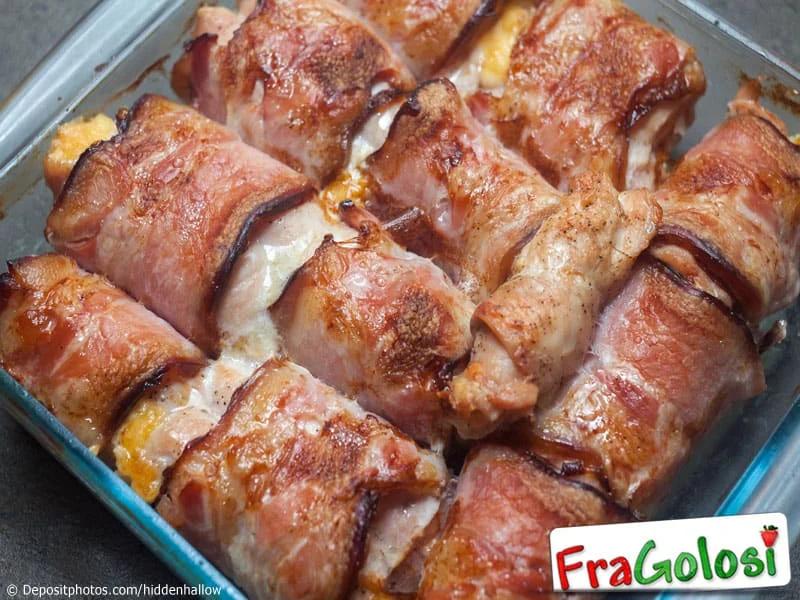
These Italian-style turkey rolls pair lean turkey with melting Colonnata lardo and a tender radicchio leaf. They are browned in a pan, then finished briefly in the oven for a simple main course with plenty of savoury flavour.
Ingredients
- 800 gthin turkey breast slices
- 100 gLardo di Colonnata
- a fewtender leaves from the heart of a radicchio
- 1 clovegarlic
- a littleextra-virgin olive oil
- to tastesalt
- to tasteblack pepper
Instructions
- 1
Top the turkey
Cover each turkey breast slice with slices of lardo.
- 2
Roll and secure
Place a small radicchio leaf on each slice, roll it up and secure the rolls with cocktail sticks.
- 3
Brown the rolls
Brown the rolls in a little olive oil with the garlic clove.
- 4
Season and cook
Season with salt and pepper, then cook the turkey rolls for about 10 minutes, turning them often so they colour on all sides.
- 5
Finish in oven
Finish cooking the rolls in the oven at 180°C for 5 minutes.
- 6
Serve the rolls
Serve.
What are turkey rolls with lardo?
Involtini are rolled portions of meat, a familiar format in Italian home cooking with many regional and household variations. Here, thin turkey breast is wrapped around lardo and a small radicchio leaf.
Lardo di Colonnata is a cured pork fat from Colonnata in Tuscany. As it warms, it softens and lends the lean turkey a rich, savoury finish, while radicchio brings a mild bitter note.
Nutrition and macros by portion
The nutrition label shows one serving as written: 475 calories, 46g protein, 1g carbs, 31g fat.
| Portion | Adjustment | kcal | Protein | Carbs | Fat |
|---|---|---|---|---|---|
| Lighter | Use less lardo | 333 kcal | 32g | 1g | 22g |
| This serving | As written | 475 kcal | 46g | 1g | 31g |
| Hungry | Add potatoes on the side | 713 kcal | 69g | 2g | 47g |
Turkey provides most of the protein, while the lardo and olive oil contribute most of the fat; the turkey is also the main source of the dish's small amount of carbohydrate. Pair a roll or two with a generous serving of vegetables and, if wanted, a modest portion of potatoes or bread.
Choosing the ingredients
Turkey slices: Choose pieces thin and flexible enough to roll around the filling. If some are noticeably thicker, gently flatten them so they cook more evenly.
Lardo and radicchio: Slice the lardo thinly so it can soften inside the roll. Pick small, tender radicchio leaves that fit the turkey without sticking out too far.
Rolling and securing
Neat rolls: Keep the lardo and leaf within the edges of each slice as you roll. Secure each one with a cocktail stick so it holds its shape while browning.
Even browning: Turn the rolls often during the pan-cooking stage, as directed, to colour them on all sides. Take care when turning so the filling stays tucked inside.
Cooking cues
In the pan: A little colour on the outside is the cue to move on to the oven finish; the recipe gives about 10 minutes of cooking, with frequent turns.
In the oven: Finish at 180°C for 5 minutes. Check that the thickest roll is cooked through before serving, since the exact cooking time can vary with the thickness of the turkey.
Garlic and seasoning
Garlic: Brown the rolls with the clove, then remove it if you prefer a subtler garlic flavour. Keep the heat controlled so the garlic does not scorch.
Salt and pepper: Season the rolls during cooking, bearing in mind that cured lardo is already savoury. Taste a small piece before adding extra salt at the table.
What to serve alongside
Vegetables: Serve with roasted or steamed vegetables, or a crisp salad to provide a fresh contrast to the rich lardo.
Something to catch the juices: Potatoes, bread or a simple grain can make the meal more substantial and work well alongside the pan juices.
Recipe notes & tips
- Lay out all the turkey slices before filling them so you can divide the lardo and radicchio evenly.
- Use cocktail sticks that are long enough to secure each roll without piercing through repeatedly.
- Turn the rolls gently with tongs to keep the filling in place.
- If the lardo is difficult to slice, chill it briefly before cutting.
- Remove the cocktail sticks before serving, or remind everyone to take them out.
Variations
- Add fresh herbs: Place a small sage leaf or a few thyme leaves inside each roll.
- Use another cured fat: Try thin slices of pancetta for a different savoury flavour.
- Change the greens: Use a small spinach leaf in place of radicchio for a milder filling.
- Add a splash of wine: Deglaze the pan with a little white wine after browning, before the oven finish.
- Serve with lemon: Add a squeeze of lemon at the table to contrast with the richness.
Common mistakes to avoid
- Thick turkey slices: They can be difficult to roll and may cook unevenly; flatten them gently before filling.
- Overfilling: Lardo or radicchio protruding from the sides can escape during cooking; keep the filling within the edges.
- Loose rolls: They may unravel as they brown; secure each one firmly with a cocktail stick.
- Scorched garlic: It can turn bitter; keep the heat moderate and remove the clove if it darkens too quickly.
- Relying only on colour: Browning does not confirm the centre is cooked; check the thickest roll before serving.
How to store
Refrigerate leftovers in a covered container and eat within 2 days. Reheat gently in a covered pan or in the oven until hot throughout, adding a splash of water if needed to keep the rolls from drying out.
Frequently asked questions
Can I prepare the rolls ahead?
You can assemble and secure the rolls in advance, then keep them covered in the fridge until cooking. For best texture, cook them shortly before serving.
How do I know when the turkey is cooked?
Check the thickest roll after the oven finish; the meat should be cooked through, not pink in the centre. Cooking time can vary with the thickness of the slices.
Can I make the rolls without an oven?
The method specifies a 5-minute oven finish at 180°C. If you do not have an oven, continue cooking gently in the covered pan until the thickest roll is cooked through.
Can I use another cut of turkey?
Thin turkey breast slices are easiest to roll and are what this recipe calls for. A thicker cut would need to be sliced or flattened before filling.
What can I use instead of radicchio?
A small tender spinach leaf is a mild alternative. The flavour will be less bitter than with radicchio.
Should I remove the garlic before serving?
Yes, if you want to avoid biting into it; it is used to flavour the cooking oil. The recipe does not require it to be served with the rolls.
Cook it from the original
This recipe comes from fragolosi.it. Their page has the author’s own photos, notes and tips — the best place to cook it from.
Open the recipe on fragolosi.it