
Scallops With Herbed Brown Butter
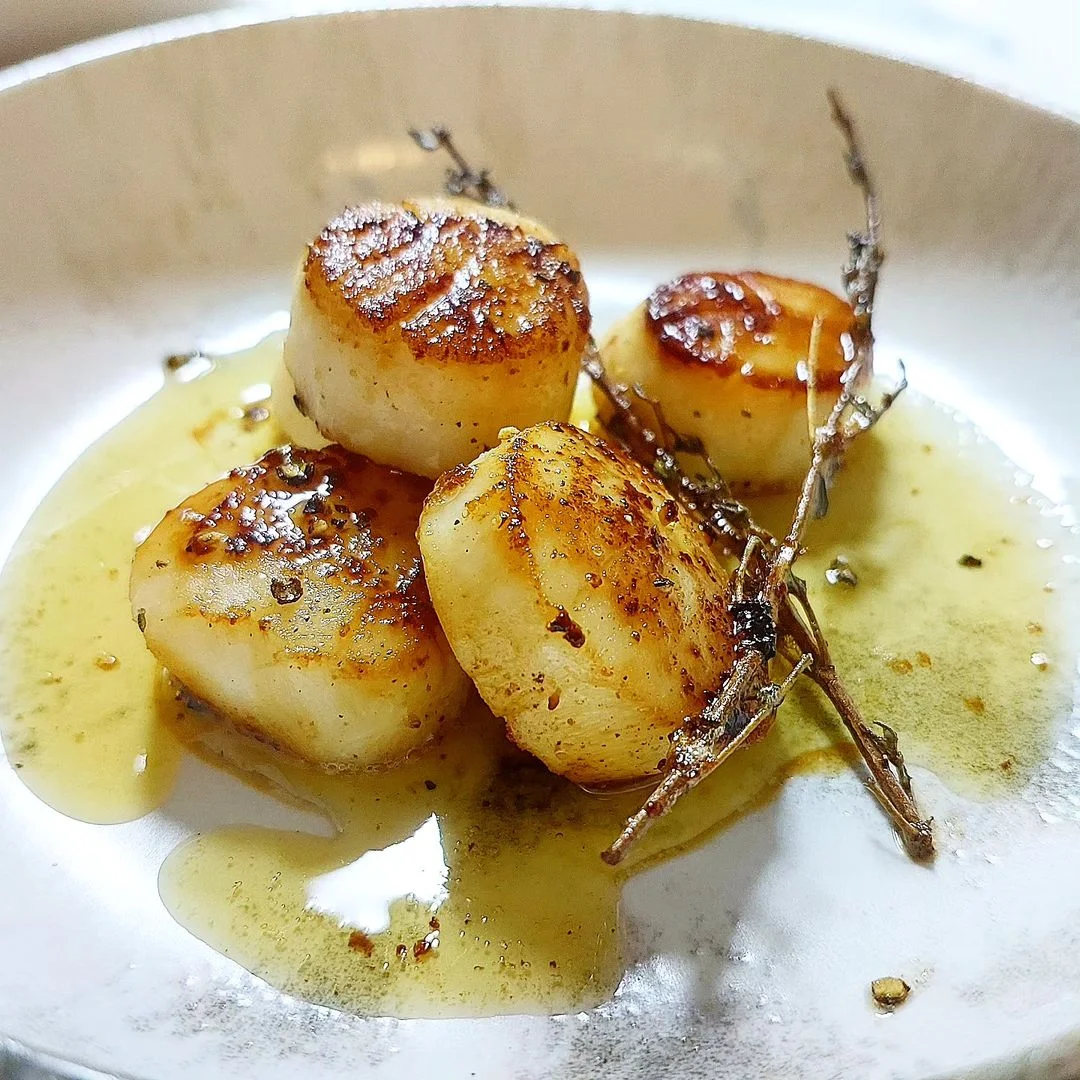
Scallops are seared until golden, then finished with butter browned alongside fresh herbs and a little lemon juice. It is a quick, elegant dish that lets the scallops’ sweet flavour shine through.
Ingredients
- 500 g (about 20 pieces)large sea scallop meat, wiped clean and dabbed dry
- 1/2 tspsalt
- 1/4 tspfreshly ground black pepper
- 1 tbspolive oil
- 2 tbspbutter, cut into small pieces
- 4 sprigsherbs, such as tarragon, lemon thyme or sage
- 2 tsplemon juice
Instructions
- 1
Heat the oil
Heat the olive oil in a large pan over medium-high heat.
- 2
Season the scallops
Season both sides of the scallops with the salt and pepper.
- 3
Sear the scallops
Arrange the scallops in the pan without overcrowding it, working in batches if needed. Cook for about 3 minutes, until the underside is deep golden brown.
- 4
Brown the butter
Turn the scallops over and add the butter and herbs. Cook for about 2 minutes, spooning the butter over the scallops often, until it is browned and smells nutty.
- 5
Finish and serve
Take the pan off the heat and add the lemon juice. Transfer the scallops to serving plates and spoon the brown butter pan sauce over them.
What are scallops with herbed brown butter?
This dish pairs seared sea scallops with butter cooked until its milk solids turn golden and smell nutty. Brown butter, known in French cooking as beurre noisette, is a classic way to add toasted, savoury depth to a simple sauce.
Here, fresh herbs perfume the butter while lemon juice adds a bright finish. The method is quick, so the scallops stay tender and remain the focus.
Nutrition and macros by portion
The nutrition label shows one serving as written: 190 calories, 20g protein, 3g carbs, 10g fat.
| Portion | Adjustment | kcal | Protein | Carbs | Fat |
|---|---|---|---|---|---|
| Lighter | Use less brown butter | 133 kcal | 14g | 2g | 7g |
| This serving | As written | 190 kcal | 20g | 3g | 10g |
| Hungry | Add potatoes or rice | 285 kcal | 30g | 5g | 15g |
The scallops provide most of the protein, while their natural carbohydrate content is low. Butter and olive oil contribute most of the fat, and the scallops and salt contribute sodium. Pair a portion with vegetables and, if you want a more filling plate, a modest serving of potatoes or rice.
Choosing the ingredients
Scallops: Large sea scallops give you a broad surface for browning while keeping the middle tender. Wiping them clean and drying them well helps them sear rather than release excess moisture.
Herbs: Tarragon, lemon thyme and sage each work with the butter in a different way. Use one kind or a combination, keeping the sprigs whole as directed.
Getting a good sear
Dry scallops: Dab the scallops thoroughly before seasoning so moisture does not interfere with browning.
Room in the pan: Cook in batches rather than crowding the pan. Scallops need direct contact with the hot surface to develop a deep golden underside.
Knowing when they are done
Golden side: Cook the first side for about 3 minutes, looking for a deep golden-brown crust before turning the scallops.
Brown butter: After adding the butter and herbs, spoon the melting butter over the scallops as it cooks for about 2 minutes. Take the pan off the heat when the butter is browned and smells nutty.
Serving the scallops
Serve the scallops straight away, while the seared edges and warm sauce are at their best. Spoon the butter from the pan over each portion so the herbs and browned milk solids are not left behind.
A simple green salad or steamed vegetables make a fresh accompaniment, while potatoes, rice or crusty bread can catch the buttery sauce.
Recipe notes & tips
- Pat the scallops dry just before seasoning them.
- Use a pan large enough to leave space between the scallops, or cook them in batches.
- Keep the heat at medium-high so the scallops can brown without lingering in the pan.
- Have the butter, herbs and lemon juice ready before you start cooking.
- Watch the butter closely once it has melted, as its colour can change quickly.
Variations
- Tarragon: Use tarragon sprigs for a gently anise-like herbal note.
- Lemon thyme: Choose lemon thyme for a citrusy aroma alongside the lemon juice.
- Sage: Use sage sprigs for a deeper, earthy flavour in the brown butter.
- Citrus: Add a little finely grated lemon zest with the lemon juice for extra fragrance.
- Chilli: Add a small pinch of chilli flakes to the butter for a mild heat.
Common mistakes to avoid
- Wet scallops: They are less likely to brown well, so dab them thoroughly dry before cooking.
- Crowded pan: The scallops can steam instead of sear; cook them in batches.
- Turning too soon: The crust may tear or remain pale; wait until the underside is deep golden before flipping.
- Burnt butter: It can turn bitter; remove the pan from the heat once the butter is browned and nutty-smelling.
- Overcooking: Scallops can become firm and dry; follow the stated cooking times and look for the golden crust and browned butter cues.
How to store
Refrigerate leftovers in a covered container and use within 1 day. Reheat gently in a pan over low heat just until warmed through; prolonged heating can make the scallops tough.
Frequently asked questions
Can I use frozen scallops?
Yes. Thaw them completely in the fridge and dab them very dry before cooking, following the same method.
How can I tell when a scallop is cooked?
The outside should be golden and the centre should be just opaque and tender. The recipe’s timing is approximate, so check the scallops as they cook.
Can I use dried herbs?
Fresh sprigs are specified because they infuse the butter as it cooks. If using dried herbs instead, use a small pinch and add it carefully, as dried herbs have a more concentrated flavour.
Why cook the scallops in batches?
Crowding the pan lowers the heat and encourages moisture to collect, making it harder to get a deep golden sear.
What can I serve with them?
Try steamed vegetables or a green salad for a lighter accompaniment, or serve with potatoes, rice or crusty bread to make the buttery sauce go further.
Cook it from the original
This recipe comes from fooooods.com. Their page has the author’s own photos, notes and tips — the best place to cook it from.
Open the recipe on fooooods.com