
Lamb Potato Curry
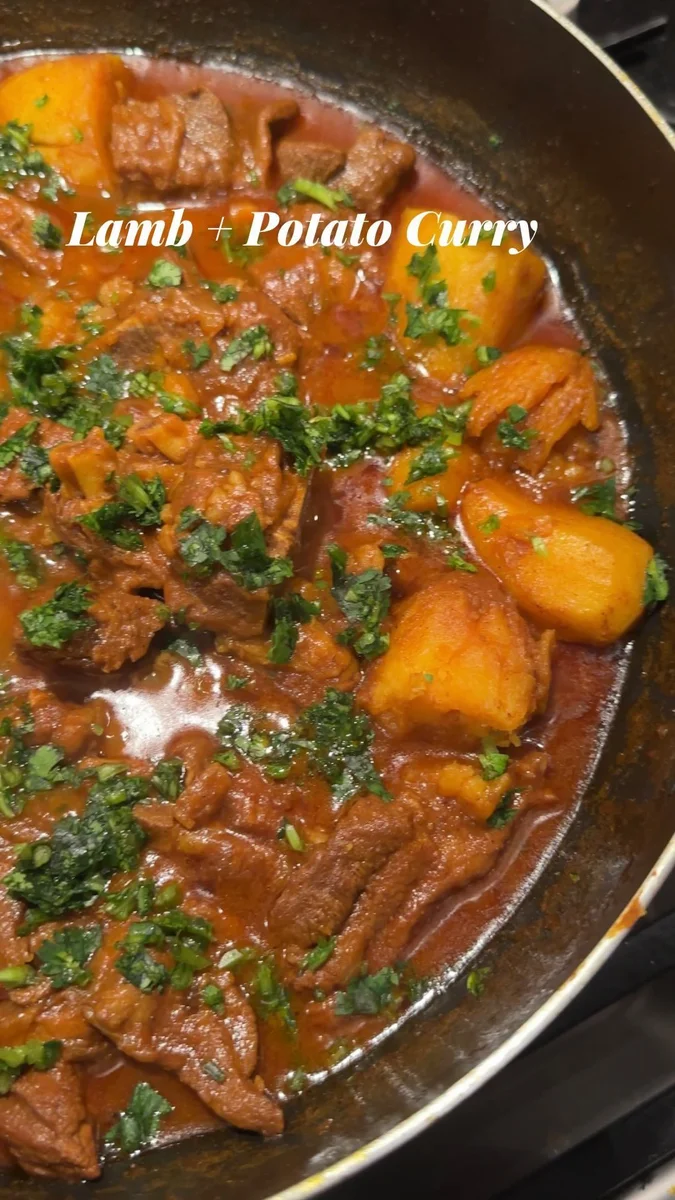
Lamb potato curry is a warming, gently spiced stew of tender lamb and potatoes in a savoury onion and garlic sauce. It makes a hearty one-pot meal, with fresh coriander to finish.
Ingredients
- 90 ml (6 tbsp)olive oil
- 2 mediumonions, sliced
- 6 clovesgarlic, finely chopped
- 15 ml (1 tbsp)garam masala
- 10 ml (2 tsp)turmeric
- 10 ml (2 tsp)chilli powder
- 1 kglamb, cut into curry pieces
- to tastesalt
- 950 ml (4 cups)water
- 400 gpotatoes
- about 15 g (½ cup)fresh coriander, finely chopped
Instructions
- 1
Cook the aromatics
Heat the olive oil in a pan, then add the sliced onions and chopped garlic. Sauté until the onions turn translucent.
- 2
Fry the spices
Add the garam masala, turmeric and chilli powder. Fry over medium-high heat for a couple of minutes, until fragrant.
- 3
Coat the lamb
Add the lamb and stir continuously for 5 minutes, coating the pieces in the spices.
- 4
Simmer the curry
Add salt and the water. Simmer over low heat for about 30 minutes.
- 5
Add the potatoes
Add the potatoes and simmer for about 15 minutes.
- 6
Finish with coriander
Garnish with the chopped fresh coriander before serving.
What is lamb potato curry?
Lamb potato curry brings together pieces of lamb, potatoes and spices in a simmered, savoury sauce. Curries have many regional traditions, and this straightforward version relies on garam masala, turmeric and chilli powder rather than a long list of ingredients.
The lamb simmers first so it has time to become tender, while the potatoes go in later to cook through without spending the whole time in the pot.
Nutrition and macros by portion
The nutrition label shows one serving as written: 905 calories, 48g protein, 22g carbs, 63g fat.
| Portion | Adjustment | kcal | Protein | Carbs | Fat |
|---|---|---|---|---|---|
| Lighter | Less oil, leaner lamb | 634 kcal | 34g | 15g | 44g |
| This serving | As written | 905 kcal | 48g | 22g | 63g |
| Hungry | Larger curry portion | 1358 kcal | 72g | 33g | 95g |
The potatoes provide most of the carbohydrate, while the lamb contributes most of the protein and a substantial share of the fat. Olive oil adds further fat, so serve a moderate portion with vegetables and rice or flatbread according to your appetite.
Building the flavour
Onions and garlic: sauté them until the onions are translucent before adding the spices. This gives the curry its aromatic base.
Spices: fry the garam masala, turmeric and chilli powder for a couple of minutes over medium-high heat. Keep stirring and let their aroma develop without letting them catch.
Getting the lamb tender
Lamb pieces: cut for curry should be reasonably similar in size so they cook at a similar pace. Stir them in the spice mixture for the full 5 minutes, then simmer gently in the water for about 30 minutes.
Gentle heat: keep the curry at a low simmer rather than a rapid boil. The recipe gives an approximate cooking time, so check that the lamb is tender before serving.
Cooking the potatoes
Potato pieces: cut them into even chunks so they soften at roughly the same rate. Add them only after the lamb has simmered for about 30 minutes.
Doneness: simmer for about 15 minutes, then check a piece with a knife. It should be tender but still hold its shape.
Managing the sauce
Water: the 950 ml creates the liquid for the simmer. Keep the pot at a low simmer and check it occasionally so the curry does not boil hard.
Salt: add it with the water, using enough to suit your taste. The sauce will be easier to season once the lamb and spices have simmered together.
Serving the curry
Coriander: scatter the finely chopped leaves over the curry at the end for a fresh, herbal contrast to the rich sauce.
On the plate: serve it with rice or flatbread to make a fuller meal and to scoop up the sauce. A simple vegetable side can add freshness and variety.
Recipe notes & tips
- Cut the lamb into similarly sized curry pieces for more even cooking.
- Stir the spices constantly while frying so they become fragrant without burning.
- Keep the lamb at a gentle simmer during its first 30 minutes.
- Cut the potatoes into even chunks and check them for tenderness after about 15 minutes.
- Taste the sauce before serving and adjust the salt to your preference.
Variations
- Adjust the heat: use less chilli powder for a milder curry.
- Add ginger: finely chop it and sauté it with the garlic for another aromatic note.
- Use a different potato: choose a firm variety if you want the chunks to hold their shape.
- Add vegetables: stir in quick-cooking vegetables near the end, allowing time for them to become tender.
- Serve with rice: pair the curry with plain rice to make the sauce go further.
Common mistakes to avoid
- Burning the spices: keep stirring and fry them only until fragrant.
- Boiling the lamb hard: lower the heat so it simmers gently and cooks more evenly.
- Adding potatoes too early: wait until the lamb has simmered for about 30 minutes so the potatoes do not overcook.
- Uneven potato chunks: cut them to a similar size so they finish cooking together.
- Skipping the final check: test both lamb and potatoes for tenderness before serving.
How to store
Cool leftovers promptly and refrigerate them in a sealed container for up to 3 days. Reheat gently in a saucepan until piping hot throughout, adding a little water if the sauce has thickened.
Frequently asked questions
How can I tell when the lamb is tender?
After the initial 30-minute simmer, check a piece with a fork. If it is not tender, continue simmering gently and check again before adding the potatoes.
Can I make the curry less spicy?
Yes. Reduce the chilli powder to suit your taste; the garam masala and turmeric will still flavour the dish.
Which potatoes work best?
A firm potato will tend to hold its shape in the curry. Cut the pieces evenly and check that they are tender after about 15 minutes.
What should I serve with lamb potato curry?
Rice or flatbread works well for serving with the sauce. You can also add a vegetable side for freshness.
Can I prepare this curry ahead?
Yes. Refrigerate it once cooled and reheat it gently until piping hot throughout. The potatoes may soften further when reheated.
Cook it from the original
This recipe comes from fooooods.com. Their page has the author’s own photos, notes and tips — the best place to cook it from.
Open the recipe on fooooods.com