
Har Gow / Hakau
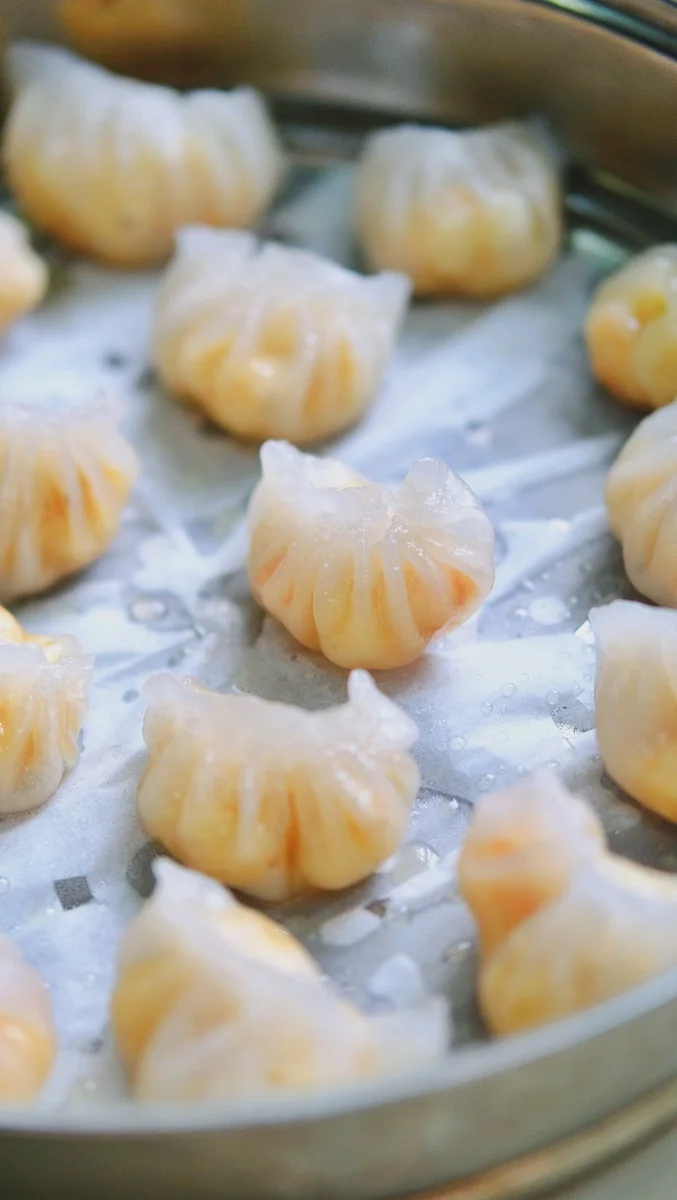
Har gow, also called hakau, are delicate Cantonese shrimp dumplings with thin, translucent wrappers and a savoury, springy filling. This version seasons diced shrimp with oyster sauce, garlic oil and sesame oil, then steams the dumplings until just cooked.
Ingredients
- 350 gdeshelled shrimp, diced
- 1 tbspoyster sauce
- 2 tbspfried garlic oil
- 2 tspegg whites
- 2 tspsesame oil
- 1/2 tspsalt
- 1 tspsugar
- 1/2 tspwhite pepper
- 2 tbsppotato starch
- amount not specifiedchilli oil, chilli sambal or sriracha
Instructions
- 1
Mix the filling
Put the diced shrimp, salt and sugar in a bowl. Mix vigorously until the mixture becomes sticky and pasty.
- 2
Season and chill
Add the oyster sauce, fried garlic oil, egg whites, sesame oil, white pepper and potato starch. Mix well, then refrigerate the filling until you are ready to use it.
- 3
Combine wrapper ingredients
Put the starches, flour and salt in a bowl and mix. Add the oil and boiling water.
- 4
Rest the mixture
Mix with chopsticks or a spoon until combined, then cover and leave for 2–3 minutes.
- 5
Knead the dough
Knead the dough by hand until smooth, then shape it into a large ball.
- 6
Divide the dough
Cut the dough into equal portions.
- 7
Portion the wrappers
Roll the dough into a log and cut it into small pieces weighing 11–13 g each.
- 8
Roll the wrappers
Roll each piece into a thin, round wrapper. Continue until the dough is used. If using a 9–10 cm ring cutter, cut the dough into pieces weighing 14–16 g each.
- 9
Fill the wrappers
Place one wrapper in front of you and put 1 tsp of filling in its centre.
- 10
Pleat and seal
Make small pleats around the edge, pinching from right to left to close each dumpling.
- 11
Prepare the steamer
Bring water to a boil in a steamer. Line the perforated parchment with the har gow.
- 12
Steam and serve
Steam for 8–10 minutes. Remove from the heat and serve with the dipping sauce.
What are har gow?
Har gow, also known as hakau, are Cantonese steamed shrimp dumplings traditionally served at dim sum. Their characteristic wrapper is thin and translucent, folded around a juicy shrimp filling.
This version builds flavour with oyster sauce, fried garlic oil and sesame oil. The recipe does not provide quantities for the wrapper ingredients, so those amounts need to be clarified before the dumplings can be made as written.
Nutrition and macros by portion
The nutrition label shows one serving as written: 180 calories, 20g protein, 8g carbs, 10g fat.
| Portion | Adjustment | kcal | Protein | Carbs | Fat |
|---|---|---|---|---|---|
| Lighter | Use less dipping oil | 126 kcal | 14g | 6g | 7g |
| This serving | As written | 180 kcal | 20g | 8g | 10g |
| Hungry | Make a larger portion | 270 kcal | 30g | 12g | 15g |
The shrimp provides most of the protein, while potato starch and the unquantified wrapper ingredients contribute carbohydrates. Garlic oil, sesame oil and the wrapper oil contribute fat; the recipe’s missing wrapper amounts mean the macros and calories can only be rough estimates. Serve with vegetables or soup to round out the plate.
The shrimp filling
Sticky texture: mix the shrimp with salt and sugar vigorously first, as the method directs, until the pieces cling together in a pasty mixture.
Seasoning: add the sauces, oils, egg whites, pepper and potato starch after the initial mixing. Chilling the filling while preparing the wrappers helps keep it together for filling.
The wrapper dough
Missing amounts: the method calls for starches, flour, salt, oil and boiling water, but none of these wrapper ingredients appears in the supplied ingredient list. Their quantities are essential for making and rolling the dough, so check the original recipe for them before starting.
Hot water: the method adds boiling water to the dry ingredients, then rests the mixture covered for 2–3 minutes before kneading. Handle the mixture carefully while it is hot.
Rolling and shaping
Small portions: cut the dough into 11–13 g pieces, or 14–16 g pieces if using a 9–10 cm ring cutter, as specified in the method.
Thin wrappers: roll each piece as thin as possible and keep the unused dough covered so it does not dry out. Put 1 tsp of filling in the centre, then pleat and pinch the edge closed from right to left.
Steaming and doneness
Steamer setup: bring the water to a boil before adding the dumplings, and line the perforated parchment with the har gow.
Timing: steam for 8–10 minutes, then remove from the heat. The recipe gives no further visual doneness cue, so follow the stated steaming time and make sure the shrimp filling is cooked through.
Serving the dumplings
Serve the har gow hot with the listed chilli oil, chilli sambal or sriracha as a dipping accompaniment. The recipe does not specify a particular dipping sauce or serving quantity.
For a fuller meal, serve alongside a simple vegetable dish or soup; these are serving suggestions rather than ingredients in the recipe.
Recipe notes & tips
- Chill the filling while you prepare the wrappers to make it easier to portion.
- Keep dough pieces covered as you work so they do not dry out.
- Roll the wrappers thinly, as the method directs, for a delicate dumpling.
- Use the specified 11–13 g dough portions unless cutting wrappers with a 9–10 cm ring cutter.
- Bring the steamer water to a boil before steaming the dumplings.
- Check the wrapper ingredient quantities before starting; they are missing from the supplied list.
Variations
- Choose a dip: serve with chilli oil, chilli sambal or sriracha, as listed.
- Adjust the heat: offer the chilli accompaniment on the side so diners can add it to taste.
- Serve with vegetables: add a simple vegetable side for a more substantial meal.
- Make a larger batch: scale the listed ingredients proportionally, once the missing wrapper quantities have been confirmed.
Common mistakes to avoid
- Starting without wrapper quantities: the method omits their amounts; check the original recipe before mixing the dough.
- Dry dough: keep unused portions covered while rolling and shaping.
- Thick wrappers: roll each wrapper as thin as possible, as directed.
- Overfilling: use 1 tsp of filling per wrapper so there is room to pleat and seal.
- Loose pleats: pinch from right to left around the edge to close the dumpling.
- Skipping the pre-boil: bring the steamer water to a boil before adding the lined dumplings.
How to store
The recipe does not give storage instructions. For best texture, serve the dumplings soon after steaming; refrigerate leftovers promptly in a covered container and reheat until hot throughout.
Frequently asked questions
What does har gow mean?
Har gow, also called hakau, are Cantonese steamed shrimp dumplings commonly associated with dim sum.
Why is the wrapper dough ingredient list incomplete?
The method refers to starches, flour, salt, oil and boiling water, but the supplied ingredients list gives no wrapper ingredients or quantities. Check the original recipe for the amounts before making the dough.
How thin should I roll the wrappers?
The method says to roll them as thin as possible. It gives portions of 11–13 g, or 14–16 g when using a 9–10 cm ring cutter.
How much filling goes in each dumpling?
The method specifies 1 tsp of filling per wrapper.
How long do I steam har gow?
Steam them for 8–10 minutes in a steamer once the water is boiling.
What can I serve with har gow?
The method suggests serving them with dipping sauce and lists chilli oil, chilli sambal or sriracha among the ingredients. A vegetable side or soup would also work.
Cook it from the original
This recipe comes from fooooods.com. Their page has the author’s own photos, notes and tips — the best place to cook it from.
Open the recipe on fooooods.com