
Thai Chicken Curry with Coconut Milk
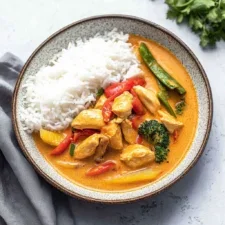
This quick Thai-inspired chicken curry simmers chicken and red peppers in a creamy coconut sauce flavoured with yellow curry powder and red curry paste. It is ready in about 25 minutes and works well with rice or noodles.
Ingredients
- 680 g (1½ lb)boneless, skinless chicken breasts or thighs
- 3red bell peppers
- 1onion
- 30 ml (2 tablespoons)oil
- 10 ml (2 teaspoons)yellow curry powder
- 30 ml (2 tablespoons)red curry paste
- 737 g (26 oz)unsweetened coconut milk
- to tastesalt
- to tastecrushed red pepper flakes
- to tastecornstarch
- to tastecold water
Instructions
- 1
Cook chicken and vegetables
Heat the oil in a large skillet over medium heat. Add the chicken, bell peppers and onion and cook for 6–8 minutes, until the chicken is cooked through.
- 2
Add curry powder
Sprinkle the yellow curry powder over the mixture and cook for 1 minute more.
- 3
Simmer the sauce
Stir in the coconut milk, red curry paste, crushed red pepper flakes and salt. Bring the mixture to a low boil.
- 4
Thicken the curry
Whisk the cornstarch with cold water, then add it to the skillet. Stir until the sauce thickens.
- 5
Season and serve
Taste and adjust the seasoning if needed. Serve straight away over rice or noodles.
What is Thai chicken curry?
Thai curries are commonly built around curry paste, coconut milk and a balance of aromatic, savoury and spicy flavours. This home-style version combines red curry paste with yellow curry powder for a creamy, gently spiced sauce.
Chicken, peppers and onion make it a one-pan main. The coconut milk softens the curry paste’s heat, while the vegetables add colour and a little sweetness.
Nutrition and macros by portion
The nutrition label shows one serving as written: 420 calories, 40g protein, 10g carbs, 22g fat.
| Portion | Adjustment | kcal | Protein | Carbs | Fat |
|---|---|---|---|---|---|
| Lighter | Use less coconut milk | 294 kcal | 28g | 7g | 15g |
| This serving | As written | 420 kcal | 40g | 10g | 22g |
| Hungry | Serve with extra rice | 630 kcal | 60g | 15g | 33g |
The chicken supplies most of the protein, while the coconut milk and cooking oil contribute much of the fat. The peppers and onion add carbohydrates, with rice or noodles adding more if served alongside. For a balanced plate, serve a moderate portion of rice with extra vegetables.
Choosing the chicken
Breast or thigh: either works here. Breast cooks quickly and stays fairly lean; thighs tend to remain juicy and have a richer flavour.
Even pieces: cut the chicken into similar-sized pieces so it cooks at a similar rate. The method gives a 6–8 minute cooking window, but check that the thickest pieces are cooked through.
Building the curry flavour
Yellow curry powder: cooking it briefly with the chicken and vegetables helps release its aroma. Keep it moving in the pan so it does not catch.
Red curry paste: stir it into the coconut milk with the other sauce ingredients. Curry pastes vary in heat and saltiness, so taste before adding extra seasoning.
Getting the sauce right
Low boil: once the coconut milk is added, bring the curry just to a low boil rather than letting it bubble vigorously. This gives the flavours time to come together without aggressively reducing the sauce.
Cornstarch slurry: whisk the cornstarch with cold water before adding it, which helps it blend into the curry. Stir as the sauce thickens and stop when it reaches the consistency you like.
Checking doneness
Chicken: cut into a larger piece to check that it is cooked through before moving on. Avoid relying only on the outside colour.
Vegetables: the peppers and onion cook alongside the chicken for 6–8 minutes, so they should soften while retaining some shape. If the chicken needs longer, continue cooking until done.
What to serve with it
Rice: spoon the curry over steamed rice to catch the coconut sauce. Noodles are another option named in the recipe.
Fresh contrast: serve with a crisp cucumber salad or lightly dressed greens if you want a fresh counterpoint. Keep the side simple so the curry remains the focus.
Recipe notes & tips
- Cut the chicken and vegetables to similar sizes for more even cooking.
- Use a wide skillet so the chicken and vegetables have room to cook.
- Stir the curry powder briefly into the hot mixture before adding the liquid.
- Whisk the cornstarch thoroughly with cold water before pouring it into the pan.
- Taste the curry before adding more salt, as curry paste can already be salty.
- Serve the curry as soon as the sauce has thickened.
Variations
- Choose thighs: use boneless, skinless chicken thighs for a richer result.
- Add vegetables: include sliced courgette or green beans and cook until tender.
- Adjust the heat: add more crushed red pepper flakes for a spicier curry.
- Use another curry paste: swap the red paste for a different curry paste, bearing in mind that the flavour will change.
- Finish with herbs: scatter chopped coriander over the curry just before serving.
Common mistakes to avoid
- Uneven chicken pieces: cut them to a similar size so they finish cooking together.
- Rushing the chicken: check a thick piece and cook until it is done before adding the sauce.
- High, vigorous simmer: keep the coconut milk at a low boil to avoid reducing the sauce too quickly.
- Lumpy thickener: whisk the cornstarch with cold water before adding it to the skillet.
- Over-salting early: taste after the curry paste is mixed in, then adjust the salt.
How to store
Refrigerate leftovers in a covered container and use within 3 days. Reheat gently in a saucepan, stirring until hot throughout; add a splash of water if the sauce has thickened in the fridge.
Frequently asked questions
Can I use chicken breast or thighs?
Yes. The recipe allows either boneless, skinless breasts or thighs. Cut whichever you choose into evenly sized pieces and check that they are cooked through.
How can I make the curry spicier?
Add crushed red pepper flakes to taste. You can also use a hotter curry paste, though this will change the flavour as well as the heat.
Why is my curry sauce not thickening?
Check that the cornstarch has been whisked with cold water and stirred into the hot curry. Continue stirring as the sauce heats and thickens.
Can I make this without rice?
Yes. The recipe also suggests serving it over noodles. You can also serve it on its own or with another side of your choice.
Can I prepare the curry ahead?
You can cook it ahead and refrigerate it, then reheat gently before serving. The recipe is designed to be quick, so it can also be made just before mealtime.
Cook it from the original
This recipe comes from bazarecipe.com. Their page has the author’s own photos, notes and tips — the best place to cook it from.
Open the recipe on bazarecipe.com