
Baked Polenta with Veggies
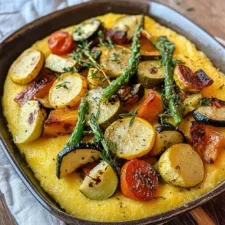
This baked polenta pairs a creamy, Parmesan-rich cornmeal base with colourful roasted vegetables. It is a good make-ahead-style supper when you want a comforting oven dish with plenty of savoury, caramelised flavour.
Ingredients
- 160 gcoarse cornmeal (polenta), not instant
- 946 mlvegetable stock
- 50 g, plus extra for toppinggrated Parmesan
- 28 gunsalted butter
- 5 ml, or to tastesalt
- 2.5 ml, or to tasteblack pepper
- 2.5 mlgarlic powder
- 1 largered pepper, chopped
- 1 largeyellow pepper, chopped
- 1 mediumcourgette, chopped
- 1 mediumred onion, chopped
- 300 gcherry or grape tomatoes, halved
- 4 clovesgarlic, minced
- 45 mlolive oil
- 5 mldried Italian seasoning
- 2.5 ml, or to tastesalt
- 1.25 ml, or to tasteblack pepper
- 1.25 ml, optionalred pepper flakes
- To taste, optionalfresh parsley or basil, chopped
Instructions
- 1
Preheat the oven
Heat the oven to 200°C. Lightly grease a 23 × 33 cm baking dish, or a similar-sized casserole dish, with olive oil or butter.
- 2
Combine the vegetables
Put the chopped red and yellow peppers, courgette, red onion, halved tomatoes and minced garlic in a large bowl.
- 3
Season the vegetables
Drizzle over 45 ml olive oil and add the Italian seasoning, 2.5 ml salt, 1.25 ml black pepper and optional red pepper flakes.
- 4
Coat the vegetables
Toss until the vegetables are evenly coated with the oil and seasonings.
- 5
Spread on a tray
Arrange the vegetables in a single layer on a large baking tray. Use two trays if needed, or roast them in the baking dish you plan to use for the polenta, then transfer them out temporarily.
- 6
Roast until tender
Roast for 20–25 minutes, stirring halfway through, until tender and lightly caramelised. Remove from the oven and set aside; if you used the baking dish, carefully transfer the vegetables to a bowl.
- 7
Boil the stock
While the vegetables roast, bring 946 ml vegetable stock to the boil in a large saucepan or Dutch oven over a medium-high heat.
- 8
Whisk in cornmeal
Once the stock is boiling, slowly pour in 160 g coarse cornmeal in a steady stream, whisking constantly to prevent lumps.
- 9
Cook the polenta
Lower the heat and cook for about 15–20 minutes, whisking frequently, until the polenta has thickened considerably and pulls away from the sides of the pan. The timing can vary with the coarseness of the cornmeal.
- 10
Stir in cheese
Take the pan off the heat. Stir in 50 g Parmesan, 28 g butter, 5 ml salt or to taste, 2.5 ml black pepper and 2.5 ml garlic powder. Stir vigorously until the butter and cheese have melted and the polenta is smooth and creamy, then taste and adjust the seasoning if needed.
- 11
Spread the polenta
Pour the creamy polenta into the greased 23 × 33 cm baking dish and spread it into an even layer.
- 12
Add the vegetables
Arrange the roasted vegetables evenly over the polenta.
- 13
Top with Parmesan
If you like, sprinkle extra grated Parmesan over the vegetables for a cheesier crust.
- 14
Bake the dish
Put the dish in the oven, still at 200°C.
- 15
Cook until golden
Bake for 15–20 minutes, until the edges are slightly bubbly and golden and the top is heated through. For a crisper top, switch to the grill for the final 1–2 minutes, watching closely to prevent burning.
- 16
Rest before serving
Remove the dish from the oven and leave it to stand for 5–10 minutes so the polenta sets slightly and is easier to portion.
- 17
Add fresh herbs
If desired, scatter chopped fresh parsley or basil over the dish before serving.
What is baked polenta with veggies?
Polenta is a northern Italian dish made from cornmeal cooked slowly in liquid until soft and thick. In this version, it is finished in the oven beneath a layer of roasted vegetables.
Coarse, non-instant cornmeal gives the base a pleasantly substantial texture, while Parmesan and butter make it rich and savoury. Roasting the vegetables first brings out their sweetness before they meet the creamy polenta.
Nutrition and macros by portion
The nutrition label shows one serving as written: 400 calories, 12g protein, 0g carbs, 0g fat.
| Portion | Adjustment | kcal | Protein | Carbs | Fat |
|---|---|---|---|---|---|
| Lighter | Use less butter and Parmesan | 280 kcal | 8g | 0g | 0g |
| This serving | As written | 400 kcal | 12g | 0g | 0g |
| Hungry | Serve a larger portion | 600 kcal | 18g | 0g | 0g |
The cornmeal provides most of the carbohydrate, while the Parmesan, butter and olive oil contribute much of the fat; the cheese also supplies some protein. Balance a serving with a green salad or other fresh vegetables alongside.
Choosing the cornmeal
Coarse cornmeal: Use the non-instant type specified here; it takes longer to cook but gives the finished polenta its characteristic texture. Stir it into boiling stock gradually to help keep the mixture smooth.
Stock: Vegetable stock supplies flavour to the polenta from the start. If yours is salty, wait until the end of cooking to judge how much extra salt it needs.
Roasting the vegetables
Give them room: Spread the chopped vegetables in a single layer so they roast rather than steam. Use two trays if the vegetables are crowded.
Check for colour: Stir once halfway through and look for tender pieces with lightly browned edges after 20–25 minutes. The tomatoes should soften and release some of their juices.
Getting smooth polenta
Add slowly: Pour the cornmeal into the boiling stock in a steady stream while whisking constantly. This helps prevent lumps from forming.
Keep stirring: Cook over low heat for 15–20 minutes, whisking often. It is ready when thick and pulling away from the sides of the saucepan; coarser cornmeal may need a little longer.
Layering and baking
Even base: Spread the cooked polenta level in the greased dish so it bakes consistently. Distribute the roasted vegetables across the surface rather than piling them in the centre.
Golden finish: Bake at 200°C for 15–20 minutes, until the edges bubble and the top is hot. A brief 1–2 minutes under the grill can crisp the top, but keep a close eye on it.
Serving and timing
Resting time: Leave the baked dish to stand for 5–10 minutes before cutting or spooning out portions. This gives the polenta a chance to firm up slightly.
To serve: Fresh parsley or basil adds a bright finishing note. A simple green salad or lightly dressed leaves make a fresh contrast to the warm, cheesy polenta.
Recipe notes & tips
- Taste the stock before adding salt, especially if it is a seasoned or reduced-salt variety.
- Cut the vegetables into similar-sized pieces so they roast at a similar rate.
- Whisk the cornmeal in gradually rather than tipping it all into the stock at once.
- Stir the polenta frequently over low heat to help it cook evenly and avoid sticking.
- Use a second tray if necessary to keep the vegetables in a single layer.
- Watch closely if you grill the top, as the Parmesan can brown quickly.
Variations
- Add mushrooms: Roast sliced mushrooms with the other vegetables until tender.
- Use different herbs: Replace the Italian seasoning with dried oregano or thyme.
- Bring the heat: Add a little more red pepper flakes to the vegetables.
- Try another cheese: Use a similar amount of grated mature hard cheese in place of Parmesan.
- Change the vegetables: Swap in chopped aubergine or extra courgette, keeping the pieces a similar size.
Common mistakes to avoid
- Crowding the tray: The vegetables may steam instead of caramelise; divide them between two trays.
- Adding cornmeal too quickly: It can form lumps; whisk it into the boiling stock in a slow, steady stream.
- Using instant polenta: It cooks differently from coarse cornmeal; use the non-instant type specified for this method.
- Cooking over high heat: The polenta can stick or catch; reduce the heat after adding the cornmeal and whisk frequently.
- Skipping the rest: The polenta may be harder to portion; leave it to stand for 5–10 minutes after baking.
- Leaving the grill unattended: The top can burn quickly; watch it closely during the final 1–2 minutes.
How to store
Cool leftovers and refrigerate them in a covered container for up to 3 days. Reheat portions in the oven or microwave until piping hot; the polenta will firm up as it chills.
Frequently asked questions
Can I make this with instant polenta?
This method is written for coarse, non-instant cornmeal, which needs 15–20 minutes of cooking. Instant polenta has different cooking instructions, so follow its packet directions and check the texture before assembling.
How do I stop the polenta from going lumpy?
Whisk constantly while adding the cornmeal in a slow, steady stream to boiling stock. Keep whisking frequently as it cooks.
Can I roast the vegetables in the baking dish?
Yes. Roast them in the dish first, then transfer them to a bowl while you prepare the polenta. Spread the polenta in the same dish afterwards.
How can I tell when the polenta is cooked?
It should be considerably thickened and pull away from the sides of the pan. The exact cooking time depends on the coarseness of the cornmeal.
Can I make the top crispier?
Yes. After baking, switch the oven to the grill for the final 1–2 minutes and watch closely so the topping does not burn.
Why should the dish rest before serving?
A 5–10 minute rest lets the polenta set slightly, making the dish easier to portion.
Cook it from the original
This recipe comes from betterhomerecipes.com. Their page has the author’s own photos, notes and tips — the best place to cook it from.
Open the recipe on betterhomerecipes.com