
Perfect Baked Chicken Parmesan
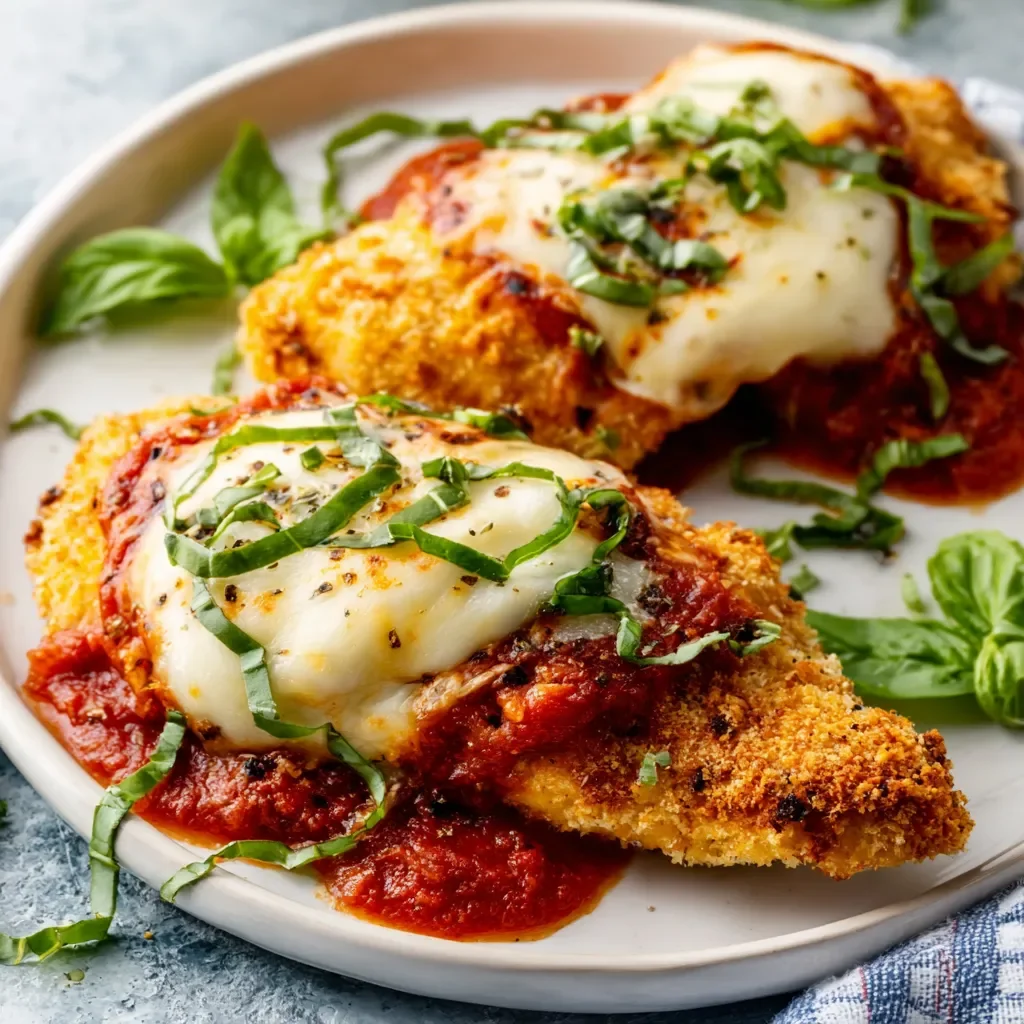
Baked chicken Parmesan pairs crisp, Italian-seasoned breadcrumb-coated chicken with marinara and melted mozzarella. It brings the familiar Italian-American combination to the table without frying.
Ingredients
- 4 (170–227 g each; 6–8 oz)boneless, skinless chicken breasts
- 125 g (1 cup)plain flour
- 2 largeeggs, beaten
- 220 g (2 cups)Italian-seasoned breadcrumbs
- 100 g (1 cup)grated Parmesan cheese
- 1 teaspoongarlic powder
- ½ teaspoondried oregano
- ¼ teaspoonsalt
- ¼ teaspoonblack pepper
- 480 ml (2 cups)marinara sauce
- 200 g (2 cups)shredded mozzarella cheese
- 10 g (¼ cup), optionalchopped fresh basil
- Optionalolive oil spray
Instructions
- 1
Prepare the oven
Heat the oven to 200°C (400°F). Lightly grease a baking sheet or line it with parchment paper.
- 2
Flatten the chicken
Pound each chicken breast to an even thickness of 1.3 cm (½ inch). Pat the breasts completely dry with paper towels.
- 3
Set up dishes
Arrange three shallow dishes for the flour, beaten eggs and breadcrumb mixture.
- 4
Mix the breadcrumbs
In a medium bowl, combine the Italian-seasoned breadcrumbs, Parmesan, garlic powder, oregano, salt and pepper. Mix well.
- 5
Coat the chicken
Coat one breast at a time in flour, shaking off the excess. Dip it in the beaten egg until covered, then dredge it in the breadcrumb mixture, pressing gently so the coating sticks.
- 6
Arrange on tray
Place the coated breasts on the prepared baking sheet. If using, lightly spray their tops with olive oil spray.
- 7
Bake the chicken
Bake for 20–25 minutes, until the chicken is cooked through and the coating is golden brown. Its internal temperature should reach 74°C (165°F).
- 8
Add sauce and cheese
Take the baking sheet out of the oven. Spread about 60 ml (¼ cup) of marinara sauce over each breast and top each with about 50 g (½ cup) of mozzarella.
- 9
Melt the cheese
Return the tray to the oven and bake for another 5–7 minutes, until the cheese is melted and bubbling.
- 10
Finish and serve
Remove from the oven and leave to cool for a few minutes. Garnish with fresh basil, if using, and serve immediately.
What is chicken Parmesan?
Chicken Parmesan is an Italian-American dish of breaded chicken topped with tomato sauce and cheese. It draws on the Italian tradition of serving food alla Parmigiana, adapted here with chicken and a generous mozzarella topping.
This version bakes the coated breasts rather than frying them. The Parmesan mixed into the breadcrumbs adds savoury flavour, while the sauce and mozzarella go on towards the end to keep the topping distinct.
Nutrition and macros by portion
The nutrition label shows one serving as written: 650 calories, 0g protein, 0g carbs, 0g fat.
| Portion | Adjustment | kcal | Protein | Carbs | Fat |
|---|---|---|---|---|---|
| Lighter | Use less mozzarella | 455 kcal | 0g | 0g | 0g |
| This serving | As written | 650 kcal | 0g | 0g | 0g |
| Hungry | Add a pasta side | 975 kcal | 0g | 0g | 0g |
Chicken supplies most of the protein, while the breadcrumbs and flour contribute carbohydrates. The Parmesan, mozzarella and olive oil spray (if used) contribute much of the fat; serve with vegetables or salad to add a fresh side to the plate.
The coating ingredients
Flour first: it gives the beaten egg a surface to cling to, helping the breadcrumb layer stay in place.
Seasoned crumbs: Italian-seasoned breadcrumbs, Parmesan, garlic powder and oregano make up the crisp, savoury coating. Mix them thoroughly so the seasoning is distributed across the chicken.
Even thickness matters
Flattening the breasts to 1.3 cm (½ inch) helps them cook at a similar rate. Patting them dry before breading also helps the coating adhere rather than slipping on a wet surface.
Work with one breast at a time through the flour, egg and crumbs. Press the crumbs on gently, then shake away any loose excess before transferring the chicken to the tray.
Check the chicken and coating
The first bake should leave the coating golden and the chicken cooked through; check that the centre reaches 74°C (165°F). The stated 20–25 minutes is a guide, so use the temperature as the doneness cue.
Add the marinara and mozzarella only after this bake. The shorter second bake melts the cheese and warms the sauce without leaving the topping in the oven for the full cooking time.
Keep the topping balanced
Spread about 60 ml (¼ cup) of marinara over each breast, then add about 50 g (½ cup) of mozzarella. Spreading the sauce over the surface helps each portion get some, while an even layer of cheese melts together.
If using basil, add it after baking as directed. Serve once the chicken has cooled for a few minutes, while the cheese is still melted.
What to serve alongside it
The recipe gives each chicken breast a rich tomato-and-cheese topping, so a simply dressed green salad or steamed vegetables make an easy contrast.
For a more substantial meal, serve it with pasta, or with bread to catch any marinara left on the plate.
Recipe notes & tips
- Line the tray with parchment for easier cleanup.
- Pat the chicken dry before starting the coating so it is easier for the layers to adhere.
- Use separate shallow dishes for flour, egg and crumbs to make the coating process straightforward.
- Press the breadcrumb mixture gently onto each breast, then remove any loose excess.
- Use a thermometer to check that the thickest part of each breast reaches 74°C (165°F).
- Add the basil after baking so it stays fresh-tasting.
Variations
- Add chilli: mix a little chilli flakes into the breadcrumb mixture for a warmer flavour.
- Use provolone: replace some or all of the mozzarella with sliced provolone.
- Try fresh herbs: scatter chopped parsley over the finished chicken instead of basil.
- Make it gluten-free: use gluten-free flour and breadcrumbs.
- Use a different sauce: substitute another tomato-based pasta sauce for the marinara.
Common mistakes to avoid
- Uneven chicken: pound the breasts to an even 1.3 cm (½ inch) thickness so they cook more evenly.
- Wet surface: pat the chicken dry before breading to help the coating stick.
- Loose coating: press the crumbs gently onto the egg-coated chicken and shake off only the excess.
- Skipping the temperature check: confirm the centre reaches 74°C (165°F) rather than relying on colour alone.
- Sauce added too early: wait until after the first bake to add marinara and mozzarella, as the method directs.
How to store
Refrigerate leftovers in a covered container and use within 3–4 days. Reheat in an oven until hot throughout; the breadcrumb coating may soften as it sits.
Frequently asked questions
Can I prepare the chicken ahead?
You can pound and dry the chicken ahead of time, then keep it covered in the fridge. For the crispest coating, bread it shortly before baking.
How do I know when the chicken is done?
Check the thickest part with a food thermometer; it should reach 74°C (165°F). The coating should also be golden after the first bake.
Can I leave out the olive oil spray?
Yes. It is optional, so you can bake the breaded chicken without it.
Can I use a different cheese?
Yes. Provolone can replace some or all of the mozzarella, though it will change the flavour of the topping.
What goes well with chicken Parmesan?
Serve it with a green salad or vegetables for a lighter accompaniment, or add pasta or bread for a more substantial meal.
Can I freeze leftovers?
The recipe does not specify freezing. For best texture, refrigerate and reheat leftovers within 3–4 days.
Cook it from the original
This recipe comes from besthomemaderecipes.com. Their page has the author’s own photos, notes and tips — the best place to cook it from.
Open the recipe on besthomemaderecipes.com