
Garlic Lemon Salmon
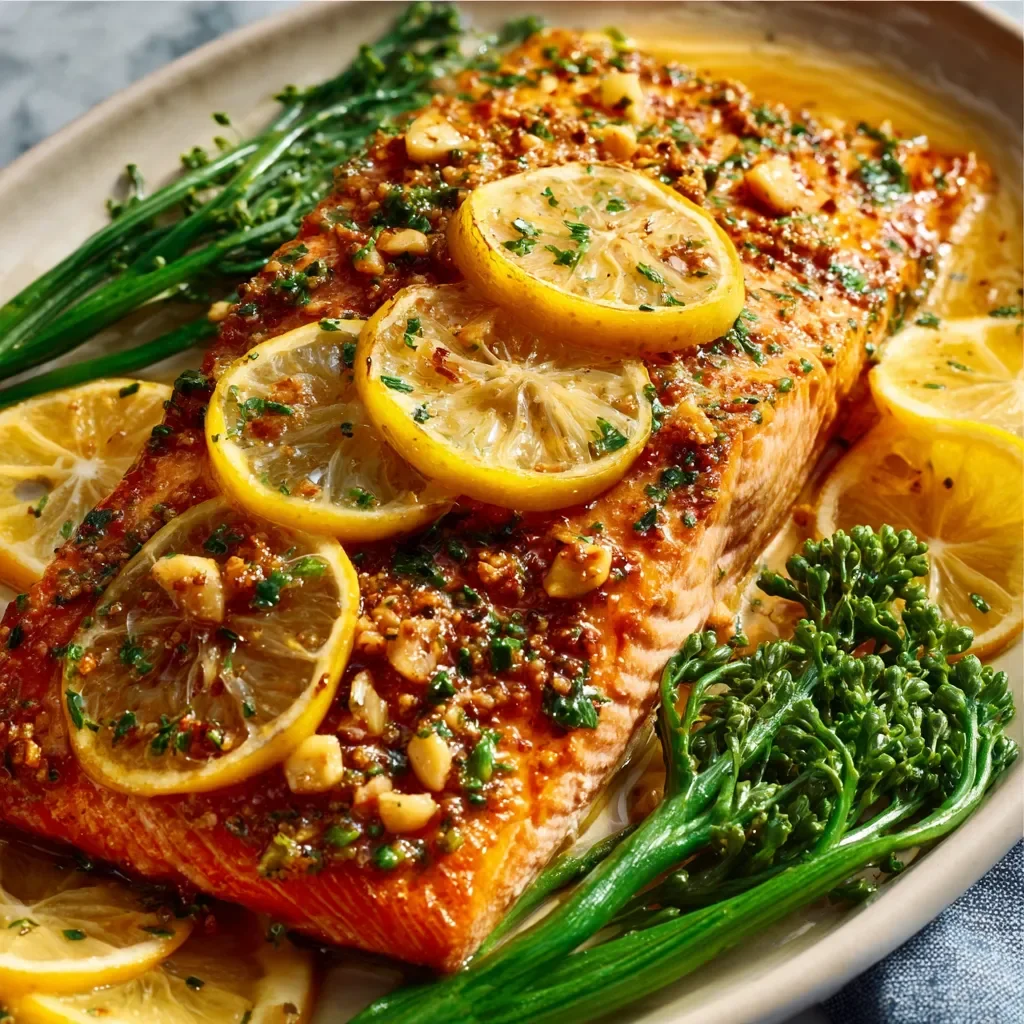
Garlic Lemon Salmon is oven-baked salmon coated in a buttery sauce with olive oil, garlic, lemon and oregano. It is a straightforward weeknight meal, with a brief bake and a bright, savoury finish.
Ingredients
- Not specifiedSalmon fillets
- 4 tablespoons (60 ml)Olive oil
- 4 clovesGarlic, minced
- 60 ml (¼ cup)Fresh lemon juice
- 2 tablespoons (30 ml)Butter, melted
- 1 teaspoonLemon zest
- ½ teaspoonDried oregano
- ¼ teaspoonRed pepper flakes (optional)
- To tasteSalt
- To tasteFreshly ground black pepper
- For garnishFresh parsley, chopped
- For garnishLemon slices
Instructions
- 1
Heat the oven
Preheat the oven to 200°C (400°F).
- 2
Dry the salmon
Pat the salmon fillets dry with paper towels.
- 3
Mix the sauce
In a small bowl, whisk together the olive oil, minced garlic, lemon juice, melted butter, lemon zest, oregano and red pepper flakes, if using. Season generously with salt and pepper.
- 4
Arrange the fillets
Place the salmon fillets on a baking sheet lined with parchment paper or foil.
- 5
Add the sauce
Pour the garlic lemon sauce evenly over the salmon fillets.
- 6
Bake the salmon
Bake for 12–15 minutes, until cooked through and easy to flake with a fork.
- 7
Brown the top
For extra colour, place the salmon under the grill for the final 1–2 minutes, if desired.
- 8
Add the garnish
Garnish with chopped fresh parsley and lemon slices.
- 9
Serve straight away
Serve immediately.
What is garlic lemon salmon?
This American-style preparation pairs salmon with a quick lemon, garlic and herb sauce, then bakes it until tender. The recipe’s appeal is its contrast of rich fish and butter with sharp citrus and savoury garlic.
Drying the fillets first helps the sauce cling, while a short blast under the grill can add colour at the end.
Nutrition and macros by portion
The nutrition label shows one serving as written: 400 calories, 0g protein, 0g carbs, 0g fat.
| Portion | Adjustment | kcal | Protein | Carbs | Fat |
|---|---|---|---|---|---|
| Lighter | Use less butter | 280 kcal | 0g | 0g | 0g |
| This serving | As written | 400 kcal | 0g | 0g | 0g |
| Hungry | Serve with potatoes | 600 kcal | 0g | 0g | 0g |
Salmon provides most of the protein, while olive oil and butter contribute much of the fat. The recipe contains little in the way of carbohydrate apart from small amounts in the seasonings and lemon; add potatoes, rice or bread and vegetables to balance the plate.
The sauce ingredients
Citrus and garlic: Fresh lemon juice and zest give the sauce a lively flavour, while minced garlic spreads through the oil and butter.
Herbs and heat: Dried oregano brings an earthy note, and the optional red pepper flakes add a little warmth. Salt and black pepper season the sauce before it goes over the fish.
Get the fillets ready
Dry surface: Blot the salmon with paper towels before placing it on the lined baking sheet. This removes surface moisture so the sauce is less likely to slide off.
Even arrangement: Set the fillets on the tray with a little room between them, then pour the sauce over evenly.
Check for doneness
The recipe gives a baking time of 12–15 minutes at 200°C, but the thickness of the fillets affects how quickly they cook. Check that the fish is cooked through and flakes easily with a fork.
The optional 1–2 minutes under the grill is for extra colour; keep a close eye on it during this final step.
Make the timing work
The oven can heat while you dry the fish and whisk the sauce. Once the fillets are coated, bake them straight away and prepare the parsley and lemon slices while they cook.
The stated total time is 25 minutes, including preparation and cooking.
What to serve alongside
Serve the salmon with a green vegetable, such as broccoli or green beans, and a starch such as potatoes, rice or bread to make a more substantial meal.
Spoon any sauce from the tray over the sides, and add the lemon slices at the table for extra citrus.
Recipe notes & tips
- Line the baking sheet with parchment paper or foil to make it easier to clean.
- Zest the lemon before juicing it.
- Whisk the sauce until the oil and melted butter are well combined.
- Use the optional red pepper flakes for a gentle chilli note.
- Watch closely if you use the grill, as the final 1–2 minutes can colour the salmon quickly.
Variations
- Add fresh herbs: Finish with chopped dill or chives alongside the parsley.
- Use a different citrus: Replace some of the lemon juice with lime juice for a sharper twist.
- Increase the heat: Add extra red pepper flakes to the sauce.
- Add vegetables: Roast quick-cooking vegetables on a separate tray to serve alongside.
- Try a different herb: Swap the dried oregano for dried thyme in the sauce.
Common mistakes to avoid
- Skipping the drying step: Pat the fillets dry first so the sauce coats them more evenly.
- Overcooking the fish: Check for easy flaking from 12 minutes onwards, as fillet thickness varies.
- Uneven sauce coverage: Pour the sauce across all the fillets rather than concentrating it in one spot.
- Leaving the grill unattended: Stay close during the final 1–2 minutes to prevent excessive browning.
- Forgetting to season: Add salt and pepper to the sauce before pouring it over the salmon.
How to store
Refrigerate leftover salmon in a covered container and eat within 2 days. Reheat gently in the oven or microwave until hot, taking care not to overcook it.
Frequently asked questions
How do I know when the salmon is cooked?
It should be cooked through and flake easily with a fork. Begin checking at 12 minutes, since thicker fillets may take longer.
Can I leave out the red pepper flakes?
Yes. They are optional, so omit them for a milder sauce.
Do I need to use parchment paper?
No. The method allows either parchment paper or foil to line the baking sheet.
Can I skip the final grill step?
Yes. The 1–2 minutes under the grill are optional and are included for extra colour.
Can I prepare the sauce ahead?
You can whisk it shortly before cooking and keep it covered in the fridge until needed. Stir it again before pouring it over the salmon.
Cook it from the original
This recipe comes from besthomemaderecipes.com. Their page has the author’s own photos, notes and tips — the best place to cook it from.
Open the recipe on besthomemaderecipes.com