
Dudh Shemai / Sheer Kurma / Sevaiyan
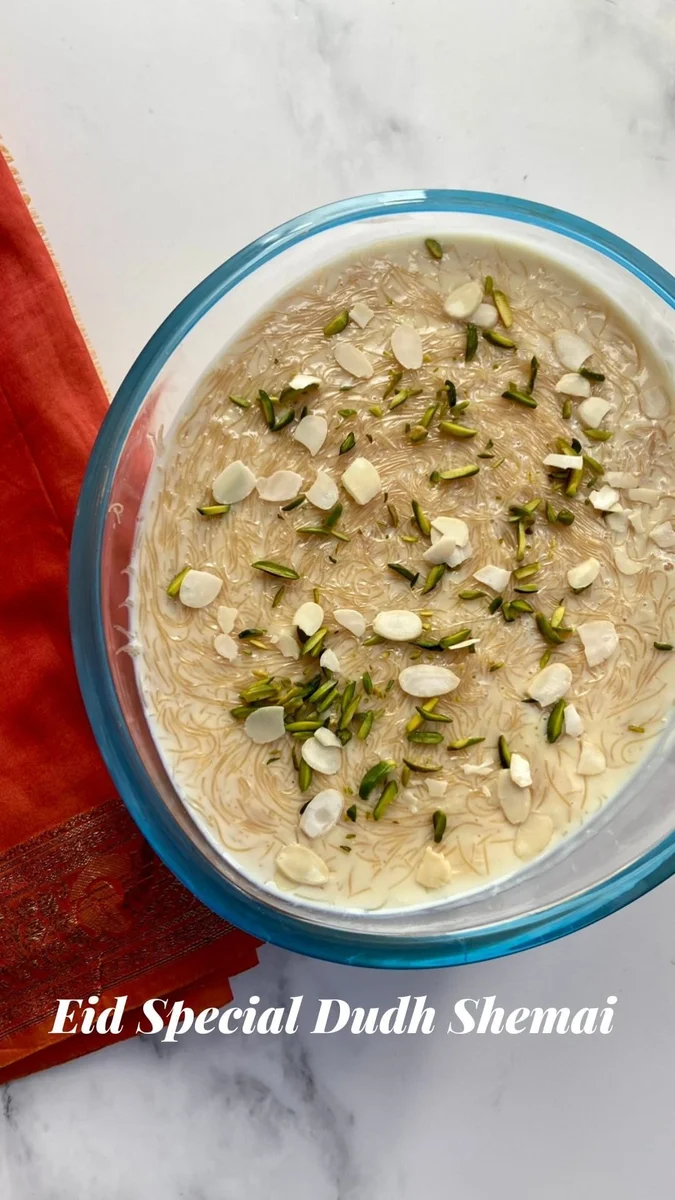
Dudh shemai, also known as sheer kurma or sevaiyan, is a rich milk pudding made with roasted vermicelli and sugar, finished with cream and nuts. It is a comforting dessert for sharing, with a soft, thick texture and a simple method.
Ingredients
- 2 Lfull-fat milk
- 250 groasted vermicelli
- 300 g (1½ cups)sugar
- 300 mlthickened cream or double cream
- 1 tbspsliced pistachios
- 1 tbspflaked almonds
Instructions
- 1
Heat the milk
Pour the milk into a pan and heat it.
- 2
Add vermicelli
When the milk is hot, add the roasted vermicelli and stir.
- 3
Mix in sugar
When the vermicelli begins to stick to the spoon, add the sugar and mix it in.
- 4
Stir in cream
Once the sugar has melted, turn off the heat. Add the cream and stir until thoroughly combined.
- 5
Add the garnish
Scatter the pistachios and flaked almonds over the top.
- 6
Serve
Enjoy.
What is dudh shemai?
Dudh shemai is a South Asian vermicelli pudding cooked in milk and sweetened with sugar. It is also called sheer kurma or sevaiyan, though names and recipes vary across households and regions.
This version builds richness from full-fat milk and cream, while roasted vermicelli brings a toasted note and softens as it cooks. Pistachios and almonds add a little crunch on top.
Nutrition and macros by portion
The nutrition label shows one serving as written: 1055 calories, 26g protein, 147g carbs, 40g fat.
| Portion | Adjustment | kcal | Protein | Carbs | Fat |
|---|---|---|---|---|---|
| Lighter | Use less cream and sugar | 739 kcal | 18g | 103g | 28g |
| This serving | As written | 1055 kcal | 26g | 147g | 40g |
| Hungry | Serve a larger bowl | 1583 kcal | 39g | 221g | 60g |
The vermicelli and sugar provide most of the carbohydrates, while the milk and cream contribute much of the fat and protein. To balance the plate, serve a smaller bowl after a meal with fruit alongside.
The vermicelli and milk
Roasted vermicelli: It is ready to go straight into the hot milk, so there is no need to toast it separately. Stir after adding it to help the strands cook evenly.
Full-fat milk: This gives the pudding its creamy body. Heat it in a pan and keep an eye on it as it warms so it does not boil over.
When to add the sugar
Sugar timing: Wait until the vermicelli starts sticking to the spoon before adding the sugar, as directed in the method. Stir until the sugar has dissolved.
Cream: Turn off the heat before stirring in the cream. This keeps the finishing step gentle and helps the cream blend smoothly into the hot pudding.
How to judge the texture
Vermicelli: The recipe uses the point at which strands begin to stick to the spoon as the cue to add sugar. Keep stirring as you cook so you can notice the change.
Finished pudding: The method does not specify a precise cooking time or thickness. Expect the vermicelli to soften in the milk; the mixture will continue to feel rich after the cream is stirred in.
A sweet, rich serving
This pudding is particularly filling because it combines milk, cream, sugar and vermicelli. Serve it in modest bowls after a meal, or offer it as part of a larger spread of sweets.
The pistachios and almonds provide contrast against the soft noodles. Add them just before serving so their texture stands out.
Serving and timing
No total cooking time is specified, so use the method's cues rather than a timer: heat the milk, add the vermicelli, then wait for it to begin sticking to the spoon before adding sugar.
The recipe does not state whether to serve the pudding hot or chilled. It can be enjoyed once prepared, or cooled and refrigerated if you prefer it cold.
Recipe notes & tips
- Stir after adding the vermicelli so the strands are distributed through the milk.
- Keep watch as the milk heats to prevent it boiling over.
- Use the spoon-sticking cue to decide when to add the sugar.
- Stir until the sugar has melted before turning off the heat.
- Add the cream only after turning off the heat, then mix until smooth.
- Scatter the nuts over the pudding just before serving for more texture.
Variations
- More pistachios: Increase the garnish for a stronger nutty flavour.
- More almonds: Add extra flaked almonds for additional crunch.
- Less sweet: Reduce the sugar to suit your taste.
- Less rich: Use less cream for a lighter finish.
- Chilled serving: Refrigerate the pudding after it has cooled and serve cold.
Common mistakes to avoid
- Milk boiling over: Watch the pan as it heats and lower the heat if it starts to rise.
- Uneven vermicelli: Stir it through the milk as soon as you add it.
- Sugar added too early: Wait until the vermicelli starts sticking to the spoon.
- Sugar not dissolved: Keep mixing until it has melted before switching off the heat.
- Cream added over the heat: Turn the heat off first, then stir the cream in.
- Nuts losing their crunch: Add the pistachios and almonds as a final garnish.
How to store
Cool leftovers and store them covered in the fridge for up to 3 days. Reheat gently in a pan, stirring often; add a little milk if the pudding has thickened. You can also serve it chilled.
Frequently asked questions
Are dudh shemai, sheer kurma and sevaiyan the same dessert?
The names are used for related South Asian vermicelli desserts, but recipes differ by household and region. This version cooks roasted vermicelli in milk and finishes it with cream and nuts.
Do I need to roast the vermicelli first?
No. This recipe calls for roasted vermicelli, which is added directly to the hot milk.
When should I add the sugar?
Add it when the vermicelli starts sticking to the spoon, then stir until it has melted.
Can I serve it cold?
Yes. Let it cool, cover it and refrigerate it before serving. It may thicken as it chills.
What can I use instead of thickened cream?
Double cream is a suitable alternative. The recipe does not specify another substitute, so changing the cream may alter the finished richness.
Cook it from the original
This recipe comes from fooooods.com. Their page has the author’s own photos, notes and tips — the best place to cook it from.
Open the recipe on fooooods.com