
Fish soup
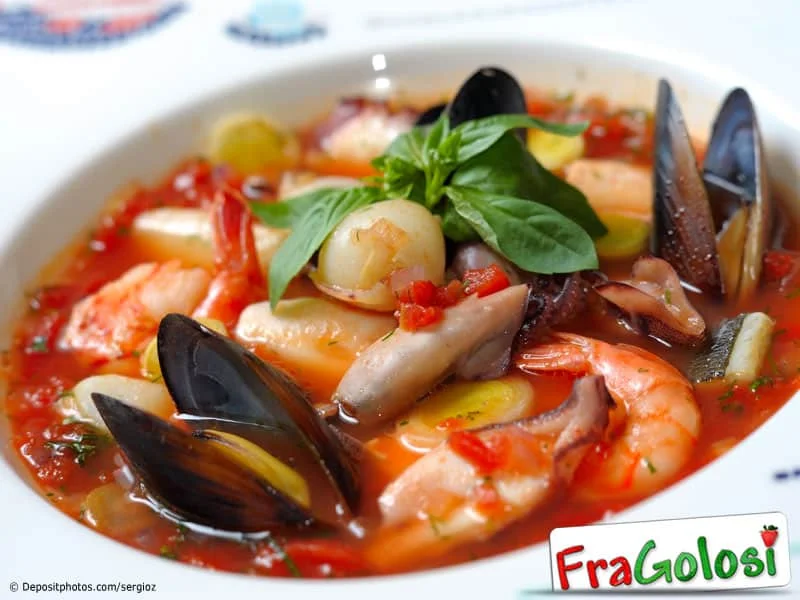
Italian fish soup brings fish and shellfish together in a tomato and seafood broth, served over toasted country bread. It is a leisurely one-pot meal that makes good use of a varied selection of fresh catch.
Ingredients
- 1.5–2 kgfish and seafood of your choice, as fresh as possible (such as scorpionfish, red mullet, cuttlefish, squid, octopus, mussels or clams)
- 300 gripe tomatoes
- 2 clovesgarlic
- 2 mediumonions
- 1 glassdry white wine
- 1 stalkcelery
- 1 bunchparsley, chopped
- 1carrot
- As neededcountry bread, sliced
- 3 tablespoonsextra-virgin olive oil
- To tastesalt
- To tastechilli
- 2 litreswater
Instructions
- 1
Prepare the seafood
Clean, scale and gut the fish, and clean the cuttlefish, squid and octopus. Cut everything into pieces. Scrub the mussels well, and soak the clams in salted water for a few hours.
- 2
Make the stock
Put the fish heads and bones in a pan with one sliced onion, a bunch of parsley, the carrot cut into rounds, the celery broken into pieces and 2 litres of water. Bring to the boil to make a fish stock.
- 3
Strain the stock
Once the stock has reduced, strain it through a sieve and set it aside. In a large earthenware casserole, soften the garlic cloves and chopped onion in 3 tablespoons of oil until lightly golden.
- 4
Add the tomatoes
Let the onion mixture take on the flavour of the oil, then add the tomatoes, peeled and passed through a sieve. Add the seafood in order of cooking time, starting with the item that takes longest: the octopus.
- 5
Add the wine
Pour in the wine. As a guide, octopus takes 25 minutes, squid 20 minutes, flying squid and baby octopus 15 minutes, and cuttlefish 10 minutes.
- 6
Cook fish and shellfish
Monkfish, scorpionfish, tub gurnard, mussels, clams, sea truffles and razor clams take 10 minutes to cook.
- 7
Add quick-cooking fish
Hake, prawns and langoustines take 5 minutes. Let the first seafood added take on the flavour of the sauce, then loosen it with a ladleful of strained stock.
- 8
Season the soup
Add the remaining fish and shellfish gradually, along with more stock. Adjust the salt and chilli only at the end, bearing in mind that sea fish can be naturally salty.
- 9
Toast the bread
When the soup is nearly cooked, stir in the chopped parsley. While it simmers gently, toast the country bread and place the slices in individual soup bowls.
- 10
Serve the soup
When the seafood is cooked, ladle it and its cooking sauce over the bread in the bowls. Serve straight away.
What is Italian fish soup?
Italian fish soup is a broad family of coastal dishes made with the catch available locally, rather than one fixed combination of seafood. This version builds a broth from fish bones and aromatics, then cooks a selection of fish and shellfish in a tomato base.
The approach works because the stock adds depth while seafood goes into the pot in stages according to how long it needs to cook. Toasted country bread soaks up the sauce and makes the soup a substantial meal.
Nutrition and macros by portion
The nutrition label shows one serving as written: 430 calories, 36g protein, 34g carbs, 14g fat.
| Portion | Adjustment | kcal | Protein | Carbs | Fat |
|---|---|---|---|---|---|
| Lighter | Less bread, more seafood | 301 kcal | 25g | 24g | 10g |
| This serving | As written | 430 kcal | 36g | 34g | 14g |
| Hungry | Extra bread and seafood | 645 kcal | 54g | 51g | 21g |
The fish and shellfish provide most of the protein, while the bread contributes much of the carbohydrate. Olive oil adds fat, and the amount of fish, shellfish and bread can change the balance considerably. For a more balanced plate, serve a generous portion of seafood with a side of vegetables and a moderate amount of bread.
Choose a varied catch
Freshness first: use the freshest fish and shellfish you can find, choosing a mix that suits your fishmonger’s selection. The recipe lists examples rather than requiring every kind of seafood.
Keep the pieces manageable: clean the fish and cut larger items into pieces so they are easier to serve. Save the fish heads and bones for the stock.
Build a useful stock
Fish scraps: simmer the heads and bones with onion, parsley, carrot, celery and 2 litres of water, then strain the reduced liquid. Straining removes the scraps and leaves a stock to add gradually to the soup.
Clams and mussels: scrub the mussels and soak the clams in salted water for several hours as directed. Drain the clams before adding them to the casserole.
Add seafood in stages
Long cookers: start with octopus, followed by the other seafood according to the recipe’s guide. The listed times are approximate and can vary with the size of each piece.
Short cookers: hake, prawns and langoustines need only 5 minutes in the guide, so add them near the end. Add the stock a ladle at a time as the soup cooks.
Watch the simmer
Gentle heat: once the seafood is in, keep the soup at a gentle simmer rather than a vigorous boil. This helps the pieces cook without breaking up as readily.
Check for doneness: use the recipe’s timings as a starting point and check that the seafood is cooked through. Add the parsley when cooking is nearly complete.
Serve with toasted bread
Toast the country bread while the soup finishes cooking, then put slices in the serving bowls. Ladle the seafood and tomato broth over the top so the bread can absorb some of the sauce.
Serve promptly, while the bread is still holding its shape and the seafood is hot. A simple green salad can round out the meal.
Recipe notes & tips
- Ask the fishmonger to clean and portion the fish if you do not want to prepare it yourself.
- Keep the seafood types and sizes in mind when using the suggested cooking times.
- Strain the stock carefully before adding it to the casserole.
- Add stock gradually so the soup stays brothy without diluting the tomato flavour.
- Wait until the end to season with salt, as the seafood may already contribute plenty.
- Toast the bread just before serving so it does not become soggy too early.
Variations
- Use local catch: choose the freshest fish and shellfish available in place of the examples listed.
- Adjust the chilli: use a small amount for gentle warmth or omit it for a milder soup.
- Change the bread: serve with toasted slices of another rustic loaf if country bread is unavailable.
- Make it more tomato-forward: add a little more of the recipe’s ripe tomatoes while keeping the stock additions gradual.
Common mistakes to avoid
- Adding everything at once: seafood cooks at different speeds, so add each type in stages.
- Boiling hard: a rolling boil can break up delicate fish; keep the soup at a gentle simmer.
- Skipping the stock straining: pass it through a sieve to remove the fish scraps before using it.
- Salting too early: wait until the soup is nearly ready and taste before adding salt.
- Over-soaking the bread: put the toast in the bowls just before ladling over the soup.
How to store
Refrigerate cooled soup in a covered container and use within 1–2 days. Store the bread separately; reheat the soup gently on the hob until steaming, taking care not to overcook the seafood.
Frequently asked questions
Can I use frozen fish?
Yes, provided it has been thawed safely and is suitable for soup. Drain it well and check its cooking time, as pieces may differ in size from fresh fish.
Do I need to use every seafood listed?
No. The recipe calls for fish and seafood of your choice, with the examples serving as options. Use a mix that is available and fresh.
Why does the recipe add seafood in stages?
Different fish and shellfish take different amounts of time to cook. Starting with the longest-cooking items helps prevent quicker-cooking seafood from becoming overdone.
How do I know when the seafood is cooked?
Use the suggested timings as a guide, then check the pieces themselves: fish should be cooked through and shellfish should be cooked. Adjust for the size and type of seafood you have.
Can I prepare the stock ahead?
Yes. Strain and chill it promptly, then refrigerate it in a covered container and use it within a couple of days, or freeze it for longer storage.
Should the bread go in the pot?
No. Toast the slices and place them in the bowls, then ladle the finished soup over them. This lets you control how much broth the bread absorbs.
Cook it from the original
This recipe comes from fragolosi.it. Their page has the author’s own photos, notes and tips — the best place to cook it from.
Open the recipe on fragolosi.it