
Grandma’s Iron-Skillet Fried Chicken
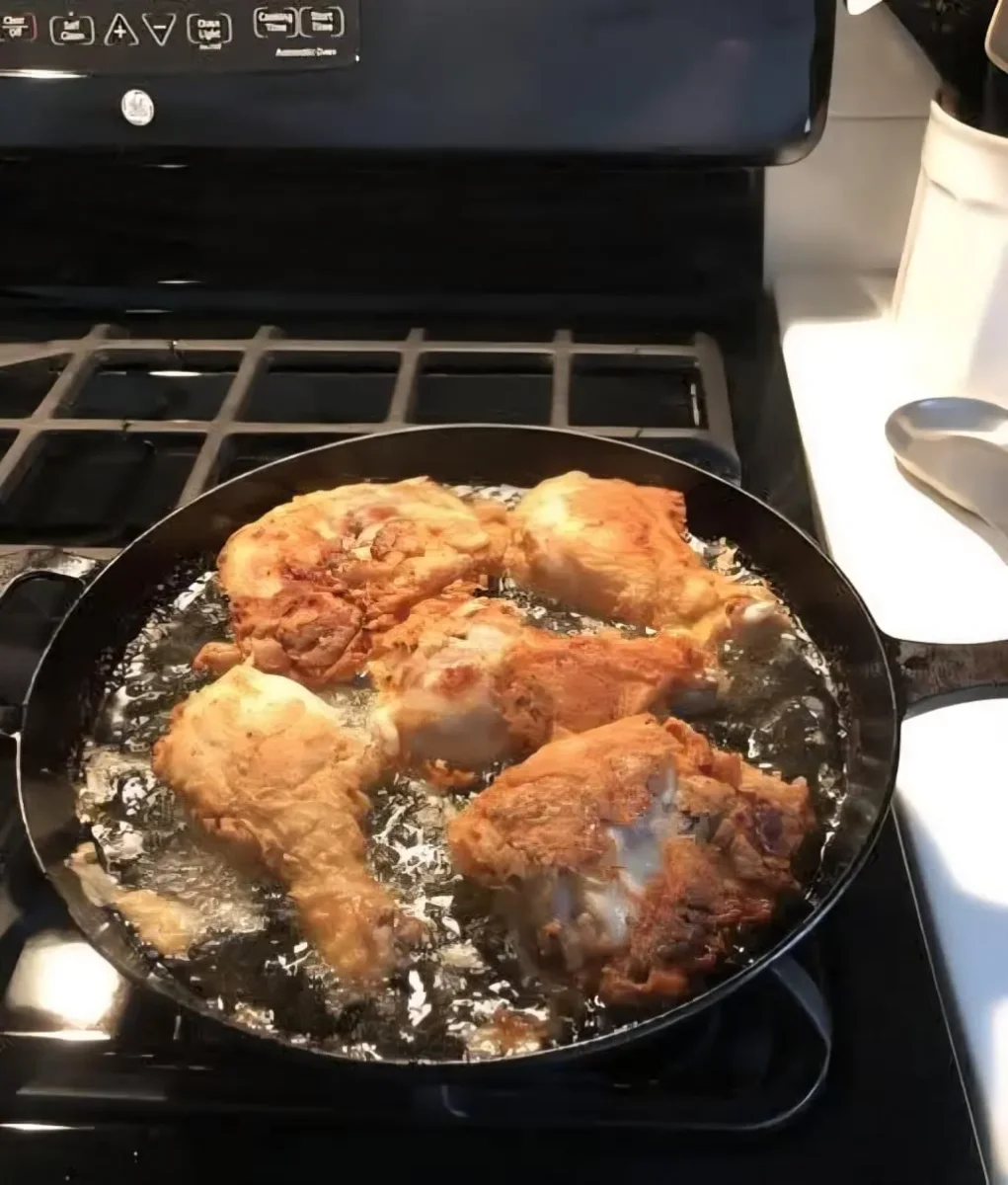
This Southern-style fried chicken is soaked in buttermilk, coated in seasoned flour and fried in a cast-iron skillet until crisp and golden. It is a comforting choice when you want juicy chicken with a crunchy, well-seasoned crust.
Ingredients
- 1whole chicken, cut into pieces
- 480 ml (2 cups)buttermilk
- 240 g (2 cups)plain flour
- 1 tsppaprika
- 1 tspgarlic powder
- 1 tsponion powder
- 1 tspsalt
- 1 tspblack pepper
- 1 tspbaking powder
- as neededoil for frying (lard or vegetable oil)
Instructions
- 1
Soak the chicken
Put the chicken pieces in a bowl and cover them with the buttermilk. Cover the bowl and refrigerate for at least 2 hours or overnight.
- 2
Mix the coating
In a separate bowl, whisk together the flour, paprika, garlic powder, onion powder, salt, black pepper and baking powder.
- 3
Heat the oil
Pour oil to a depth of 1.3 cm (½ inch) into a cast-iron skillet and heat over medium heat until it shimmers. A pinch of flour should sizzle when it touches the oil.
- 4
Coat the chicken
Lift the chicken from the buttermilk and let the excess drip away. Dredge each piece in the seasoned flour, pressing the coating on so it adheres.
- 5
Fry in batches
Place the chicken skin-side down in the skillet. Fry in batches without crowding the pan, keeping the oil temperature steady.
- 6
Cook until done
Fry for 6–8 minutes per side, until golden and cooked through. The internal temperature should reach 74°C (165°F).
- 7
Drain and rest
Transfer the chicken to a wire rack or paper towels to drain. Leave it to rest for a few minutes, then serve hot.
What is iron-skillet fried chicken?
Fried chicken is a familiar Southern American dish, often made by coating chicken in seasoned flour and frying it until crisp. Cooking it in a cast-iron skillet gives the pieces direct contact with hot oil and makes it easy to fry them in batches.
This version uses buttermilk for the soak and a simple spiced flour coating. The contrast between a crunchy outside and juicy meat is what makes it such a comforting centrepiece.
Nutrition and macros by portion
The nutrition label shows one serving as written: 490 calories, 38g protein, 16g carbs, 31g fat.
| Portion | Adjustment | kcal | Protein | Carbs | Fat |
|---|---|---|---|---|---|
| Lighter | Serve with extra vegetables | 343 kcal | 27g | 11g | 22g |
| This serving | As written | 490 kcal | 38g | 16g | 31g |
| Hungry | Add another chicken piece | 735 kcal | 57g | 24g | 47g |
The chicken supplies most of the protein, while the flour coating contributes carbohydrates. The frying oil and chicken skin account for much of the fat; serve a piece with vegetables or salad to round out the plate.
Why use buttermilk?
The buttermilk coats the chicken during its long chill and helps the flour cling to the surface. Give the pieces at least 2 hours in the fridge, or leave them overnight as the method allows.
Drain off excess before dredging: a light coating of liquid helps the flour stick, but too much can make the crust heavy or uneven.
Building the seasoned crust
Seasoning mix: paprika, garlic powder, onion powder, salt and pepper give the flour a savoury, gently spiced flavour. Baking powder is included in the coating as written in the recipe.
Press the flour onto each piece rather than simply turning it through the bowl. This helps the coating adhere as the chicken goes into the skillet.
Getting the oil ready
Shimmering oil and a pinch of flour that sizzles on contact are the recipe’s cues that the skillet is ready. If the oil smokes, lower the heat before adding the chicken.
Avoid crowding the pan; frying in batches leaves space around each piece and helps the oil stay hot. Let the oil return to temperature between batches.
How to check doneness
The coating should be golden after 6–8 minutes per side, but colour alone does not confirm that the meat is cooked through. Check the thickest part of the chicken with a food thermometer, avoiding the bone; the target is 74°C (165°F).
Once cooked, transfer the pieces to a wire rack or paper towels and let them rest for a few minutes. The brief rest also gives excess oil time to drain.
What to serve with it
Serve the chicken hot with a fresh salad or green vegetables to bring a crisp, light contrast to the fried coating. Cornbread, mashed potatoes or another simple side can make the meal more substantial.
If serving several batches together, keep the cooked pieces on a rack while the remaining chicken fries so the coating is less likely to sit in pooled oil.
Recipe notes & tips
- Allow enough time for the chicken to soak for at least 2 hours or overnight.
- Use a skillet large enough to leave space between the chicken pieces.
- Let excess buttermilk drip off before coating the chicken.
- Bring the oil back to a steady sizzle between batches.
- Use a thermometer to check the thickest part of each piece reaches 74°C (165°F).
Variations
- More pepper: Add extra black pepper to the flour for a sharper seasoning.
- Smokier coating: Use smoked paprika in place of regular paprika.
- Herby flavour: Mix dried thyme into the seasoned flour.
- Different frying fat: Choose lard or vegetable oil, as suggested in the recipe.
- Milder coating: Reduce the black pepper for a gentler flavour.
Common mistakes to avoid
- Skipping the soak: Refrigerate the chicken in buttermilk for at least 2 hours as directed.
- Wet coating: Let excess buttermilk drip off before dredging.
- Loose flour crust: Press the seasoned flour onto each piece so it adheres.
- Crowded skillet: Fry in batches with space around each piece.
- Oil too hot: Lower the heat if the oil smokes, and use the flour-sizzle cue before frying.
- Guessing doneness: Check that the thickest part reaches 74°C (165°F).
How to store
Refrigerate leftovers in a covered container once cooled and use within 3–4 days. Reheat in an oven until hot throughout to help the coating crisp again; refrigeration will soften it somewhat.
Frequently asked questions
Can I marinate the chicken overnight?
Yes. The method allows an overnight soak in a covered bowl in the refrigerator.
How deep should the oil be?
Use enough oil to reach about 1.3 cm (½ inch) in the skillet.
How can I tell when the oil is ready?
It should shimmer, and a pinch of flour should sizzle as soon as it touches the oil.
Can I fry all the chicken at once?
Fry in batches rather than crowding the skillet, and let the oil regain its heat between batches.
What temperature should the chicken reach?
Check the thickest part with a thermometer; it should reach 74°C (165°F).
Can I use vegetable oil instead of lard?
Yes. The ingredient list allows either lard or vegetable oil for frying.
Cook it from the original
This recipe comes from besthomemaderecipes.com. Their page has the author’s own photos, notes and tips — the best place to cook it from.
Open the recipe on besthomemaderecipes.com