
Baked Falafel Wraps
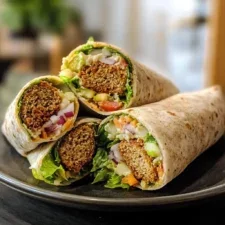
These baked falafel wraps combine crisp-edged chickpea patties, fresh salad and a creamy tahini sauce in warm pita or flatbread. They take advance planning for soaking and chilling, but the oven does the cooking without deep-frying.
Ingredients
- 200 g (about 1 cup)dried chickpeas
- 1 small (about 100 g)yellow onion, roughly chopped
- 3–4 clovesgarlic, minced or roughly chopped
- about 30 g (1 packed cup)fresh parsley, leaves and tender stems
- about 30 g (1 packed cup)fresh coriander, leaves and tender stems
- 1 teaspoonground cumin
- 1 teaspoonground coriander
- ½ teaspoon, optionalcayenne pepper
- 1 teaspoonbaking powder
- about 16 g (2 tablespoons)plain flour or chickpea flour
- 1 teaspoon, or to tastesalt
- ½ teaspoon, or to tasteblack pepper
- 30 ml (2 tablespoons), plus a little extra for greasingolive oil
- 15 ml (1 tablespoon)lemon juice
- 120 g (½ cup)tahini
- 60 ml (¼ cup), plus more as neededlukewarm water
- 30 ml (2 tablespoons)fresh lemon juice
- 1 clovegarlic, minced or grated
- ¼ teaspoon, or to tastesalt
- 4–6 largepita breads or wraps, wholemeal or white
- about 45 g (1 cup)shredded lettuce, such as romaine or iceberg
- 1 largetomato, diced
- ½cucumber, thinly sliced or diced
- ¼red onion, thinly sliced, optional
- to taste, optionalpickled turnips or cucumbers
- to taste, optionalhummus
Instructions
- 1
Soak chickpeas
The day before cooking, put the dried chickpeas in a large bowl and cover with at least 7.5–10 cm of cold water. Leave at room temperature for at least 12 hours or overnight. Drain and rinse them well, then dry them as thoroughly as possible with a clean towel or kitchen paper. Do not boil them or substitute tinned chickpeas.
- 2
Mix falafel
Put the soaked, dried chickpeas, onion, garlic, parsley and coriander in a food processor. Pulse 15–20 times, scraping down the sides as needed, until finely minced but still coarse and crumbly; do not purée. Transfer to a bowl and mix in the cumin, ground coriander, cayenne if using, baking powder, flour, salt, pepper, olive oil and 1 tablespoon lemon juice. Combine thoroughly and adjust the seasoning to taste.
- 3
Chill mixture
Cover the bowl and refrigerate the mixture for at least 1 hour and up to 4 hours. It can also be chilled overnight.
- 4
Heat the oven
Heat the oven to 200°C. Lightly grease a large baking sheet with olive oil or line it with baking paper.
- 5
Shape falafels
Take the chilled mixture from the fridge and shape it into small balls or patties about 1.5–2 tablespoons each, 1.3 cm thick and 5 cm across. Wet your hands lightly if the mixture is sticky. Arrange the falafels on the prepared tray with space between them.
- 6
Bake falafels
Brush or spray the tops with a little extra olive oil. Bake for 15–20 minutes, then carefully turn them with a thin spatula. Bake for a further 10–15 minutes, until golden on both sides and slightly firm to the touch. Total baking time is about 25–35 minutes, depending on their size and your oven.
- 7
Make tahini sauce
While the falafels bake, whisk the tahini, 60 ml lukewarm water, 2 tablespoons lemon juice, minced or grated garlic and salt in a small bowl. If the tahini thickens, keep whisking and add more lukewarm water a tablespoon at a time until creamy and pourable. Taste and adjust the lemon, salt or water as needed.
- 8
Warm the wraps
A few minutes before the falafels are ready, warm the pita breads or wraps. You can wrap them in a damp paper towel and microwave for 20–30 seconds, or warm them briefly in the oven or a dry frying pan.
- 9
Fill and serve
Lay a warm pita or wrap flat and, if using, spread it with a thin layer of hummus. Add 3–4 falafels down the centre, breaking them apart slightly if you prefer. Top with lettuce, tomato, cucumber, red onion if using, and pickled vegetables if desired. Drizzle with tahini sauce, fold or roll up tightly and serve straight away.
What are baked falafel wraps?
Falafel are seasoned chickpea patties associated with Middle Eastern cuisines, often served with bread, salad and sauces. This version bakes rather than deep-fries the patties, then tucks them into pita or wraps with crisp vegetables and tahini.
The key to their texture is starting with soaked dried chickpeas, not cooked or tinned ones. A coarse chop, a spell in the fridge and space on the baking tray help the patties hold together and brown.
Nutrition and macros by portion
The nutrition label shows one serving as written: 450 calories, 0g protein, 0g carbs, 0g fat.
| Portion | Adjustment | kcal | Protein | Carbs | Fat |
|---|---|---|---|---|---|
| Lighter | More salad, less sauce | 315 kcal | 0g | 0g | 0g |
| This serving | As written | 450 kcal | 0g | 0g | 0g |
| Hungry | Add another falafel | 675 kcal | 0g | 0g | 0g |
The chickpeas and pita or wraps provide most of the carbohydrates, while olive oil and tahini contribute much of the fat; chickpeas, tahini and the bread also provide some protein. Serve with extra lettuce and cucumber, or a side salad, to add more fresh vegetables to the plate.
Choosing the chickpeas and herbs
Dried chickpeas: soak them for at least 12 hours, then drain and dry them thoroughly. They should be softened by soaking but remain uncooked before they go into the processor.
Fresh herbs: parsley and coriander bring the characteristic green, aromatic flavour. Use the leaves and tender stems as listed, and chop them in the processor with the chickpeas.
Getting the mixture right
Coarse texture: pulse 15–20 times, stopping when the chickpeas are finely minced and the mixture resembles coarse crumbs. A smooth paste can make the baked falafel dense.
Chilling: refrigerate the mixed falafel for at least 1 hour and up to 4 hours, or overnight. This firms it up and makes shaping easier.
Shaping and baking
Even patties: aim for pieces of about 1.5–2 tablespoons, roughly 5 cm across and 1.3 cm thick. Keeping them similar in size helps them cook at the same pace.
Room to brown: leave space between falafels on the tray and brush or spray their tops with a little oil. Turn them carefully after 15–20 minutes, then bake for another 10–15 minutes.
Making the tahini sauce
Tahini can briefly seize and look very thick when first whisked with the other sauce ingredients. Keep whisking and add lukewarm water a tablespoon at a time until it becomes creamy and pourable.
Taste before serving: a little more lemon can sharpen the flavour, while extra water can loosen the consistency. Add salt to taste.
Building the wraps
Warm bread: heat the pita or wraps shortly before serving so they are pliable. The recipe suggests 20–30 seconds in the microwave inside a damp paper towel, or a brief warm-through in the oven or a dry frying pan.
Fresh toppings: lettuce, tomato and cucumber add crunch and juiciness. Red onion and pickles are optional, and hummus makes an additional creamy layer.
Timing and serving
Plan ahead: the chickpeas need an overnight soak and the mixture needs at least 1 hour to chill, in addition to about 25–35 minutes of baking. The exact total time depends on these resting periods and the size of the patties.
Serve the wraps as soon as they are assembled, while the bread is warm and the falafel still has a browned exterior. Any extra salad or pickles can be served alongside.
Recipe notes & tips
- Dry the soaked chickpeas thoroughly so the falafel mixture is not unnecessarily wet.
- Pulse in short bursts and stop while the mixture is still crumbly rather than pasty.
- Chill the mixture for at least 1 hour before shaping.
- Wet your hands lightly if the mixture sticks while you form the patties.
- Leave gaps between falafels on the tray so they can brown evenly.
- Add water to the tahini sauce gradually, whisking as you go.
Variations
- Use chickpea flour: choose it instead of plain flour for the listed gluten-free option.
- Adjust the heat: omit the cayenne for a milder filling or use it for a gentle kick.
- Add hummus: spread a thin layer on the bread before adding the falafels.
- Include pickles: add pickled turnips or cucumbers for a tangy, crunchy topping.
- Change the bread: use wholemeal or white pita or wraps, as preferred.
Common mistakes to avoid
- Using tinned chickpeas: they can make the mixture too soft; start with dried chickpeas soaked overnight.
- Leaving chickpeas wet: excess moisture can make the mixture soggy; dry them thoroughly after rinsing.
- Over-processing: a smooth purée can give dense falafel; pulse only until the chickpeas are finely minced.
- Skipping the chill: warm mixture is harder to shape; refrigerate it for at least 1 hour.
- Crowding the tray: close-set patties have less room to brown; space them out on the baking sheet.
- Adding too much water at once: the tahini sauce can become runny; whisk in water a tablespoon at a time.
How to store
Store leftover falafels and tahini sauce separately in covered containers in the fridge and use within 3 days. Reheat the falafels in the oven until warmed through; assemble the wraps just before serving to keep the bread and salad at their best.
Frequently asked questions
Can I use tinned chickpeas?
No. This recipe relies on dried chickpeas that have been soaked but not cooked; tinned chickpeas can make the falafel mixture too soft.
How long should I soak the chickpeas?
Soak them for at least 12 hours, preferably overnight, in plenty of cold water. Drain, rinse and dry them well before processing.
Can I make the falafel mixture ahead?
Yes. Chill it for at least 1 hour and up to 4 hours, or overnight, before shaping and baking.
How do I know when the falafels are done?
They should be golden on both sides and slightly firm to the touch. The method gives a total baking time of about 25–35 minutes, depending on their size and your oven.
Why has my tahini sauce gone thick?
Tahini can seize when the sauce is first mixed. Continue whisking and add lukewarm water a tablespoon at a time until it reaches a creamy, pourable consistency.
Can I use chickpea flour?
Yes. The ingredient list gives chickpea flour as an alternative to plain flour, including for a gluten-free option.
Cook it from the original
This recipe comes from betterhomerecipes.com. Their page has the author’s own photos, notes and tips — the best place to cook it from.
Open the recipe on betterhomerecipes.com