
Arugula Citrus Salad
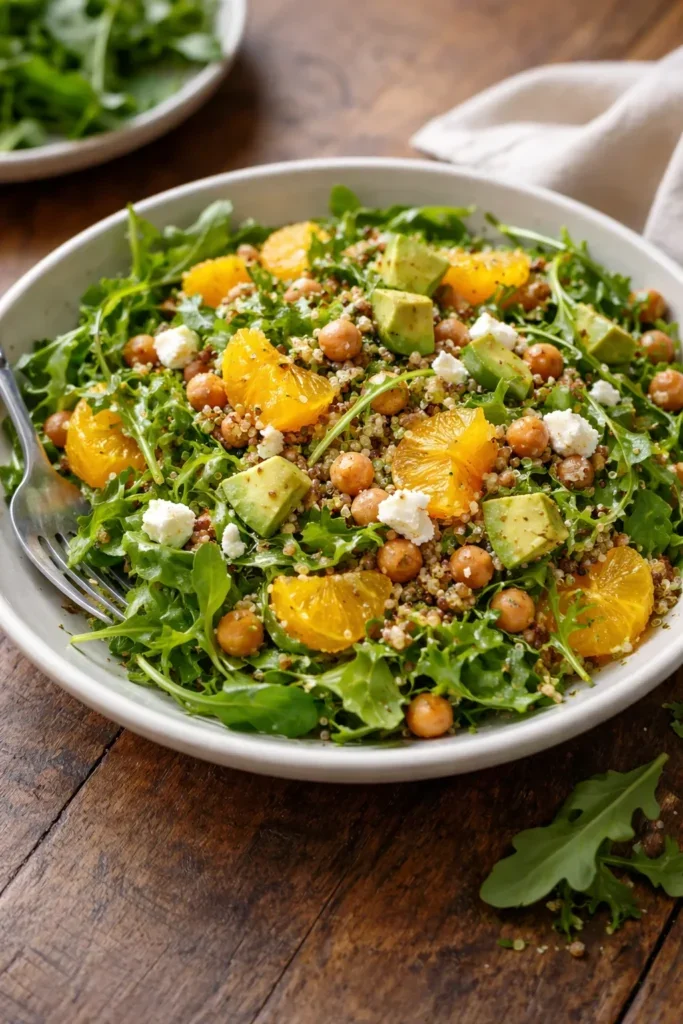
This is a fresh, peppery salad of baby arugula, sliced citrus and fennel, finished with toasted nuts, cheese and a tangy dressing. It comes together quickly and makes a bright starter or side dish.
Ingredients
- 5 cupsbaby arugula
- 2 largeoranges or blood oranges, peeled and sliced into rounds
- 1 smallfennel bulb, thinly sliced
- 1/4 cupalmonds or pistachios, toasted and roughly chopped
- 1/4 cupfeta or goat cheese, crumbled; or nutritional yeast for a dairy-free option
- 1 teaspoonhoney or maple syrup (optional)
- 1lemon, zested (optional)
- 2 tablespoonsextra-virgin olive oil
- 1 tablespoonwhite wine vinegar or champagne vinegar
- To tastesalt and freshly cracked black pepper
Instructions
- 1
Toast the nuts
Warm a small skillet over medium heat. Toast the almonds or pistachios for 2–3 minutes, until fragrant and lightly browned, then leave them to cool.
- 2
Prepare the produce
Use a knife to peel the oranges, removing the pith, then slice them into rounds or separate them into segments. Thinly slice the fennel and zest the lemon.
- 3
Mix the dressing
Whisk together the olive oil, vinegar, honey or maple syrup, a pinch of salt and a few twists of black pepper. Taste and adjust the seasoning.
- 4
Toss the salad
Put the arugula, fennel and orange segments in a large bowl. Drizzle over the dressing and toss gently.
- 5
Finish and serve
Scatter the toasted nuts and crumbled cheese over the salad. Finish with lemon zest and another crack of black pepper, then serve straight away.
What is arugula citrus salad?
This American-style salad brings together peppery arugula, sweet-tart citrus and crisp fennel, with nuts and cheese for extra texture. It draws on the familiar idea of pairing seasonal fruit with leafy greens rather than relying on a heavy dressing.
Fresh citrus and a sharp vinaigrette balance the greens, while the toasted nuts make each bite more substantial. The result works as a starter or alongside a main course.
Nutrition and macros by portion
The nutrition label shows one serving as written: 250 calories, 6g protein, 10g carbs, 20g fat.
| Portion | Adjustment | kcal | Protein | Carbs | Fat |
|---|---|---|---|---|---|
| Lighter | Less oil and cheese | 175 kcal | 4g | 7g | 14g |
| This serving | As written | 250 kcal | 6g | 10g | 20g |
| Hungry | Larger salad portion | 375 kcal | 9g | 15g | 30g |
The arugula, citrus and fennel provide most of the carbohydrates, while olive oil and nuts contribute much of the fat; cheese and nuts also provide some protein. Pair a serving with a protein-rich main and, if you want a more filling plate, a wholegrain side.
Choose the key ingredients
Arugula: Baby leaves are tender and peppery, so they can be tossed and served without extra preparation. Use fresh leaves and keep them dry until assembly.
Citrus: Oranges bring sweetness and juiciness; blood oranges make the colour more vivid. Remove the pith as directed to avoid a bitter edge.
Fennel: A small bulb adds a crisp, lightly anise-like note. Slice it thinly so it sits comfortably alongside the delicate leaves.
Toast for a deeper flavour
Nuts: A brief spell in a medium-hot dry skillet helps bring out their aroma. Keep them moving or watch closely, as they can go from lightly browned to burnt quickly.
Cooling: Let the toasted nuts cool before scattering them over the salad. This helps preserve the freshness of the greens and keeps the nuts crisp.
Balance the dressing
Oil and vinegar: Whisk them together before dressing the salad so the mixture is evenly combined. White wine vinegar or champagne vinegar both give the citrus a clean, sharp counterpoint.
Sweetness: Honey or maple syrup is optional and can soften the acidity. Taste the dressing before adding it to the leaves, adjusting the salt and pepper to suit.
Keep the texture fresh
Gentle tossing: Coat the arugula and fennel with the dressing without crushing the leaves. Add the citrus carefully so the segments stay intact.
Last-minute finish: Add the nuts and cheese after tossing, then serve promptly. Once dressed, the leaves will gradually soften.
Serve it with
As a side: The bright, tangy flavours pair well with roasted vegetables, grilled fish or chicken. It also makes a fresh contrast beside a richer main course.
As a starter: Serve the salad on its own in smaller portions, making sure each plate gets a little citrus, fennel, nut and cheese.
Recipe notes & tips
- Dry the arugula well so the dressing clings rather than pooling.
- Use a sharp knife to slice the fennel thinly and evenly.
- Toast the nuts just until fragrant and lightly browned.
- Taste the dressing before tossing, as citrus sweetness can vary.
- Dress the salad just before serving to keep the leaves lively.
Variations
- Use blood oranges: Swap in blood oranges for a deeper colour and slightly different citrus flavour.
- Change the nuts: Choose almonds or pistachios according to the flavour and crunch you prefer.
- Make it dairy-free: Replace the cheese with nutritional yeast as suggested.
- Adjust the sweetness: Leave out the honey or maple syrup for a sharper dressing.
- Add a citrus finish: Use the optional lemon zest for extra aroma.
Common mistakes to avoid
- Burning the nuts: Keep the skillet over medium heat and check them throughout the 2–3 minutes.
- Leaving pith on the oranges: Peel with a knife and remove the white pith to avoid bitterness.
- Slicing fennel too thickly: Cut it thinly so its crisp texture does not overwhelm the leaves.
- Overdressing the greens: Drizzle in the dressing and toss gently rather than adding it all at once.
- Dressing too early: Toss shortly before serving so the arugula does not become limp.
How to store
For the best texture, serve the salad immediately after dressing. If preparing ahead, keep the dressing, toasted nuts and cut produce separate from the arugula, then assemble just before serving; dressed leftovers are best eaten promptly.
Frequently asked questions
Can I prepare any of this salad ahead?
Yes. Toast the nuts, slice the fennel and prepare the dressing in advance, keeping each covered separately. Toss everything together just before serving.
Can I use blood oranges?
Yes. The recipe allows either regular oranges or blood oranges, so use whichever is available.
How should I peel the oranges?
Use a knife to remove the peel and pith, then slice the fruit into rounds or separate it into segments.
Can I make it dairy-free?
Yes. The recipe suggests using nutritional yeast instead of feta or goat cheese.
Do I need to add the honey or maple syrup?
No, it is optional. Leave it out if you prefer a sharper dressing, or add it to round out the vinegar's acidity.
Can I use a different vinegar?
The recipe specifies white wine vinegar or champagne vinegar. Either can be whisked into the olive oil for the dressing.
Cook it from the original
This recipe comes from benefitrecipes.com. Their page has the author’s own photos, notes and tips — the best place to cook it from.
Open the recipe on benefitrecipes.com