
Easy Korean Bulgogi
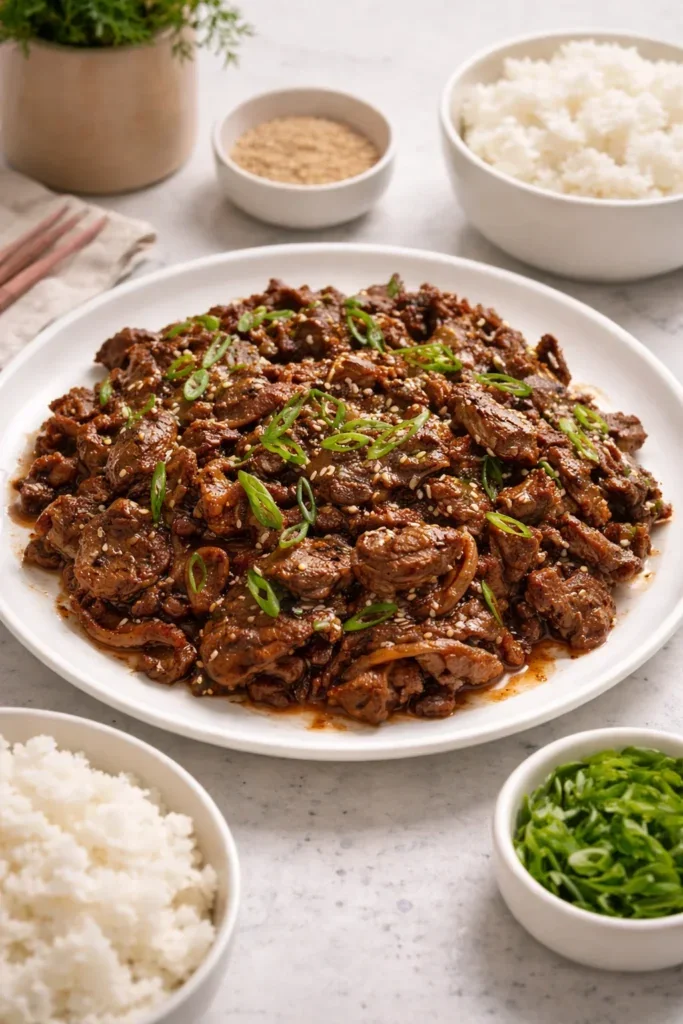
Easy Korean bulgogi is thinly sliced beef coated in a savoury-sweet marinade, then quickly seared until caramelised at the edges. It makes a comforting meal with rice and bright, crunchy garnishes.
Ingredients
- 454 g (1 lb)thinly sliced beef ribeye or sirloin
- 60 ml (¼ cup)soy sauce
- 2 tablespoons (30 ml)brown sugar
- 2 tablespoons (30 ml)mirin or rice wine
- 1 tablespoon (15 ml)toasted sesame oil
- 3 clovesgarlic, minced
- 1 teaspoongrated ginger
- ½ teaspoonblack pepper
- 1 smallonion, thinly sliced
- 2scallions, cut on the bias
- 1 tablespoon (15 ml)toasted sesame seeds
- ½pear or apple, grated (optional)
- To tastekimchi, for garnish
- To tastepickled radish, for garnish
- To tastecucumber, thinly sliced, for garnish
- 1 teaspoon (5 ml)oil, for the pan
Instructions
- 1
Mix marinade
Whisk together the soy sauce, brown sugar, mirin, sesame oil, garlic, ginger and black pepper in a bowl. If using grated pear or apple, stir it in.
- 2
Marinate beef
Add the sliced beef and toss to coat. If time allows, marinate at room temperature for 20 minutes, or refrigerate for up to 2 hours.
- 3
Heat the pan
Set a large skillet or cast-iron pan over medium-high heat until very hot. Add 1 teaspoon of oil and wait for it to shimmer.
- 4
Sear the beef
Cook half the beef in a single layer without crowding the pan. Leave it undisturbed for about 2 minutes so the edges can caramelise.
- 5
Finish cooking
Stir the beef and cook for another 1 to 2 minutes, until cooked through. Add the sliced onion in the final minute so it softens but retains some bite, then add the scallions off the heat to keep them bright.
- 6
Garnish and serve
Sprinkle over the toasted sesame seeds and drizzle with sesame oil. Taste and adjust the balance with sugar or soy sauce, then serve immediately.
What is Korean bulgogi?
Bulgogi is a Korean dish of thinly sliced beef cooked quickly after being coated in a seasoned marinade. Its name is commonly translated as “fire meat”, a nod to the traditional grilling method.
This skillet version keeps the cooking quick and approachable. Soy, sugar, garlic and sesame bring savoury sweetness, while optional grated pear or apple adds fruitiness to the marinade.
Nutrition and macros by portion
The nutrition label shows one serving as written: 300 calories, 25g protein, 18g carbs, 15g fat.
| Portion | Adjustment | kcal | Protein | Carbs | Fat |
|---|---|---|---|---|---|
| Lighter | More cucumber, less rice | 210 kcal | 18g | 13g | 11g |
| This serving | As written | 300 kcal | 25g | 18g | 15g |
| Hungry | Add rice and extra beef | 450 kcal | 38g | 27g | 23g |
The beef supplies most of the protein, while the brown sugar and any rice served alongside provide much of the carbohydrate. Fat comes mainly from the beef and sesame oil. For a more balanced plate, serve it with plenty of cucumber or other vegetables alongside a moderate portion of rice.
Choose and slice the beef
Beef cut: Ribeye gives a richer result, while sirloin is a leaner option. Either works best when sliced very thinly across the grain so it cooks quickly and is easy to bite.
Easy slicing: Ask a butcher to slice the beef, or chill it in the freezer briefly until firm enough to cut thinly.
Build the marinade
Savoury base: Soy sauce seasons the meat, while brown sugar helps the surface brown in the hot pan. Mirin or rice wine adds a gentle sweetness and acidity.
Aromatics: Garlic, ginger, black pepper and toasted sesame oil give the beef its fragrant, rounded flavour. Grated pear or apple is optional; it contributes natural sweetness and is a traditional tenderising addition.
Sear in batches
Hot pan: Wait until the skillet is very hot and the oil shimmers before adding the beef. A strong sear helps the edges caramelise.
Room to brown: Cook only half the beef at a time in a single layer. If the pan is crowded, the meat releases moisture and is more likely to steam than sear.
Watch the timing
Beef: Leave each batch undisturbed for about 2 minutes, then stir and cook for another 1 to 2 minutes until cooked through. Thin slices cook fast, so keep an eye on them.
Vegetables: Add the onion during the final minute so it softens without losing all its bite. Stir in the scallions after taking the pan off the heat to preserve their fresh colour and crunch.
Serve with contrasting sides
Fresh and tangy: Kimchi, pickled radish and thinly sliced cucumber provide crisp, lively contrasts to the sweet-savoury beef. Use any combination you like.
Filling base: Serve the bulgogi with steamed rice for a simple meal, or add lettuce leaves for wrapping. Spoon the beef and its juices over the side just before eating.
Recipe notes & tips
- Pat the beef dry if it looks especially wet before adding it to the marinade.
- Keep the sliced beef in the fridge while preparing the other ingredients if you are not cooking it straight away.
- Have the onion and scallions sliced before heating the pan, since the beef cooks quickly.
- Use a wide skillet so the beef can sit in a single layer.
- Serve the beef as soon as it is cooked for the best browned edges and tender texture.
Variations
- Use honey: Swap it for the brown sugar for a different kind of sweetness.
- Add pear or apple: Grate in half a fruit for the optional fruity tenderiser.
- Choose sirloin: Use sirloin instead of ribeye for a leaner cut.
- Make it spicy: Serve with extra kimchi for a hotter, tangier accompaniment.
- Wrap in lettuce: Spoon the beef into lettuce leaves with cucumber and pickled radish.
Common mistakes to avoid
- Crowding the skillet: The beef can steam instead of sear; cook it in two batches.
- Starting with a cool pan: The meat may release liquid before browning; heat the pan until the oil shimmers.
- Cutting the beef too thickly: It takes longer to cook evenly; slice it thinly across the grain.
- Overcooking the beef: Thin slices cook quickly; check after the stated cooking time.
- Cooking the scallions too long: They lose their fresh quality; add them after removing the pan from the heat.
How to store
Refrigerate leftover bulgogi in a covered container for up to 3 days. Reheat in a skillet over medium heat until hot throughout, adding a small splash of water if it seems dry.
Frequently asked questions
Can I marinate the beef ahead of time?
Yes. Refrigerate it in the marinade for up to 2 hours, as directed. For the shorter option, leave it at room temperature for 20 minutes.
What can I use instead of mirin?
Rice wine is listed as an alternative. Dry sherry can also be used as a substitute.
Do I have to add pear or apple?
No, it is optional. The beef will still take on the soy, sugar and aromatics in the marinade.
How do I know when the beef is cooked?
After about 2 minutes undisturbed, stir and cook for another 1 to 2 minutes, checking that the slices are cooked through. Thinly sliced beef can finish quickly.
What should I serve with bulgogi?
Steamed rice makes a filling base, while kimchi, pickled radish and cucumber add crunch and freshness. Lettuce leaves are another option for serving.
Cook it from the original
This recipe comes from benefitrecipes.com. Their page has the author’s own photos, notes and tips — the best place to cook it from.
Open the recipe on benefitrecipes.com